Rajnath Singh Inaugurates Advanced Naval Research Tunnel in Visakhapatnam
Synopsis
Defence Minister Rajnath Singh has laid the groundwork for a revolutionary Large Cavitation Tunnel in Visakhapatnam, enhancing India's naval research capabilities. This initiative is a significant step towards achieving technological self-sufficiency and strengthening India’s position as a leader in defence technology.
Key Takeaways
Advanced Facility : Introduction of the Large Cavitation Tunnel enhances research capabilities.
Technological Self-Reliance : A significant move towards Aatmanirbhar Bharat.
Indigenous Development : Focus on designing and testing equipment in India.
Future-Ready Defense : Emphasis on innovations in naval engineering and maritime systems.
Government Commitment : Strengthening national security through technological advancements.
On April 3rd, in Visakhapatnam, Defence Minister Rajnath Singh inaugurated the foundation stone for a cutting-edge Large Cavitation Tunnel (LCT) facility at the Naval Science and Technological Laboratory (NSTL), part of the DRDO.
This facility is poised to greatly enhance India's naval research and testing capabilities, representing a significant leap towards achieving technological self-reliance, as stated by officials.
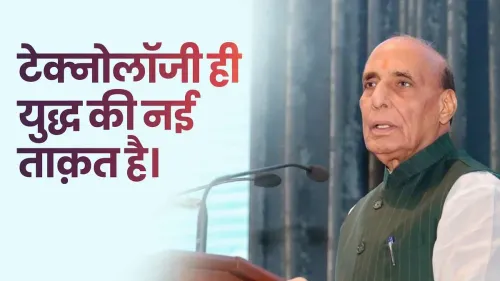
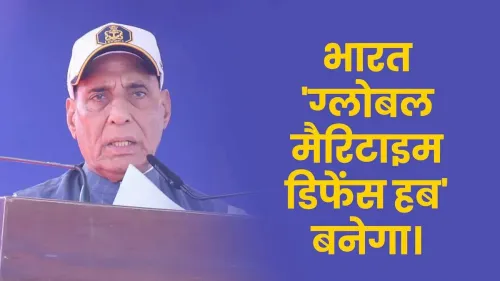
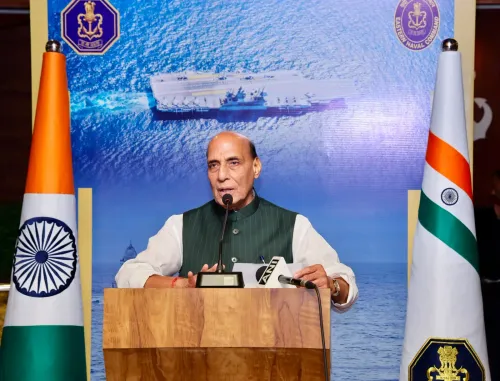
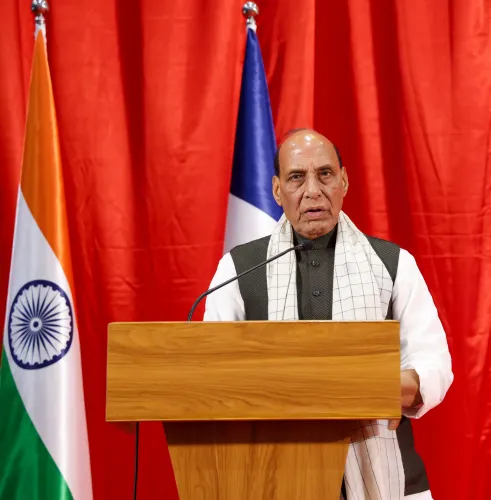
While speaking to scientists and personnel at NSTL, the Defence Minister emphasized that with this initiative, India will have the capability to design, develop, and test its own equipment and systems, positioning itself as a formidable naval power and a leader in defence technology.
“Historically, even after successfully creating various systems, we often had to seek foreign assistance for essential testing. This trend is set to change with this new facility,” he remarked.
Rajnath Singh noted that this facility is not just an infrastructure enhancement, but a critical system that will bolster our proficiency in propulsion systems, support targeted efforts in noise reduction, and further enhance stealth capabilities.
“It will act as a foundational support for the design and development of submarines and ships, aiding future innovations in naval engineering and maritime defence systems,” he added.
Moreover, Rajnath Singh termed the project as a manifestation of Prime Minister Narendra Modi’s vision for Aatmanirbhar Bharat.
He asserted that the government's efforts toward making India self-sufficient are deeply intertwined with the national security framework. Despite various challenges, the country has made significant strides towards complete Aatmanirbharta across multiple sectors, thanks to the collective endeavors of the domestic industry, academia, MSMEs, youth, and researchers.
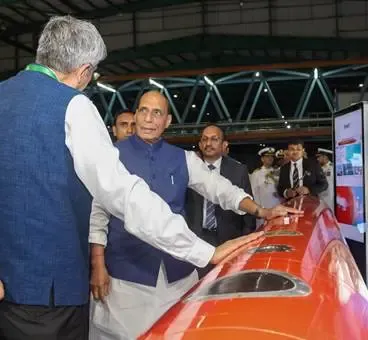
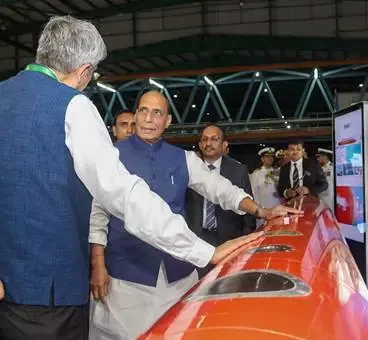
During his visit, the Defence Minister received insights into NSTL's projects and programs from Dr. Samir V Kamat, Secretary of the Department of Defence R&D and Chairman of DRDO.
He also explored the Seakeeping and Manoeuvring Basin, where he observed advanced underwater systems, including torpedoes, naval mines, decoys, and autonomous underwater vehicles (AUVs).
A live demonstration featuring a swarm of man-portable AUVs highlighted India's advancing capabilities in autonomous maritime operations and next-generation underwater warfare technologies, showcasing the nation's commitment to developing future-ready defence systems.
The Defence Minister also reviewed several vital products achieved as spin-off technologies from the Naval Systems Materials cluster labs following Operation Sindoor.
Point of View
The establishment of the Large Cavitation Tunnel signifies a momentous advancement in India's defence landscape. With Rajnath Singh's vision for self-reliance, this initiative not only aims to enhance naval capabilities but also reflects a commitment to innovation and technological independence.
NationPress
19 Sept 2026
Frequently Asked Questions
What is the purpose of the Large Cavitation Tunnel?
The Large Cavitation Tunnel aims to enhance India's naval research and testing capabilities, facilitating the design and development of submarines and ships.
Why is this facility important for India?
It represents a significant step towards achieving technological self-reliance and bolstering India's status as a leader in defence technology.
Who inaugurated the tunnel facility?
Defence Minister Rajnath Singh inaugurated the Large Cavitation Tunnel facility.
Where is the facility located?
The facility is located at the Naval Science and Technological Laboratory (NSTL) in Visakhapatnam.
What technologies were showcased during the visit?
Advanced underwater systems including torpedoes, naval mines, decoys, and autonomous underwater vehicles were showcased.