Rajnath Singh pushes Indian shipyards to go global, eyes exports to friendly nations
Synopsis
Rajnath Singh's Visakhapatnam visit wasn't just a ship launch — it was a policy statement. By framing self-reliance as a milestone rather than the destination, and calling for India to export warships to friendly nations, Singh has set a new bar for HSL and Indian defence shipbuilding at large. The Miniratna upgrade and a 300-tonne Goliath Crane signal the yard is being readied for exactly that leap.
Key Takeaways
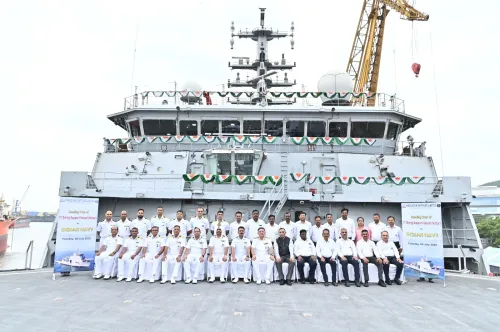
Defence Minister Rajnath Singh launched Fleet Support Ship-1 (FSS-1) at Hindustan Shipyard Limited (HSL) in Visakhapatnam on 6 October 2026 .
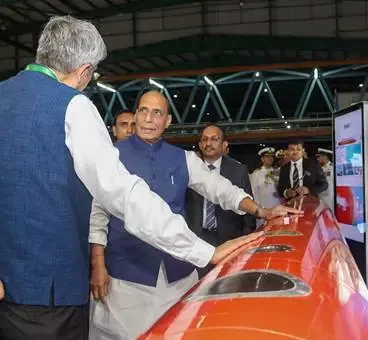
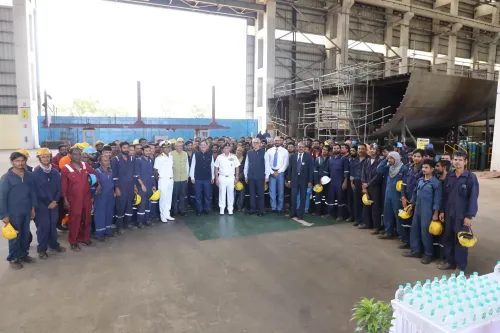
Singh also laid the keel of FSS-5 and inaugurated the upgraded Slipway-4 and a 300-tonne Goliath Crane .
HSL attained Miniratna Category-I status in 2025 , reflecting a significant financial turnaround under the Ministry of Defence .
Singh called for Visakhapatnam to be developed as a 'comprehensive Maritime Industrial Hub,' integrating MSMEs, universities, startups, and tech firms.
He identified timely delivery, indigenous design capability, supply chain resilience , and cost competitiveness as priority areas for achieving global competitiveness.
Singh stressed an integrated ecosystem — Navy, HSL, DRDO, academia, industry, MSMEs and startups — as essential to building India's maritime strength.
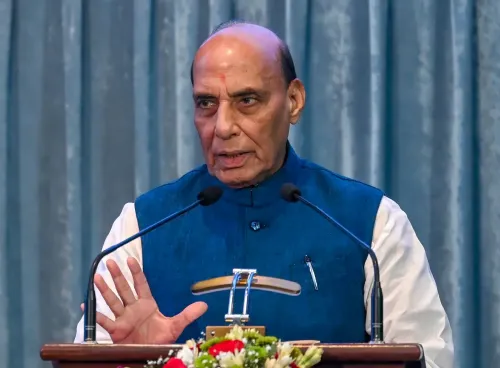
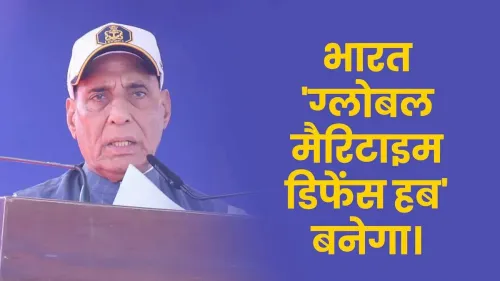
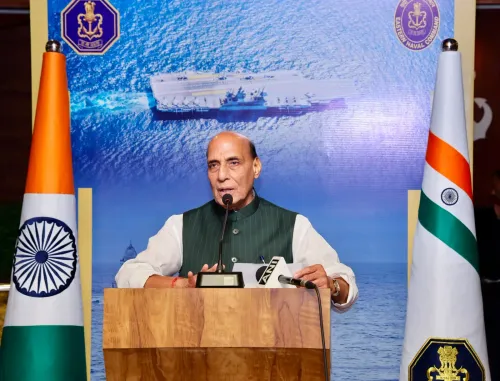
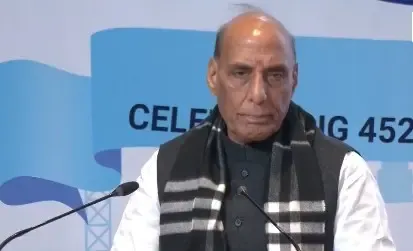
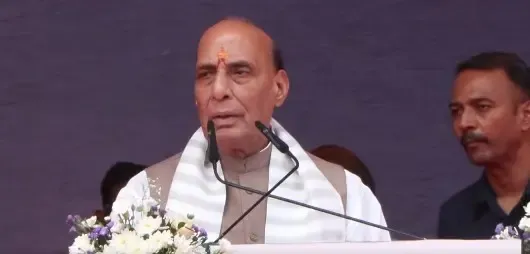
Defence Minister Rajnath Singh on Tuesday, 6 October 2026, called for transforming Indian shipyards into globally competitive enterprises capable of exporting ships and maritime services to friendly nations and international markets. Singh made the remarks at the launch of Fleet Support Ship-1 (FSS-1) at Hindustan Shipyard Limited (HSL) in Visakhapatnam, Andhra Pradesh.
Key Developments at HSL Visakhapatnam
Beyond the FSS-1 launch, Rajnath Singh also laid the keel of Fleet Support Ship-5 (FSS-5) and inaugurated the upgraded Slipway-4 and a new 300-tonne Goliath Crane. Describing the occasion, Singh said: 'Launch is a symbol of our achievement, Keel Laying is a symbol of our resolve, and the new Slipway is a symbol of our growing capacity. Today at HSL, along with building ships, we are further strengthening the foundation of India's maritime power for the future.'
The Fleet Support Ship programme is considered a strategic enabler, extending the Indian Navy's reach, endurance, and operational effectiveness across the Indian Ocean Region.
What the Defence Minister Said
Singh drew a distinction between self-reliance and global competitiveness, framing the latter as India's 'next big leap.' 'Our goal is not just to become self-reliant. We need to become globally competitive. Self-reliance is an important milestone on our journey; global competitiveness is our next big leap. India must achieve a position where our shipyards can provide ships and maritime services not only for the Indian Navy, but also for friendly nations and international markets,' he said.
He identified timely delivery, productivity, indigenous design capability, supply chain resilience, skilled manpower, capacity and cost competitiveness as the key areas requiring focused attention to realise that ambition.
HSL's Rise: From Debt to Miniratna
Singh highlighted the transformation of HSL over the past decade, noting that the yard's financial position improved significantly following its placement under the Ministry of Defence. In 2025, HSL attained Miniratna Category-I status — a public-sector benchmark — underscoring what he called a 'remarkable' turnaround. He credited both ministerial effort and the shipyard's own workforce for the change.
HSL, which has operated for over eight decades, is described by Singh as 'the custodian of India's national maritime capability.' Notably, this recognition comes as the Centre deepens its push to embed defence shipbuilding within a broader commercial and industrial ecosystem.
Vision for Visakhapatnam as a Maritime Industrial Hub
Singh called for Visakhapatnam to be developed beyond a single shipyard location into a 'comprehensive Maritime Industrial Hub.' He envisioned Andhra Pradesh's MSMEs as potential suppliers, local universities as research and skill development centres, technology companies contributing to digital shipbuilding, and startups developing maritime technologies.
He also stressed the importance of an integrated national maritime ecosystem, arguing that neither the Navy alone nor shipyards alone can build India's maritime strength. 'The Navy, HSL, DRDO, academia, industry, MSMEs, and startups should work as an integrated team,' he said.
India's Larger Defence Manufacturing Shift
Singh's remarks sit within a broader decade-long shift in India's defence posture. He noted that Indian shipyards are now constructing advanced warships and submarines domestically — a marked departure from the heavy import dependence of earlier years. The Indian Navy, he added, has demonstrated its capability as a first responder across the Indian Ocean Region, conducting humanitarian, anti-piracy, evacuation, and maritime security operations.
This comes amid India's wider effort to emerge as a credible defence exporter, with shipbuilding seen as a high-value frontier where domestic capability and export potential can converge. Whether the ambition translates into signed export orders will be the measure of success Singh himself has set.
Point of View
But the distance between ambition and order books is wide. India's shipbuilding share in global output remains marginal, and HSL's Miniratna status, while welcome, reflects a low baseline. The real test is whether the 'Maritime Industrial Hub' vision produces a supply chain deep enough to compete with South Korea, China, and Japan on price and delivery timelines — something no Indian yard has yet managed at scale. Without long-term financing structures and a pipeline of export clients, the call for global competitiveness risks remaining a recurring keynote rather than a measurable target.
NationPress
6 Oct 2026
Frequently Asked Questions
What did Rajnath Singh launch at Hindustan Shipyard Limited in Visakhapatnam?
Rajnath Singh launched Fleet Support Ship-1 (FSS-1) at Hindustan Shipyard Limited (HSL) in Visakhapatnam on 6 October 2026. He also laid the keel of Fleet Support Ship-5 (FSS-5) and inaugurated the upgraded Slipway-4 and a new 300-tonne Goliath Crane.
What is Hindustan Shipyard Limited's Miniratna Category-I status?
Miniratna Category-I is a government classification for central public sector enterprises that have achieved consistent profitability and operational scale, granting them greater financial and operational autonomy. HSL attained this status in 2025, reflecting a significant financial turnaround after being placed under the Ministry of Defence.
Why is Rajnath Singh calling for Indian shipyards to be globally competitive?
Singh argues that self-reliance in defence manufacturing is a milestone, not the final goal — and that India's shipyards must now compete internationally to supply ships and maritime services to friendly nations and global markets. He cited timely delivery, indigenous design, supply chain resilience, and cost competitiveness as the key gaps to address.
What is the plan for Visakhapatnam as a Maritime Industrial Hub?
Rajnath Singh called for Visakhapatnam to evolve beyond a single shipyard into a comprehensive Maritime Industrial Hub. The vision involves Andhra Pradesh's MSMEs as component suppliers, local universities as research and skilling centres, technology firms contributing to digital shipbuilding, and startups developing maritime technologies.
How does the Fleet Support Ship programme strengthen the Indian Navy?
Fleet Support Ships are logistical vessels that extend the Indian Navy's operational reach and endurance at sea, enabling longer deployments across the Indian Ocean Region. Singh described the FSS-1 launch as a significant step in bolstering the Navy's effectiveness in humanitarian, anti-piracy, and maritime security missions.