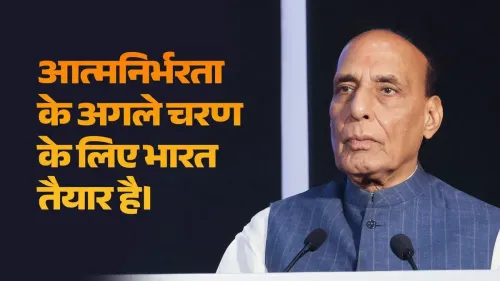
Rajnath Singh calls for 'Aatmanirbharta 2.0' in defence, eyes Viksit Bharat 2047
Synopsis
Rajnath Singh's 'Aatmanirbharta 2.0' call at SWAVLAMBAN 2026 is a candid admission that Phase 1 built foundations but left quality, supply-chain resilience, and high-end technology gaps wide open. With naval demand rising in the Indian Ocean Region and import dependency still a security vulnerability, the Defence Minister is signalling that India's next indigenisation leap must be harder, smarter, and measurably better.
Key Takeaways
Defence Minister Rajnath Singh called for 'Aatmanirbharta 2.0' at the SWAVLAMBAN naval seminar in New Delhi on 26 October 2026 .
Phase 2 must prioritise quality, efficiency, and affordability over mere quantity of indigenous products.
Singh flagged rising demand for naval ships in the Indian Ocean Region and called for cost-reduction strategies in domestic shipbuilding.
Supply chain resilience was described as a 'strategic imperative' directly linked to national security, with proactive buffer stock assessment required.
R&D and stronger industry-academia collaboration were identified as central to achieving the next phase of self-reliance.
The push aligns with the broader Viksit Bharat@2047 national development vision championed by Prime Minister Narendra Modi .
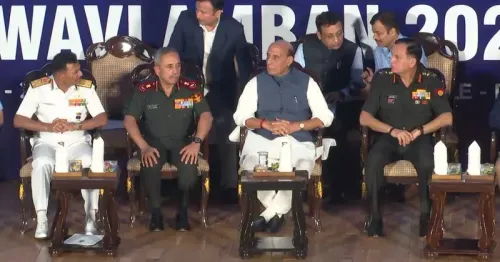
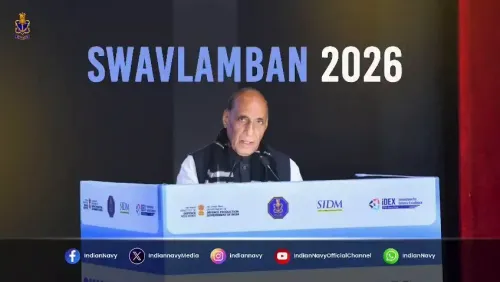
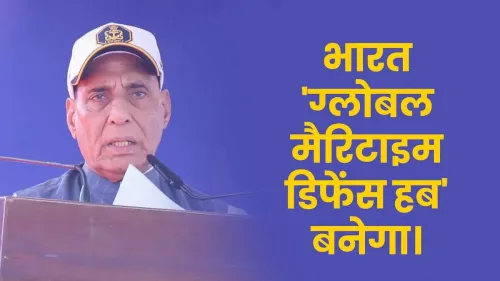
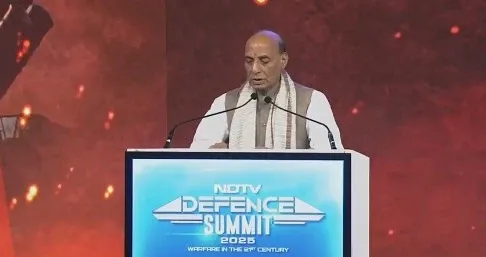
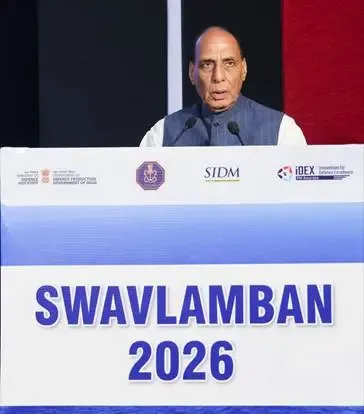
Defence Minister Rajnath Singh on Monday, 26 October 2026, called for a second phase of self-reliance in India's defence sector — dubbed 'Aatmanirbharta 2.0' — with a sharper focus on cutting-edge technologies, resilient supply chains, and global competitiveness, framing it as a cornerstone of the Viksit Bharat@2047 vision. Singh made the call while addressing the fifth edition of SWAVLAMBAN, the Indian Navy's Naval Innovation and Indigenisation Seminar, in New Delhi.
What Aatmanirbharta 2.0 Entails
Singh stressed that the next phase must go beyond merely counting indigenous products and instead prioritise quality, efficiency, and affordability. He argued that genuine self-reliance must simultaneously strengthen national security and economic resilience — two objectives that, in his framing, are inseparable.
He called for a dynamic roadmap that sets clear timelines for achieving self-reliance in each defence item, identifies the technologies to be developed, names the industries that will drive innovation, and specifies the resources required to meet these goals.
Naval Shipbuilding and Cost Reduction in Focus
Singh highlighted that demand for naval vessels is steadily rising in the context of an evolving strategic environment in the Indian Ocean Region. Because ship construction is capital-intensive, he said there is an urgent need to explore mechanisms to reduce costs while simultaneously scaling up domestic production capacity.
He underlined the importance of manufacturing products that are cost-effective, operationally superior, and globally competitive — a trio of benchmarks he set as the bar for the second phase of indigenisation.
Supply Chain Resilience as a Strategic Imperative
The Defence Minister described supply chain management as 'not just a technical issue but a strategic imperative' directly tied to national security. He called for proactive assessment of buffer stocks and domestic production capabilities, warning against waiting for a crisis before acting on supply vulnerabilities.
Notably, Singh urged the nation to remain prepared against potential disruptions in supply routes — a remark widely read as referencing geopolitical tensions in India's extended neighbourhood. This is consistent with a broader Centre push to reduce import dependence following procurement delays experienced during earlier global supply shocks.
R&D and Industry-Academia Collaboration
Singh identified Research and Development (R&D) as the central pillar for achieving Aatmanirbharta 2.0, expressing confidence in India's talent pool to develop cutting-edge technologies indigenously with sustained focus and investment. He called for stronger industry-academia collaboration, greater encouragement for R&D in educational institutions, and expanded career opportunities for youth in the innovation space.
He suggested that defence innovators with a 'futuristic vision and scientific discipline' could serve as 'impact players' in pursuing more challenging technological goals — building on the gains of the first phase of self-reliance achieved under Prime Minister Narendra Modi's leadership over the past decade.
Context and What Comes Next
India's defence indigenisation drive has recorded tangible milestones over the last ten years, including positive indigenisation lists that barred imports of hundreds of items and a growing domestic defence export order book. However, critics have noted that several high-end platforms — including fighter engines and advanced sensors — remain import-dependent, making the quality-over-quantity emphasis of Aatmanirbharta 2.0 a direct acknowledgement of those gaps.
With SWAVLAMBAN 2026 bringing together naval planners, industry leaders, and innovators, the seminar is expected to produce actionable recommendations that feed into the Navy's indigenisation roadmap for the next five years.
Point of View
And the lack of a specific accountability mechanism leaves the roadmap aspirational for now. India's defence import bill remains substantial, and high-end dependencies in propulsion, avionics, and sensors persist. Whether SWAVLAMBAN's recommendations translate into binding procurement and R&D mandates — or remain seminar-circuit commitments — will be the real test of Aatmanirbharta 2.0.
NationPress
26 Oct 2026
Frequently Asked Questions
What is 'Aatmanirbharta 2.0' in defence?
'Aatmanirbharta 2.0' is the second phase of India's defence self-reliance push, as articulated by Defence Minister Rajnath Singh at SWAVLAMBAN 2026 on 26 October 2026. It moves beyond the first phase's focus on indigenisation volumes to emphasise quality, efficiency, affordability, resilient supply chains, and cutting-edge R&D, all aligned with the Viksit Bharat@2047 vision.
What is SWAVLAMBAN and why does it matter?
SWAVLAMBAN is the Indian Navy's Naval Innovation and Indigenisation Seminar, now in its fifth edition, that brings together defence planners, industry leaders, and innovators to advance domestic naval manufacturing. It serves as a key policy platform where the government signals indigenisation priorities and the Navy outlines its technology roadmap.
Why did Rajnath Singh stress naval shipbuilding costs?
Singh highlighted that demand for naval vessels is rising sharply due to evolving strategic dynamics in the Indian Ocean Region. Since ship construction is capital-intensive, he called for ways to reduce production costs while scaling up domestic capacity, making Indian-built ships globally competitive.
What role does supply chain management play in Aatmanirbharta 2.0?
Singh described supply chain management as a strategic imperative — not merely a technical concern — directly linked to national security. He stressed proactive assessment of buffer stocks and domestic production capabilities before any crisis emerges, rather than reacting after supply disruptions occur.
How does Aatmanirbharta 2.0 relate to Viksit Bharat@2047?
Viksit Bharat@2047 is the Centre's vision of a fully developed India by the centenary of Independence. Singh positioned Aatmanirbharta 2.0 as a key driver of that goal, arguing that technological superiority and economic resilience in defence are inseparable from India's broader development ambitions.