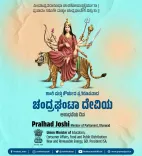
Rajnath Singh offers Navratri greetings on Maa Chandraghanta day
Synopsis
Union Defence Minister Rajnath Singh on 13 October 2026 shared a devotional message honouring Maa Chandraghanta on the third day of Navratri, praying for compassion, fearlessness, justice and truth for all devotees, alongside a classical Sanskrit shloka.
Key Takeaways
Union Defence Minister Rajnath Singh posted Navratri greetings on 13 October 2026 , the third day of the festival.
The post honoured Maa Chandraghanta , the goddess venerated on Navratri's third night, symbolising courage and protection.
Singh prayed for compassion in hearts, fearlessness in conduct, and the prevalence of justice and truth in devotees' lives.
He shared a Sanskrit shloka from the Devi Mahatmya tradition glorifying Maa Chandraghanta as a bestower of grace.
Sharing devotional messages during major Hindu festivals is a consistent and long-standing part of Singh's public communication.
On the third day of Navratri, Union Defence Minister Rajnath Singh invoked the blessings of Maa Chandraghanta on Tuesday, 13 October 2026, sharing a devotional message that prayed for compassion, fearlessness, justice and truth in the lives of all devotees.
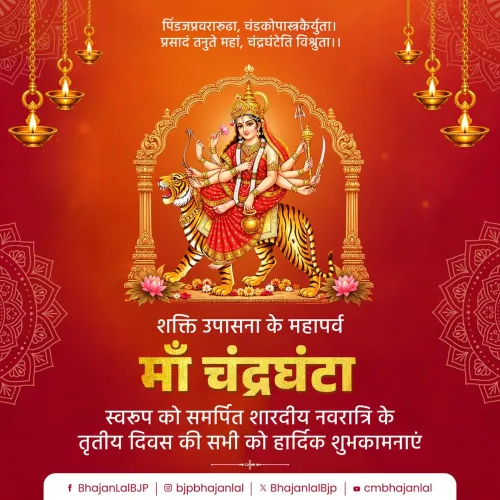
Posting in Hindi, Singh wrote: 'जय माँ चंद्रघंटा!' — 'Victory to Maa Chandraghanta!' — and offered a salutation to the goddess's divine form. He prayed that her grace may 'illuminate the path of justice and truth in our lives, fill our hearts with compassion, and make our conduct fearless.' He also shared a classical Sanskrit shloka: 'Pindajapravaraarodha chandakopastrakairyuta. Prasadam tanute mahyam chandraghanteti vishroota' — a verse from the Devi Mahatmya tradition that honours the goddess as one who bestows grace upon her devotees.
The third goddess of Navratri and her significance
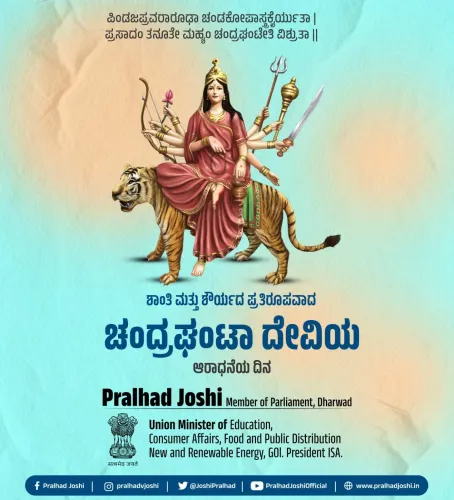
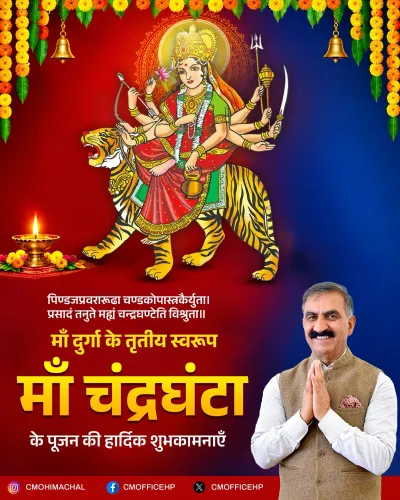
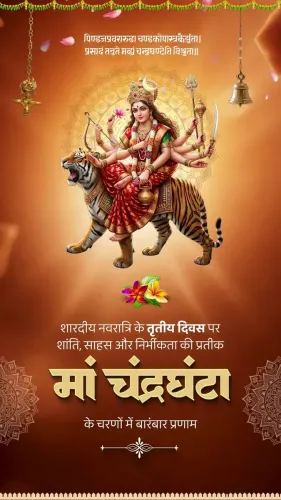
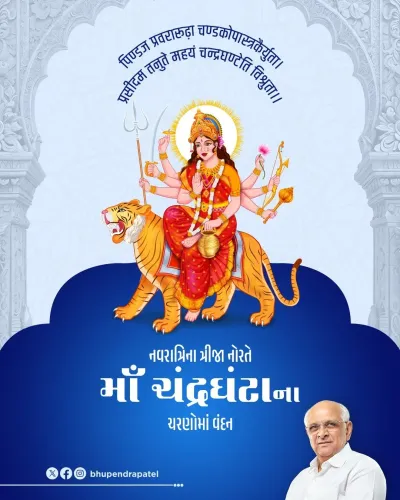
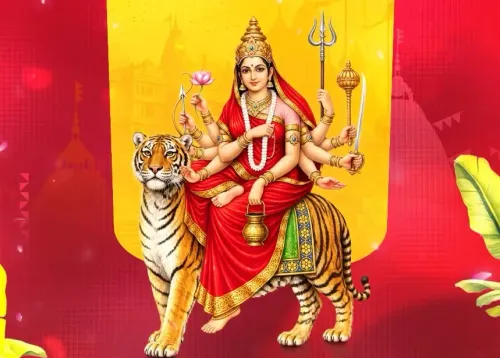
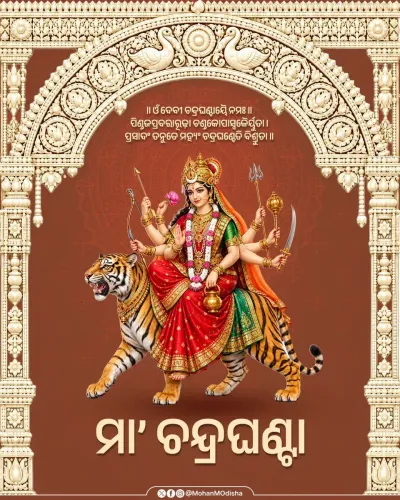
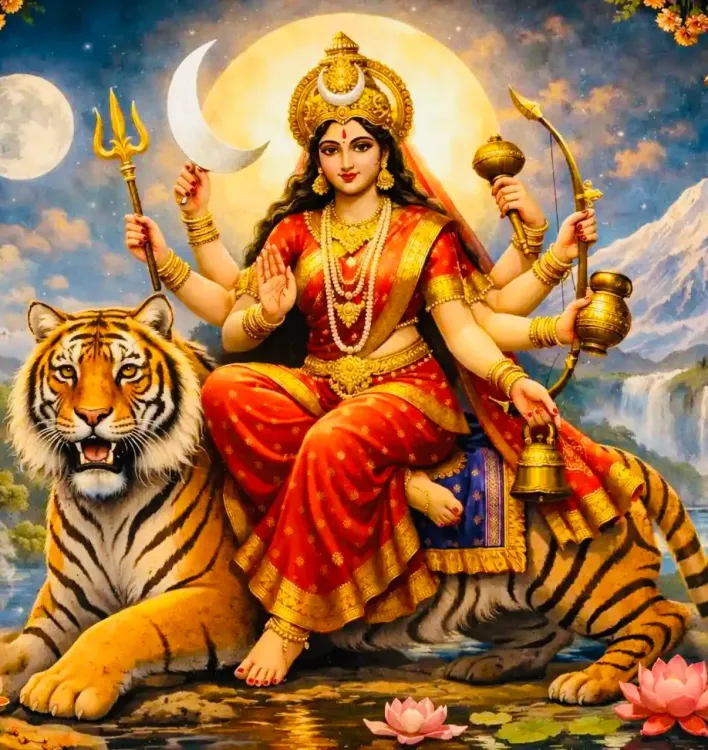
Maa Chandraghanta is venerated on the third night of Navratri, the nine-night Hindu festival dedicated to Goddess Durga. She is depicted riding a tiger, bearing a crescent moon on her forehead and wielding weapons — a form symbolising courage and readiness to protect devotees from harm. Her name combines chandra (moon) and ghanta (bell), evoking a sound that, in devotional tradition, is believed to ward off evil forces.
Singh's devotional posts and India's festival political landscape
Sharing greetings during major Hindu festivals is a consistent feature of Rajnath Singh's public persona, in keeping with both his personal faith and the broader tradition across India's political spectrum. Senior leaders from multiple parties routinely mark Navratri, Diwali, Eid, Christmas and other occasions on social media — a practice that has become a standard part of political communication in contemporary India. Singh, a former Chief Minister of Uttar Pradesh and former Union Home Minister, is among the BJP's most senior figures, and his messaging on such occasions carries wide reach among his followers.
As Navratri continues through its nine nights, the festival remains one of India's most widely observed religious events, drawing millions of devotees into prayer, fasting and community celebrations from Gujarat to West Bengal and beyond.
Point of View
It sits within a broader pattern where religious observance and political visibility are inseparable for top BJP figures. The inclusion of a Sanskrit shloka — rather than a simple greeting — signals a degree of textual engagement that distinguishes such posts from generic festival wishes. Across the political spectrum, festival communication has evolved into a serious digital-outreach tool, and Singh's consistent participation underscores how the BJP has institutionalised this practice at the highest levels of government.
NationPress
13 Oct 2026
Frequently Asked Questions
Why is Maa Chandraghanta worshipped on the third day of Navratri?
Maa Chandraghanta is the third form of Goddess Durga in the Navratri cycle. She is honoured on the third night and is associated with bravery, grace, and protection, depicted with a crescent moon on her forehead and weapons in her multiple arms.
What did Rajnath Singh post for Navratri 2026?
Union Defence Minister Rajnath Singh shared a Hindi devotional message on 13 October 2026 saluting Maa Chandraghanta, praying for compassion, fearlessness, justice, and peace for all devotees, along with a Sanskrit shloka in her honour.
What does the Sanskrit shloka Rajnath Singh posted mean?
The shloka — 'Pindajapravaraarodha chandakopastrakairyuta. Prasadam tanute mahyam chandraghanteti vishroota' — is from the Devi Mahatmya tradition and describes the goddess as one who rides a tiger, wields weapons in her wrath, and bestows her grace upon devotees.
When is Navratri celebrated in India?
Navratri is a nine-night Hindu festival dedicated to Goddess Durga, celebrated twice a year with the most prominent observance falling in the autumn month of Ashvin according to the Hindu calendar, typically in September or October.
Does Rajnath Singh regularly post about Hindu festivals?
Yes, Rajnath Singh consistently shares devotional messages during major Hindu festivals. This is consistent with both his personal faith and the broader practice among senior BJP leaders of publicly participating in religious observances.