Joshi Highlights India's Renewable Energy Leap Under Modi
Synopsis
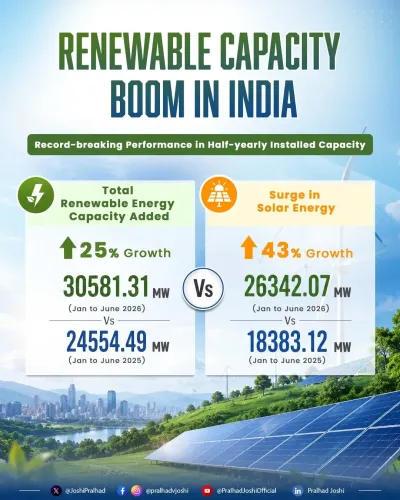
Union Minister Pralhad Joshi highlights India's renewable energy capacity surging from 75 GW in 2014 to nearly 300 GW, beating its Paris Agreement 40% non-fossil target nine years early, with PM Surya Ghar and PM-KUSUM schemes adding 30 GW of solar and cutting over 30 million tonnes of carbon emissions annually.
Key Takeaways
India achieved its Paris Agreement target of 40% non-fossil installed electricity capacity in November 2021 , nine years ahead of the 2030 deadline.
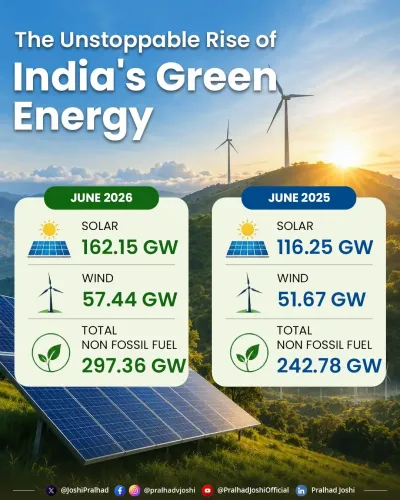
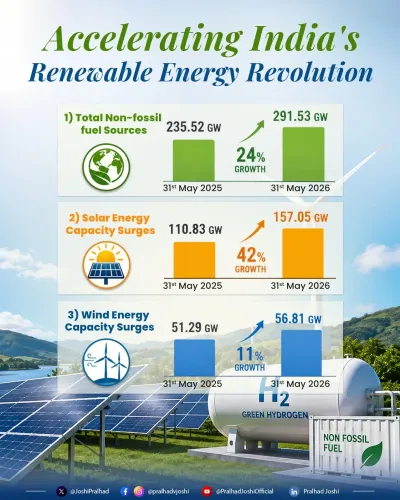
Renewable energy capacity has grown from roughly 75 GW in 2014 to nearly 300 GW today — a near four-fold increase in just over a decade.
PM Surya Ghar promotes subsidised rooftop solar for households; PM-KUSUM (launched 2019) brings solar pumps and plants to farmers.
The two schemes together have reportedly added over 30 GW of solar capacity and reduced carbon emissions by more than 30 million tonnes annually .
India's performance on climate commitments strengthens its position in multilateral forums including future UNFCCC COP negotiations.
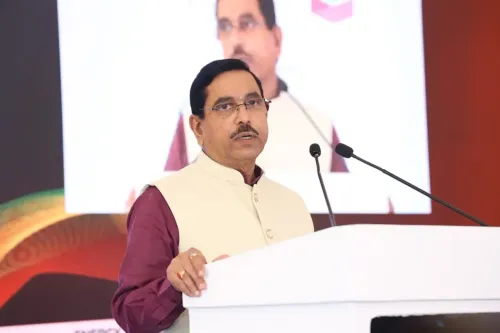
Nine years ahead of schedule and four gigawatts short of a near-300 GW milestone — Union Minister Pralhad Joshi on Tuesday, 13 October 2026 laid out the arc of India's renewable energy transformation in a post on X, crediting Prime Minister Narendra Modi with a policy push that has redefined the country's position in global climate diplomacy.
The minister quoted PM Modi directly, underscoring that India had committed under the Paris Agreement to sourcing 40% of installed electricity capacity from non-fossil sources by 2030 — and then quietly demolished that deadline in November 2021, nearly a decade early. That single fact reframes every climate conversation India enters.
From 75 GW to nearly 300 GW: the numbers that changed the argument
When Narendra Modi took office in 2014, India's total renewable energy installed capacity stood at roughly 75 GW. Today, according to the minister's post, that figure has climbed to nearly 300 GW — a roughly four-fold jump in just over a decade. That is not incremental growth; that is a structural shift in how the world's third-largest energy consumer powers itself.
The trajectory also reflects India's Intended Nationally Determined Contributions (INDCs), submitted to the UNFCCC in October 2015, which locked in the 40% non-fossil target. Beating it by nine years gave India rare diplomatic leverage — a developing economy that over-delivered on a multilateral climate pledge while expanding electricity access at scale.
PM Surya Ghar and PM-KUSUM: solar reaching the household and the field
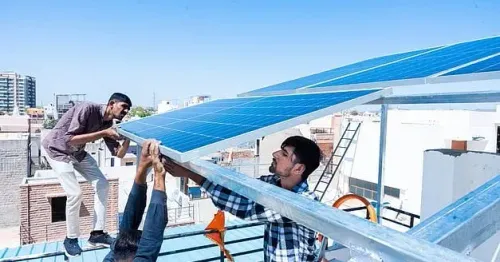
Beyond utility-scale plants, the minister highlighted two schemes as the human face of the expansion. PM Surya Ghar is a central programme promoting subsidised rooftop solar for households, pushing decentralised generation into cities and towns. PM-KUSUM, launched in 2019, targets farmers — replacing diesel pumps with solar-powered alternatives and seeding distributed solar plants in agricultural zones.
Together, the post credits these initiatives with adding over 30 GW of solar capacity and cutting carbon emissions by more than 30 million tonnes annually. For the farmer swapping a diesel pump for a solar one, or the household trimming an electricity bill, the energy transition is no longer an abstraction — it is a monthly saving.
India's solar diplomacy and what comes next
India's renewable push sits within a broader strategic frame: the country co-founded the International Solar Alliance precisely to export the model, positioning itself as a clean-energy anchor for the Global South. Each domestic milestone — a capacity record, a scheme rollout, a target beaten early — feeds that narrative heading into future UNFCCC COP negotiations.
The next pressure points are state-level implementation of PM Surya Ghar and PM-KUSUM, where uptake has varied, and any revised NDC targets India may announce as the 2030 deadline — already beaten on the 40% metric — approaches. The question is no longer whether India can hit its climate targets. It is how far beyond them the country is willing to set its sights.
Point of View
Giving New Delhi credibility in climate negotiations that few developing economies can match. The shift from 75 GW to nearly 300 GW of renewable capacity in a decade also reflects a deliberate policy architecture — moving from centralised utility projects toward decentralised household and farm-level solar through PM Surya Ghar and PM-KUSUM. For the BJP government, these numbers serve a dual purpose: domestic political messaging ahead of state elections and international leverage as India positions itself as a clean-energy leader for the Global South. The real test now is equitable state-level implementation, where ground-level uptake of schemes has remained uneven.
NationPress
13 Oct 2026
Frequently Asked Questions
When did India achieve its Paris Agreement 40% non-fossil electricity target?
India achieved its Paris Agreement target of sourcing 40% of installed electricity capacity from non-fossil sources in November 2021, nine years before the 2030 deadline.
How much has India's renewable energy capacity grown since 2014?
India's renewable energy installed capacity has grown from around 75 GW in 2014 to nearly 300 GW as of 2026, according to Union Minister Pralhad Joshi's post.
What is the PM Surya Ghar scheme?
PM Surya Ghar is a central government scheme that promotes subsidised rooftop solar installations for households, aimed at providing decentralised electricity generation and reducing power bills.
What is the PM-KUSUM scheme and who does it benefit?
PM-KUSUM, launched in 2019, is designed to install solar-powered pumps and decentralised solar plants for farmers, replacing diesel-run equipment and reducing agricultural energy costs.
How much carbon emission reduction has India's solar expansion achieved?
According to Minister Joshi's post quoting PM Modi, initiatives like PM Surya Ghar and PM-KUSUM have helped reduce carbon emissions by more than 30 million tonnes annually.