Rajnath Singh on AI and journalism: balance is key
Synopsis
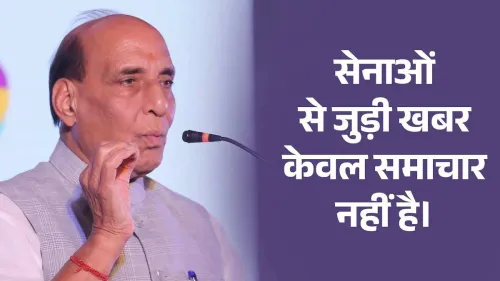
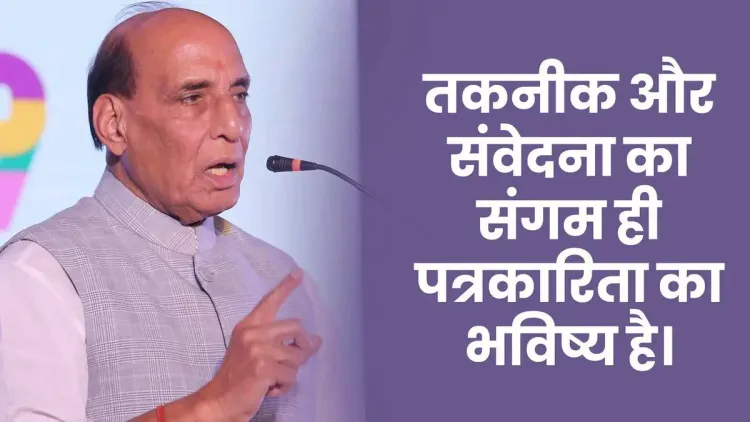
Union Defence Minister Rajnath Singh on 4 July 2026 called for journalism to find the right balance between Artificial Intelligence's vast capabilities and human sensitivity, saying that convergence of technology and sensibility would be the profession's greatest future strength.
Key Takeaways
Rajnath Singh posted on 4 July 2026 that journalism's future success depends on balancing AI capabilities with human sensitivity.
He described the convergence of technology and human sensibility as journalism's 'greatest strength' going forward.
NITI Aayog's #AIforAll strategy ( 2018 ) established India's early framework for ethical, human-centric AI adoption across sectors.
Generative AI tools in content creation have raised concerns about synthetic misinformation and editorial accountability in Indian media.
Possible AI ethics guidelines for media from the Ministry of Information and Broadcasting are being watched by policy observers.
Singh's remarks align with India's broader tradition of linking technology adoption to cultural and social values.
Union Defence Minister Rajnath Singh on Saturday, 4 July 2026, weighed in on the future of journalism, arguing that the profession's success will hinge on how well it strikes a balance between the vast capabilities of Artificial Intelligence and human sensitivity.
What the minister said
Posting in Hindi on X, Singh wrote: 'भविष्य में पत्रकारिता की सफलता इस बात पर निर्भर करेगी कि वह Artificial Intelligence की असीम क्षमताओं और मानवीय संवेदनाओं के बीच सही संतुलन एवं समन्वय कैसे स्थापित करती है।' — 'The success of journalism in the future will depend on how it establishes the right balance and coordination between the limitless capabilities of Artificial Intelligence and human sensibilities.' He added that the convergence of technology and sensitivity would be journalism's greatest strength going forward.
The post, which accompanied a video, reflects a growing trend of senior government voices articulating a framework for responsible AI adoption in public discourse and media.
Context
India's policy conversation around AI has accelerated significantly over the past several years. NITI Aayog laid early groundwork with its National Strategy for Artificial Intelligence, branded #AIforAll, released in 2018, which emphasised ethical and human-centric AI deployment across sectors including governance, health, and education.
Journalism and content creation have emerged as particularly sensitive frontiers, given the rapid proliferation of generative AI tools capable of producing text, images, audio, and video at scale. Concerns around synthetic misinformation and the erosion of editorial accountability have prompted calls for clearer guardrails.
Policy backdrop
Successive Indian governments have consistently linked digital technology adoption to the preservation of Indian cultural and social values — a thread visible in everything from data localisation debates to content moderation discussions. Singh's framing — 'technology and sensitivity' as complementary rather than competing forces — fits squarely within this tradition.
Regulators and parliamentary committees have been examining AI's role in media, with possible guidelines from the Ministry of Information and Broadcasting anticipated by observers tracking the space. No formal policy has been confirmed as of the date of this post.
Stakeholders and impact
The remarks are directly relevant to journalists, newsroom managers, media educators, and technology companies building AI tools for the Indian content ecosystem. For working reporters, the minister's words carry both encouragement — AI as an amplifier — and an implicit caution against letting automation displace the human judgment that gives journalism its credibility.
Media organisations navigating AI adoption will likely cite such high-level political statements when making the case internally for human-oversight policies and editorial standards around AI-generated content.
What's next
Observers will watch whether Singh's remarks presage any formal government initiative — such as an AI ethics framework specifically for media — or whether they remain an expression of a broader philosophical position. Any move by the Ministry of Information and Broadcasting or a parliamentary standing committee to codify responsible AI use in journalism would give these sentiments institutional weight. The intersection of AI capability and human editorial judgment is set to remain one of the defining debates in Indian media through the rest of this decade.
Point of View
Which has consistently sought to assert Indian cultural priorities alongside technological ambition. The remarks may also be read as soft pressure on newsrooms to self-regulate on AI use before harder rules arrive. Ultimately, the statement positions the ruling establishment as a stakeholder in how Indian journalism evolves in the AI era, a role it is likely to formalise through policy in the near term.
NationPress
4 Jul 2026
Frequently Asked Questions
What did Rajnath Singh say about AI and journalism?
Rajnath Singh said that the future success of journalism will depend on how well it balances the limitless capabilities of Artificial Intelligence with human sensitivity, calling this convergence journalism's greatest strength.
When did Rajnath Singh make the statement on AI and journalism?
He posted the statement on Saturday, 4 July 2026 , on his official X account.
What is India's policy on AI in journalism?
India does not yet have a dedicated AI policy for journalism, but NITI Aayog's #AIforAll strategy ( 2018 ) provides the broader ethical framework, and the Ministry of Information and Broadcasting is being watched for possible sector-specific guidelines.
Why is the balance between AI and human sensitivity important for journalism?
AI can produce content at scale and speed, but without human editorial judgment it risks amplifying misinformation and eroding trust; the balance Singh describes is meant to preserve credibility and accountability in reporting.
Who is Rajnath Singh?
Rajnath Singh is India's Union Defence Minister, a senior BJP leader, and a former Chief Minister of Uttar Pradesh and former Union Home Minister.