Rajnath Singh pays tributes at Kargil War Memorial in Dras
Synopsis
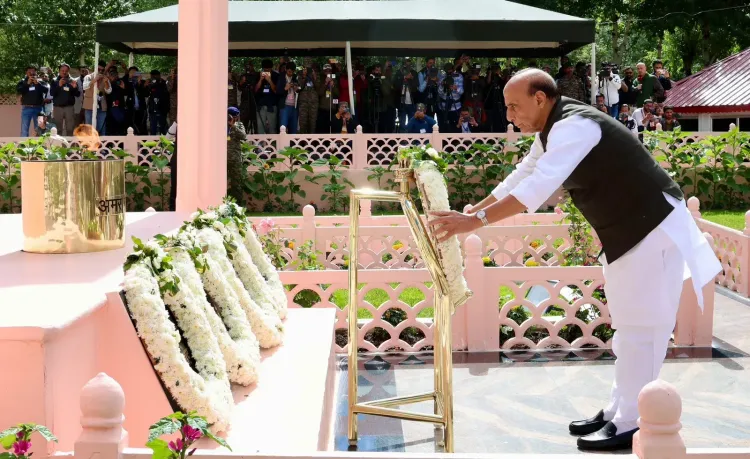
Union Defence Minister Rajnath Singh visited the Kargil War Memorial in Dras on 26 July 2026 to mark Kargil Vijay Diwas, paying tributes to Param Vir Chakra heroes Captain Vikram Batra and Captain Manoj Kumar Pandey, and calling the day a source of inspiration for India's youth.
Key Takeaways
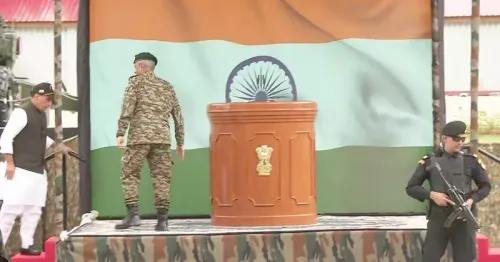
Rajnath Singh visited the Kargil War Memorial, Dras on 26 July 2026 to mark Kargil Vijay Diwas .
He paid specific tribute to Captain Vikram Batra and Captain Manoj Kumar Pandey , both posthumous Param Vir Chakra awardees.
The Defence Minister described Kargil Vijay Diwas as 'a day of inspiration' for young Indians to reflect on their responsibility toward the country.
The 1999 Kargil War was fought along the Line of Control in what is now Ladakh ; 26 July marks India's declaration of victory.
The ministerial visit to Dras continues an established annual tradition of on-ground commemoration at the principal war memorial.
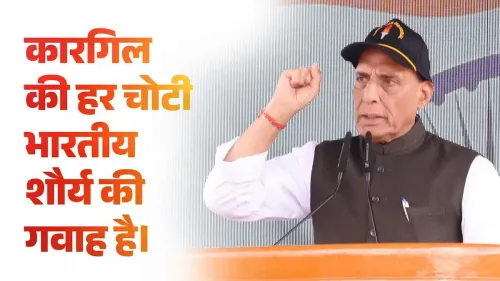
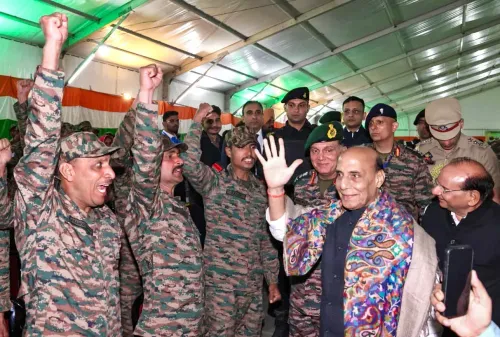
Union Defence Minister Rajnath Singh paid tributes to India's fallen soldiers at the Kargil War Memorial in Dras, Ladakh, on 26 July 2026, marking the 27th Kargil Vijay Diwas. He specifically remembered Captain Vikram Batra and Captain Manoj Kumar Pandey, both posthumous recipients of the Param Vir Chakra, calling them enduring sources of inspiration for the nation's youth.
Context
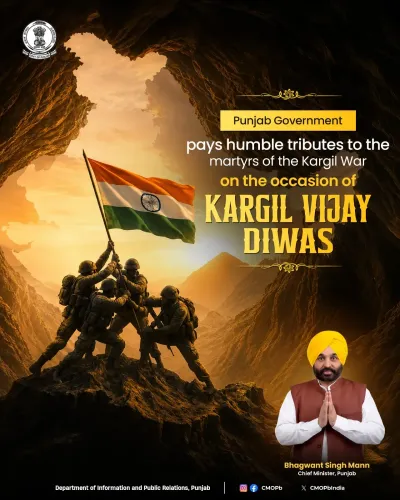
Kargil Vijay Diwas, observed every 26 July, marks India's declaration of victory in the 1999 Kargil War — a limited armed conflict with Pakistan fought along the Line of Control in the high-altitude terrain of what is now Ladakh. The Kargil War Memorial at Dras is the principal site of national commemoration, housing the names of soldiers who made the supreme sacrifice during the conflict.
Singh, in his post, described the day as 'a day of inspiration for every young person who seeks to understand his or her responsibility towards the country.' The tribute visit was accompanied by an official release from the Press Information Bureau.
The Fallen Heroes Remembered
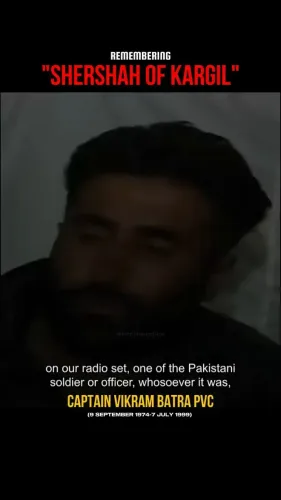
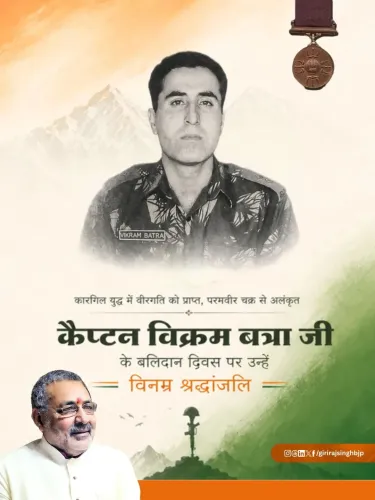
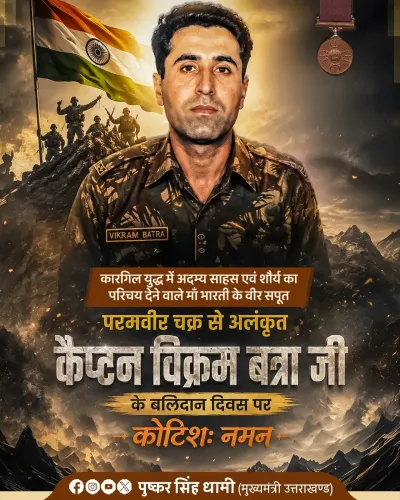
Captain Vikram Batra of the 13 JAK Rifles became one of the most celebrated officers of the Kargil conflict, famously signalling battlefield success with the phrase 'Yeh dil maange more' ('This heart wants more'). He was killed in action on 7 July 1999 while rescuing a fellow officer and was posthumously awarded the Param Vir Chakra, India's highest wartime gallantry honour.
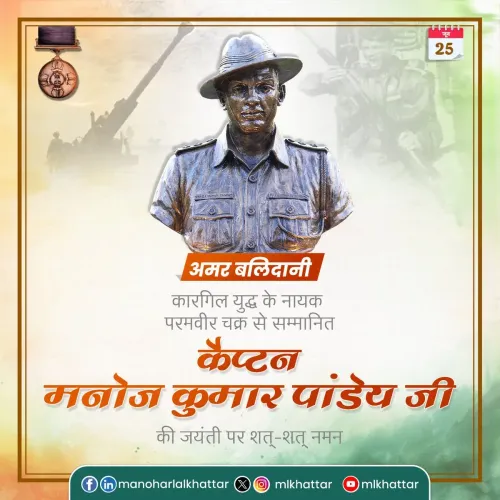
Captain Manoj Kumar Pandey of the 1/11 Gorkha Rifles led his platoon in the assault on the Khalubar heights and was fatally wounded while clearing enemy bunkers. He too was posthumously awarded the Param Vir Chakra. Both officers continue to be cited in military academies and public discourse as exemplars of selfless service.
Policy Backdrop
Annual observances at Kargil are a formal part of India's military commemorative calendar, reinforcing the country's commitment to honouring its armed forces and underlining narratives of territorial integrity. Since the 2019 reorganisation that granted Ladakh Union Territory status, the region has gained added strategic salience in national defence planning, with accelerated investment in border infrastructure along the northern frontier.
The Ministry of Defence has consistently used Kargil Vijay Diwas as an occasion to communicate defence-policy priorities to the public, particularly regarding border security and veterans' welfare. Singh's personal visit to Dras — rather than a ceremonial event in Delhi — underscores the government's emphasis on visible, on-ground solidarity with the armed forces.
Stakeholders and Impact
For the Indian armed forces and the families of Kargil martyrs, the annual ministerial visit to the War Memorial carries significant symbolic weight, affirming that the state continues to hold their sacrifice in the highest regard. Veterans' organisations have long advocated for sustained public recognition of Kargil heroes alongside concrete welfare measures.
For Indian youth, Singh's message carries a deliberate civic dimension: the Defence Minister framed the day not merely as an occasion for mourning but as a call to reflect on individual responsibility toward the nation — a theme consistent with the government's broader outreach to younger citizens on national security and civic duty.
What's Next
Attention will now turn to any follow-up announcements from the Ministry of Defence regarding veterans' initiatives, border infrastructure projects in Ladakh, or parliamentary statements linked to the Kargil Vijay Diwas observance. Next year's 28th anniversary in 2027 will mark another milestone in the conflict's commemorative cycle, and policy watchers will track whether the government announces substantive measures for martyrs' families or border-region development alongside the ceremonial tribute.
Point of View
Particularly as Ladakh's strategic profile has grown since its 2019 reorganisation as a Union Territory. By singling out Captains Batra and Pandey, the Defence Minister taps into two of India's most potent military-hero narratives, which carry cross-generational resonance beyond the armed forces community. The explicit address to 'every young person' reflects the BJP-led government's sustained effort to connect defence patriotism with civic mobilisation among younger voters and citizens. Taken together, the visit reinforces a broader policy arc in which border-region symbolism and military honour are integrated into both governance messaging and national identity-building.
NationPress
26 Jul 2026
Frequently Asked Questions
What is Kargil Vijay Diwas and why is it celebrated on 26 July?
Kargil Vijay Diwas is observed on 26 July every year to mark the day in 1999 when India declared victory in the Kargil War against Pakistan, recapturing strategic peaks along the Line of Control in Ladakh. It honours the soldiers who fought and died during the conflict.
Who were Captain Vikram Batra and Captain Manoj Kumar Pandey?
Captain Vikram Batra and Captain Manoj Kumar Pandey were Indian Army officers killed in action during the 1999 Kargil War and posthumously awarded the Param Vir Chakra , India's highest wartime gallantry honour. Batra is widely remembered for the phrase 'Yeh dil maange more' , while Pandey led the assault on the Khalubar heights.
Where is the Kargil War Memorial located?
The Kargil War Memorial is located in Dras , a strategic town in the Kargil district of Ladakh . It is the principal national site of commemoration for soldiers who died in the 1999 Kargil conflict .
Why did Rajnath Singh visit Dras on 26 July 2026?
Union Defence Minister Rajnath Singh visited the Kargil War Memorial in Dras on 26 July 2026 to pay official tributes on Kargil Vijay Diwas , honouring the courage and sacrifice of Indian soldiers, with special mention of Captain Vikram Batra and Captain Manoj Kumar Pandey .
What is the significance of Dras in the Kargil War?
Dras was one of the most critical sectors during the 1999 Kargil War , witnessing intense battles as Indian forces recaptured peaks occupied by Pakistani troops. It is home to the Kargil War Memorial and remains a symbol of the conflict's human and strategic cost.