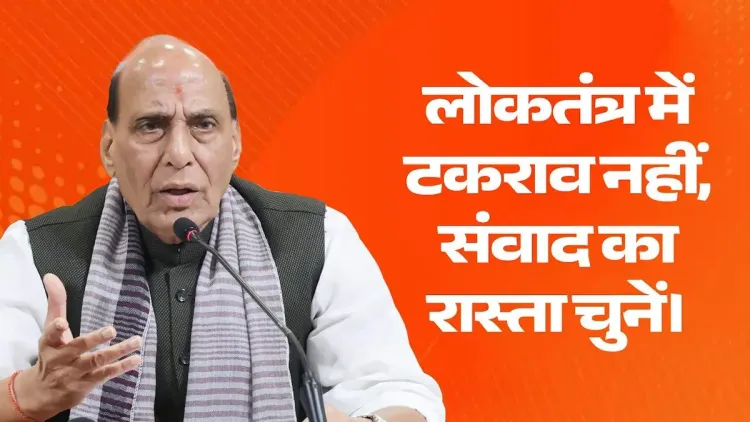
Rajnath Singh tells Rahul Gandhi: respect mandate, choose dialogue
Synopsis
Union Defence Minister Rajnath Singh publicly accused Rahul Gandhi and Congress allies of spreading anarchy under the guise of democracy and undermining constitutional institutions, demanding they respect the popular mandate and choose dialogue over disruption.
Key Takeaways
Rajnath Singh posted a direct rebuke of Rahul Gandhi and his associates on October 16, 2026 .
Singh accused the opposition of 'spreading anarchy in the name of democracy' and damaging constitutional institutions.
He demanded Gandhi rise above 'political self-interest' and respect the public mandate delivered through elections.
The post invokes India's development journey , framing opposition disruption as an obstacle to national progress.
Singh's status as a former CM and former Home Minister gives the rebuke higher political weight than routine party communication.
The BJP has levelled similar institutional-credibility charges against Congress since at least 2014 , following successive electoral victories.
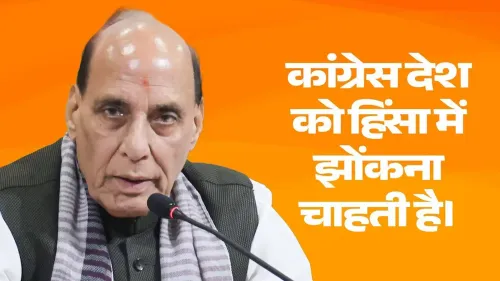
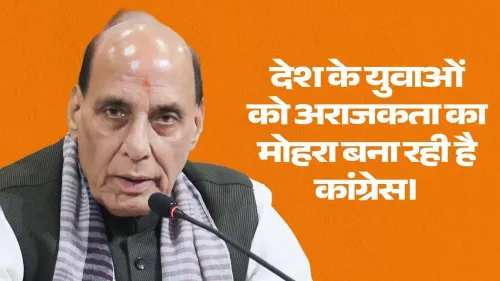
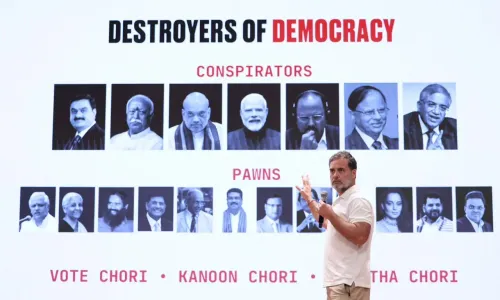
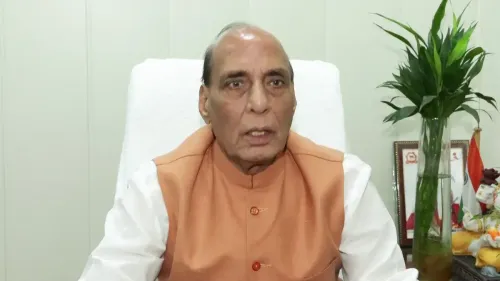
Spreading chaos in the name of democracy and striking at the credibility of constitutional institutions is unacceptable — those are the words Union Defence Minister Rajnath Singh directed squarely at the opposition on Friday, October 16, 2026, in a pointed post on X that named Rahul Gandhi and his associates by name.
In Hindi, Singh wrote: 'लोकतंत्र के नाम पर अराजकता फैलाना और संवैधानिक संस्थाओं की साख पर चोट करना स्वीकार्य नहीं है।' ('Spreading anarchy in the name of democracy and damaging the credibility of constitutional institutions is not acceptable.') He demanded that Gandhi and his colleagues rise above political self-interest, respect the popular mandate, and choose the path of 'dialogue, cooperation and nation-building' rather than obstructing India's development journey.
The charge sheet in one paragraph
Singh's language is deliberately layered. The phrase 'constitutional institutions' is a well-worn pressure point in BJP political rhetoric — it frames opposition disruptions not merely as legislative obstruction but as a threat to the Republic's architecture itself. The call to 'respect public opinion' is an equally direct reference to the electoral mandate the Bharatiya Janata Party holds at the centre, won across successive general elections in 2019 and 2024. Taken together, the post is less a policy statement and more a formal political indictment.
Gandhi and BJP's long-running institutional war of words
Rahul Gandhi, leader of the Indian National Congress and the principal face of the opposition, has clashed repeatedly with the ruling party over questions of democratic accountability. The BJP has, since at least 2014, characterised Congress-led walkouts and protests as parliamentary sabotage; the Congress has framed the same actions as the essential work of a democracy's check-and-balance machinery. Neither side has shown any sign of budging from this structural standoff.
What makes Singh's post notable is its authorship. As a senior cabinet minister and one of the BJP's most institutionally credible voices — a former Chief Minister of Uttar Pradesh and former Union Home Minister — his public rebuke carries more weight than a routine party spokesperson's statement. When Rajnath Singh speaks, it is generally read as reflecting a considered party position, not a stray tweet.
Why the 'development journey' framing matters
The choice to invoke India's 'development journey' is strategic. It pivots the argument from political grievance to national interest, casting any opposition disruption as a brake on economic progress rather than a legitimate democratic act. This framing has been a consistent plank of BJP governance communication, and its reappearance here signals the party intends to fight the next round of political contestation on that terrain.
Whether the Congress responds formally — in a press conference, on the floor of Parliament, or on social media — will tell its own story about the opposition's current appetite for a direct exchange with one of the government's heaviest hitters.
Point of View
A more damaging charge to answer. By invoking 'constitutional institutions' rather than a particular protest or walkout, he makes the argument structural, not episodic. The timing matters: such senior-level public rebukes typically precede or accompany a parliamentary session where the ruling party expects a rough ride and wants to pre-shape the narrative. Whether Congress can pivot from the defensive 'we are protecting democracy' posture to a more offensive counter-frame will determine the political cost of this salvo.
NationPress
16 Oct 2026
Frequently Asked Questions
What did Rajnath Singh say about Rahul Gandhi on October 16 2026?
Singh stated that spreading anarchy in the name of democracy and undermining constitutional institutions is unacceptable, and called on Rahul Gandhi and his associates to respect the public mandate and choose dialogue and nation-building over obstruction.
Why is Rajnath Singh criticising Rahul Gandhi?
Singh's post reflects the BJP's long-standing position that Congress-led opposition protests and disruptions damage parliamentary and constitutional institutions rather than serve democratic purposes.
What does 'respecting the popular mandate' mean in Indian politics?
In BJP political communication, it typically refers to the electoral victories the party has won in general elections, framing any sustained opposition challenge as a refusal to accept voters' verdict.
Is this a new policy announcement by Rajnath Singh?
No. The post is a political statement — a public rebuke of the opposition's conduct — not a policy or governance announcement.
How has Congress responded to Rajnath Singh's statement?
An official Congress response to this specific post has not been verified at the time of publication.