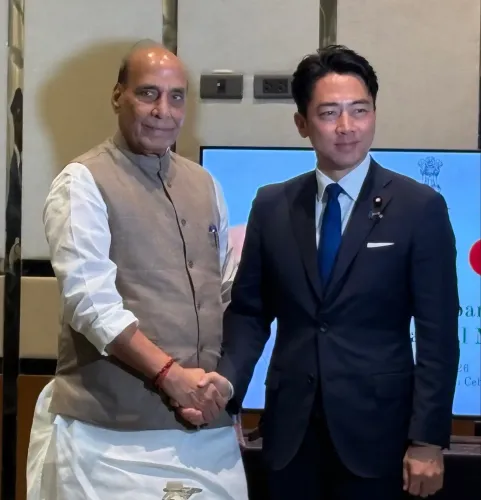
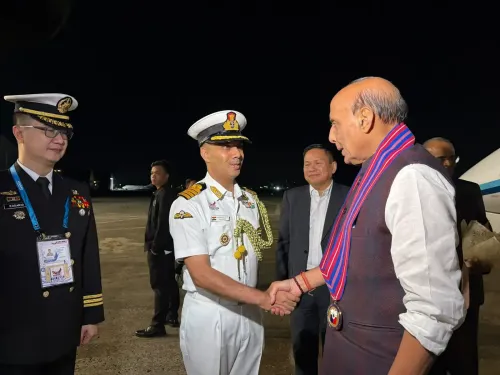
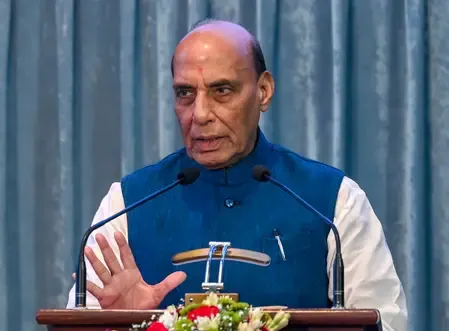
Rajnath Singh visits Cebu Gurudwara, meets Indian diaspora at ADMM-Plus
Synopsis
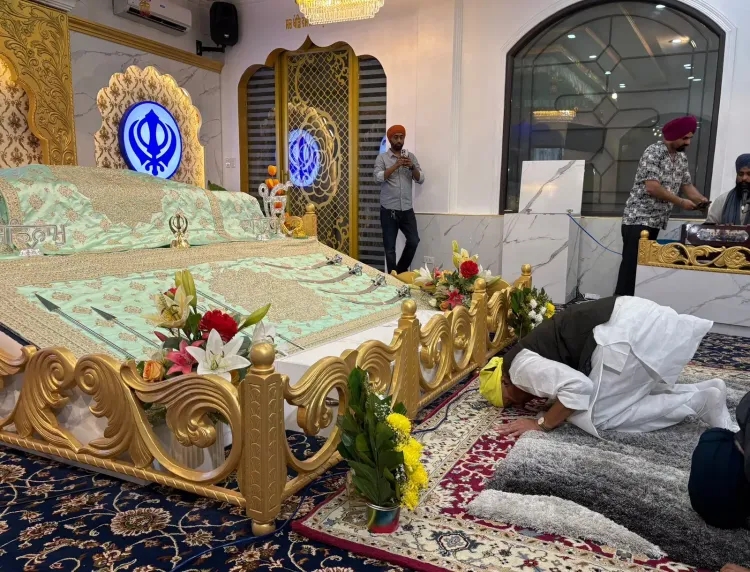
Union Defence Minister Rajnath Singh visited the Gurudwara at Gochan Street in Cebu City on 29 October 2026, meeting the Indian diaspora on the sidelines of the 13th ADMM-Plus forum, reaffirming India-Philippines people-to-people ties alongside formal defence diplomacy.
Key Takeaways
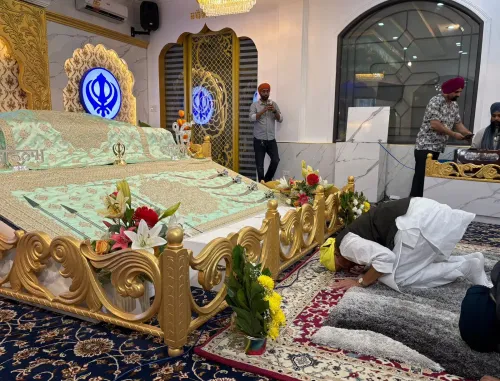
Rajnath Singh visited the Gurudwara complex at Gochan Street, Cebu City on 29 October 2026 .
The visit was part of community outreach on the sidelines of the 13th ADMM-Plus multilateral defence forum.
Singh interacted with Indian diaspora members in Cebu, recognising their role in preserving Indian culture and strengthening people-to-people ties with the Philippines.
India has participated in every ADMM-Plus since the forum's founding in 2010 .
The visit reflects India's broader Act East Policy, which frames Southeast Asia as central to its strategic and people-centric outreach.
Thousands of kilometres from New Delhi, on the sidelines of a major multilateral defence forum, Union Defence Minister Rajnath Singh stepped off the diplomatic circuit and into a Gurudwara in the heart of the Philippines — a deliberate signal that India's strategic outreach is as much about people as it is about policy.
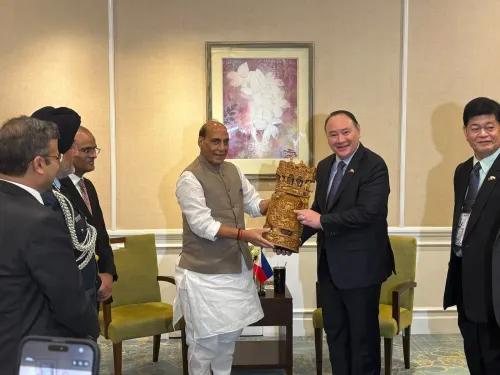
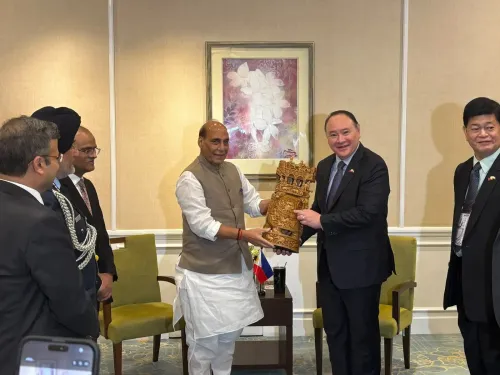
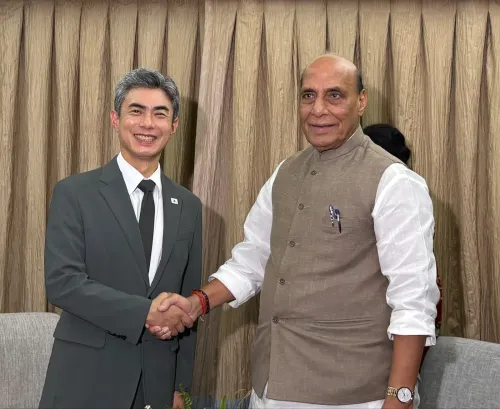
On Thursday, 29 October 2026, Singh visited the Gurudwara complex at Gochan Street in Cebu City, where he interacted with members of the Indian diaspora on the margins of the 13th ASEAN Defence Ministers' Meeting Plus (ADMM-Plus). He acknowledged the community's role in preserving Indian culture and in deepening people-to-people ties between India and the Philippines.
Why a Gurudwara visit matters at a defence summit
The ADMM-Plus is one of Asia-Pacific's most consequential multilateral defence platforms, bringing together the ten ASEAN member states and eight dialogue partners — including India — to build regional security architecture. India has been part of the forum since its launch in 2010, using it to advance interoperability, humanitarian cooperation, and maritime security dialogue with Southeast Asian partners.
But Singh's stop at the Gochan Street Gurudwara was not incidental. Indian ministers attending ASEAN-centred forums have increasingly combined official sessions with community outreach — a pattern that reflects New Delhi's wider understanding that soft power and diaspora networks are strategic assets, not just ceremonial footnotes.
India-Philippines ties and the Act East backbone
The Philippines sits at the centre of India's Act East Policy, a framework that has steadily elevated defence and economic engagement with Southeast Asia. Bilateral defence ties between the two countries have expanded in recent years, with India emerging as a potential defence supplier and partner in maritime domain awareness — a priority for Manila given its contested maritime environment in the South China Sea.
Cebu City, the venue for the 13th ADMM-Plus, is the Philippines' second-largest urban centre and a hub for its Visayas region — lending the meeting, and Singh's community visit, a reach beyond the national capital.
Diaspora as a bridge between New Delhi and Manila
The Indian community in the Philippines, though smaller than diaspora concentrations in the Gulf or North America, has maintained strong cultural and commercial ties to the homeland. By visiting the Gurudwara and engaging directly with community members, Singh reinforced the message that the Indian state sees its overseas citizens as active participants in bilateral relationship-building — not passive beneficiaries of consular services.
As the 13th ADMM-Plus concludes, any joint statements or follow-up bilateral defence engagements between India and the Philippines will indicate how much the formal diplomacy matched the warmth of the community outreach.
Point of View
Where people-to-people connectivity is treated as a strategic instrument alongside defence pacts and trade agreements. For the India-Philippines relationship specifically — still maturing on the defence side — cementing diaspora bonds provides a durable foundation that outlasts any single ministerial visit. Watch whether the 13th ADMM-Plus produces concrete India-Philippines defence deliverables to match the symbolic warmth.
NationPress
29 Oct 2026
Frequently Asked Questions
What is ADMM-Plus and why is India part of it?
ADMM-Plus stands for ASEAN Defence Ministers' Meeting Plus. It is a multilateral defence forum that brings together the ten ASEAN members and eight dialogue partners — including India — to advance regional security cooperation. India has been a participant since the forum's launch in 2010.
Why did Rajnath Singh visit a Gurudwara in the Philippines?
Singh visited the Gurudwara complex at Gochan Street in Cebu City as part of community outreach to the Indian diaspora on the sidelines of the 13th ADMM-Plus meeting, acknowledging their role in preserving Indian culture and deepening India-Philippines people-to-people ties.
Where is the 13th ADMM-Plus being held?
The 13th ADMM-Plus is being held in Cebu City, the Philippines, which is the country's second-largest urban centre.
What is India's Act East Policy?
India's Act East Policy is a strategic framework that prioritises defence, economic, and people-to-people engagement with Southeast Asian nations. It treats countries like the Philippines as central partners in India's Indo-Pacific strategy.
What is the significance of the Indian diaspora in the Philippines?
The Indian community in the Philippines maintains cultural and commercial ties with India and is seen by New Delhi as an important bridge for strengthening bilateral people-to-people connections, as highlighted by Singh's visit.