Rajya Sabha passes Births & Deaths Amendment Bill 2026 amid Opposition uproar
Synopsis
The Rajya Sabha cleared the Registration of Births and Deaths (Amendment) Bill, 2026 by voice vote on 4 August — even as Opposition members drowned out the debate with slogans. The most consequential change: for registrations delayed beyond two years, authority shifts from executive magistrates to Judicial Magistrates of the First Class, a structural check aimed at curbing fake civil records.
Key Takeaways
The Rajya Sabha passed the Registration of Births and Deaths (Amendment) Bill, 2026 by voice vote on 4 August amid Opposition protests.
The Lok Sabha had already cleared the Bill on 31 July .
For registration delays of one to two years , an executive magistrate's order remains sufficient; delays beyond two years will now require a Judicial Magistrate of the First Class .
The shift moves oversight of long-delayed registrations from the executive to the judiciary, with the aim of preventing fake records.
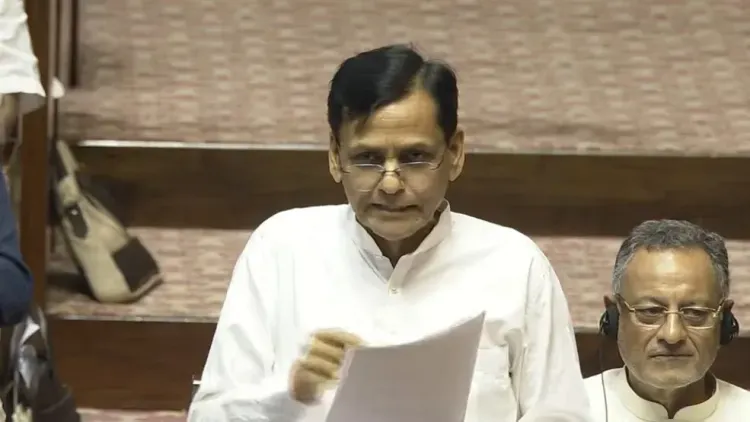
Minister of State for Home Affairs Nityanand Rai moved the Bill; the Home Minister's absence drew repeated Opposition objections.
The Bill now awaits Presidential assent before coming into force.
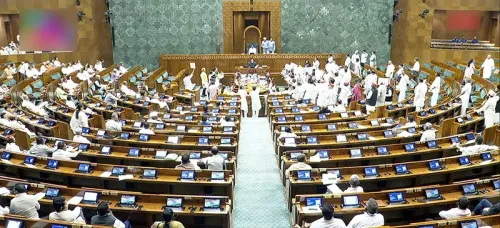
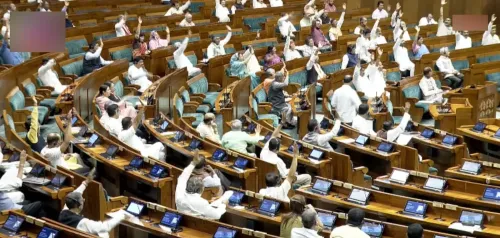
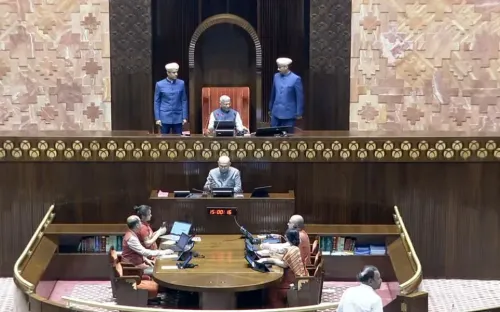
The Rajya Sabha on Tuesday, 4 August passed the Registration of Births and Deaths (Amendment) Bill, 2026 by a voice vote amid relentless sloganeering and protests by Opposition members. The upper house cleared the legislation after a truncated debate, with the Lok Sabha having already approved the Bill on 31 July.
What the Bill Changes
The amendment revises the Registration of Births and Deaths Act, 1969, introducing a stricter two-tier system for delayed registrations. Under the new framework, births and deaths registered with a delay of one to two years will continue to require an order from a district magistrate, sub-divisional magistrate, or an authorised executive magistrate. For delays exceeding two years, however, the authorising order must now come exclusively from a Judicial Magistrate of the First Class — shifting oversight from the executive to the judiciary for the most delayed cases.
The stated objective is to prevent fake records and improve the accuracy and reliability of India's civil registration and population data. Minister of State for Home Affairs Nityanand Rai, who moved the Bill, said the legislation seeks to ensure registration of every birth and death across the country.
How the Debate Unfolded
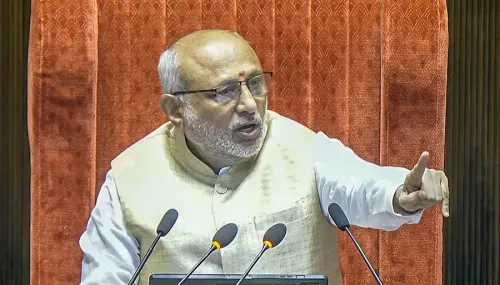
When the House reassembled at 2 pm, Deputy Chairman Harivansh Narayan Singh called on Nityanand Rai to move the motion. Leader of Opposition Mallikarjun Kharge was permitted to speak briefly, but insisted that order could be restored only if the Prime Minister and the Home Minister addressed the House — a demand the Chair did not accept.
Several Opposition members — including Fulo Devi Netam of the Indian National Congress (Chhattisgarh) and Tiruchi Siva of the Dravida Munnetra Kazhagam (Tamil Nadu) — pressed for the Home Minister's presence, arguing the Bill fell under his ministry. The Deputy Chairman repeatedly directed members to confine their remarks to the Bill, cutting short multiple interventions.
A.A. Rahim and Santosh Kumar P. of the Communist Party of India (Marxist) also questioned the Home Minister's absence. Santosh Kumar P. remarked, 'Home Minister is the subject of the Bill.' V. Sivadasan of the CPI(M) formally opposed the legislation.
Members Who Participated
Despite the disruptions, several members contributed to the debate, including Meda Raghunadha Reddy (YSRCP, Andhra Pradesh), Dr M. Thambidurai and Dr M. Dhanpal (AIADMK, Tamil Nadu), Ravi Chandra Vaddiraju (BRS, Telangana), Pramod Boro (United People's Party Liberal, Assam), Biswajit Sinha (BJP, West Bengal), and Jyoti Nagnath Waghmare (Shiv Sena, Maharashtra).
What Happens Next
Following the Bill's passage, the Deputy Chairman adjourned the House till Wednesday. With both chambers now having cleared the legislation, it will proceed for Presidential assent before coming into force. The shift of authority over long-delayed registrations to the judiciary is expected to have significant downstream implications for civil documentation, identity verification, and India's population data infrastructure.
Point of View
Which is already under severe strain. What the debate also revealed is a parliament increasingly unable to deliberate on technical legislation: a Bill amending a 57-year-old civil registration law deserved more than a shouted exchange about ministerial attendance. The Opposition's procedural grievance — that the Home Minister should have piloted his own Ministry's Bill — was not unreasonable, but it crowded out any substantive scrutiny of the amendment's implementation mechanics.
NationPress
4 Aug 2026
Frequently Asked Questions
What is the Registration of Births and Deaths (Amendment) Bill, 2026?
It is a parliamentary amendment to the Registration of Births and Deaths Act, 1969, passed by the Rajya Sabha on 4 August 2026. The Bill introduces a two-tier system for delayed registrations, requiring a Judicial Magistrate of the First Class to authorise registrations delayed by more than two years, with the aim of curbing fake civil records.
What changes does the Bill make to delayed birth and death registrations?
Under the amended law, registrations delayed by one to two years still need an order from a district magistrate or sub-divisional magistrate. For delays exceeding two years, the order must now come from a Judicial Magistrate of the First Class — shifting that authority from the executive to the judiciary.
Why did the Opposition protest during the Bill's passage?
Opposition members, including Congress leader Mallikarjun Kharge and DMK's Tiruchi Siva, objected to the Home Minister's absence from the House during debate on a Bill pertaining to his ministry. Several members demanded that the Prime Minister and Home Minister address the House before proceedings continued.
Has the Bill been passed by both Houses of Parliament?
Yes. The Lok Sabha passed the Bill on 31 July 2026, and the Rajya Sabha cleared it by voice vote on 4 August 2026. It now awaits Presidential assent before coming into force.
Why does the shift to judicial oversight matter?
Routing long-delayed registrations through a Judicial Magistrate rather than an executive official is intended to add an independent check against fraudulent birth and death certificates. Accurate civil registration underpins identity documents, welfare delivery, and India's population data — making the reliability of these records a significant governance concern.