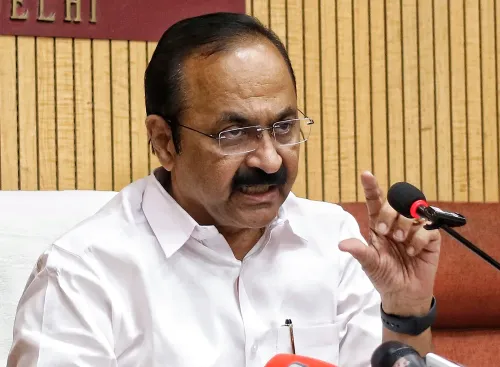
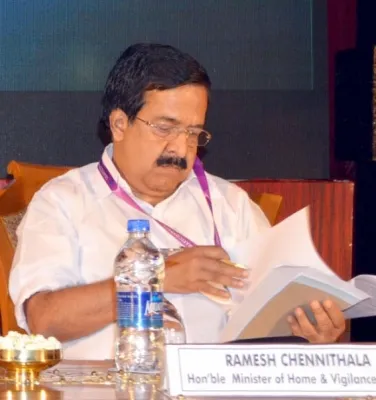
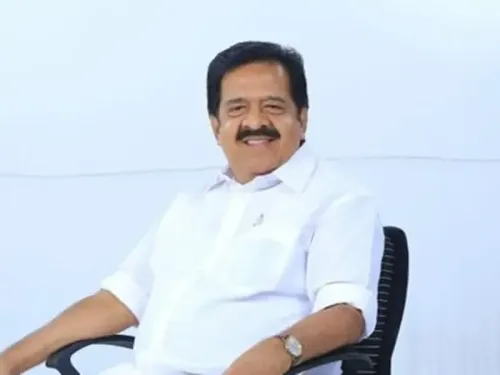
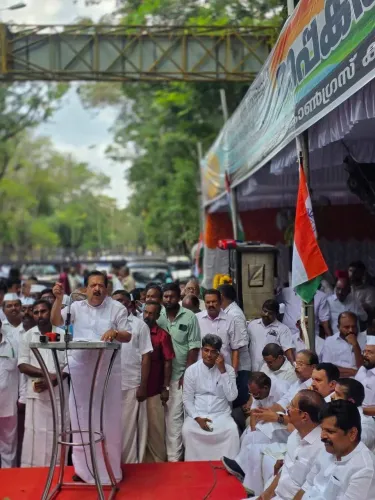
Did CWC Member Ramesh Chennithala Criticize KIIFB for 'Election-Driven' Advertising?
Synopsis
In a heated debate, Ramesh Chennithala criticizes KIIFB for alleged misuse of funds for electoral advertising. He urges transparency on financial dealings and warns of potential audits under future governance, highlighting significant political implications.
Key Takeaways
Ramesh Chennithala criticizes the KIIFB for alleged misuse of funds.
Claims of advertisement spending influencing bond ratings are dismissed.
Spending spikes during election years suggest political motivations.
Chennithala calls for transparency in financial dealings.
A future UDF government may pursue legal action if irregularities are found.
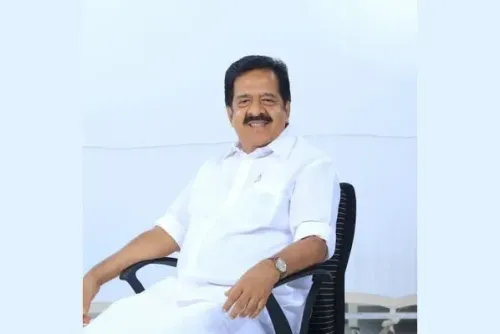
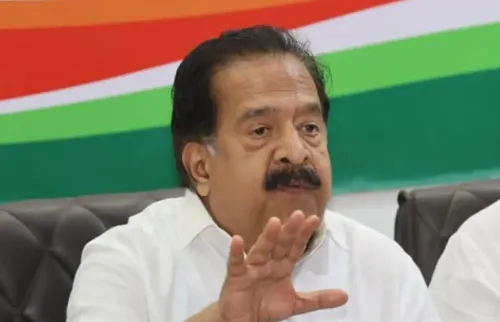
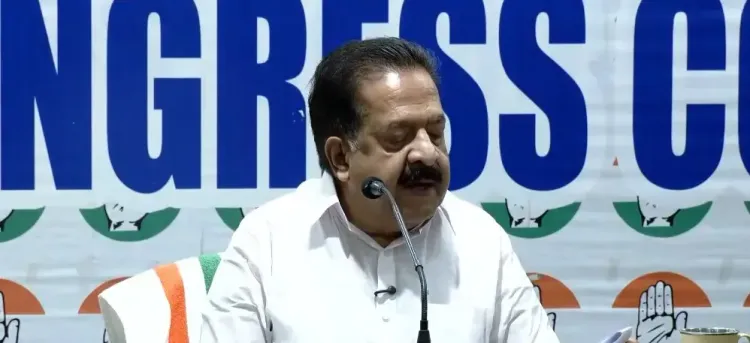
Thiruvananthapuram, Feb 17 (NationPress) Senior Congress Working Committee member and prominent legislator Ramesh Chennithala has escalated his denunciation against the Kerala Infrastructure Investment Fund Board (KIIFB), asserting that significant funds are being misappropriated under the pretext of advertising to bolster the government's electoral agenda.
In reply to a statement made by the CEO of KIIFB following his previous press briefing, Chennithala dismissed the clarification as “deceptive” and out of touch with financial truths. KIIFB has argued that their advertising initiatives have improved their financial ratings.
Chennithala countered this argument, stating, “If advertising influences ratings, then entities that invest the most in advertisements should receive the highest ratings.”
While he acknowledged that KIIFB bonds had garnered commendable ratings, he emphasized that visibility within Kerala does not contribute to achieving Double A or Triple A ratings. He highlighted that rating agencies consider metrics such as cash flow, institutional financial stability, and government guarantees, rather than regional promotional activities.
He described the assertion that Malayalam advertisements targeting local populations affect global bond ratings as unfounded. Chennithala accused that advertisement spending surges significantly in election years, reaching ten to twelve times higher than in non-election years, suggesting a political agenda. “This is not about bond ratings but rather about preserving the government’s power,” he stated.
He further maintained that neither the 1999 KIIFB Act nor its 2017 amendment permits expenditure exceeding Rs 100 crore on multimedia advertising projects.
Although the Act allows KIIFB to secure loans at rates up to 1 percent above other governmental borrowings, he mentioned that the agency has issued bonds with average interest rates of 9.5 percent, with the contentious masala bonds nearing 9.8 percent.
Chennithala highlighted that a large part of the borrowed funds had been utilized for interest repayments.
Raising additional concerns, Chennithala pointed to substantial amounts allegedly transferred to personal accounts labeled as “advertisement,” even though recipients were referred to as PWD-sanctioned contractors. He demanded transparency regarding the processing of such payments. Furthermore, he questioned KIIFB’s claim of institutional independence, noting that its CEO also leads the Chief Minister’s political office.
He warned that a future UDF government would mandate a forensic audit and pursue legal action should any irregularities be uncovered.
Point of View
This controversy surrounding Ramesh Chennithala and the KIIFB reflects ongoing tensions between political accountability and financial governance. The implications of these allegations could potentially shape the political landscape in Kerala, making it crucial for the public to remain informed.
NationPress
30 Sept 2026
Frequently Asked Questions
What allegations did Ramesh Chennithala make against KIIFB?
Ramesh Chennithala alleged that KIIFB is misusing funds for electoral advertising, diverting crores of rupees to support the government's campaign.
How does Chennithala view KIIFB's claims about advertisement spending?
Chennithala dismisses KIIFB's claims as misleading, arguing that advertising does not impact bond ratings as they assert.
What actions does Chennithala propose if irregularities are found?
He warns that a future UDF government would conduct a forensic audit and pursue legal actions against any identified irregularities.