RBI Governor: 0.4% UPI MDR fee won't dent digital payments volumes
Synopsis
For the first time since 2020, UPI is getting an MDR — and the RBI Governor is publicly backing it. Sanjay Malhotra says volumes won't drop, but with 15 October just days away, the payments industry is watching closely to see if India's digital payments juggernaut can absorb its first merchant fee in six years without a behavioural shift.
Key Takeaways
RBI Governor Sanjay Malhotra said on 7 October 2026 that a new UPI MDR fee will not hurt digital payments volumes.
From 15 October , an MDR of 0.4% applies to P2M UPI transactions above ₹2,000 , capped at ₹300 for transactions of ₹75,000 and above .
Approximately 96% of all P2M transactions will remain free and unaffected.
All P2P transfers and merchant payments up to ₹2,000 remain completely free.
Essential sectors — railways, telecom, insurance, fuel, agricultural inputs — will pay a flat ₹5 MDR on transactions above ₹2,000.
The MDR is distributed among banks, payment service providers, and UPI app providers — not collected by the government or NPCI.
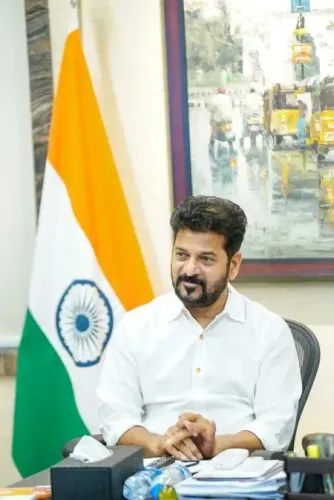
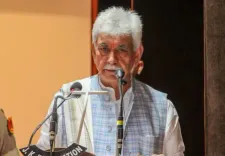
Reserve Bank of India (RBI) Governor Sanjay Malhotra on Wednesday, 7 October 2026, said the newly introduced Merchant Discount Rate (MDR) on select Unified Payments Interface (UPI) transactions is a modest levy that will not erode the country's digital payments momentum. Speaking at a press conference in Mumbai following the RBI's monetary policy announcement, Malhotra offered the clearest official signal yet that regulators do not expect a volume slowdown once the new framework kicks in on 15 October.
What the RBI Governor Said
'MDR decision has already been taken. As of now, we do not see any drop in volumes. I don't personally think a small fee will have any impact on UPI volumes,' Malhotra said, responding to a media query at the post-policy press conference.
His remarks come roughly a week before the new UPI payment framework goes live. The statement is notable because it is one of the first on-record acknowledgements from the RBI's top official that volumes are being actively tracked ahead of the transition.
How the New MDR Framework Works
From 15 October, an MDR of 0.4 per cent will apply to select person-to-merchant (P2M) UPI transactions exceeding ₹2,000. For transactions of ₹75,000 and above, the MDR will be capped at ₹300 per transaction.
Transactions above ₹2,000 in essential and thin-margin sectors — including railways, telecommunications, insurance, fuel, and agricultural inputs — will attract a flat MDR of ₹5 per transaction, providing cost certainty for critical public services.
Importantly, the charge does not apply to person-to-person (P2P) transfers of any amount. Payments to merchants up to ₹2,000, as well as transactions under the existing zero-MDR framework for small merchants, will also remain free. Consequently, approximately 96 per cent of all P2M transactions will remain unaffected.
Where the MDR Money Goes
The Finance Ministry has clarified that MDR is neither a tax nor a charge collected by the government or the National Payments Corporation of India (NPCI). The levy will instead be distributed among payment ecosystem participants — including banks, payment service providers, and UPI application providers — to fund the operation and continued expansion of the UPI network.
This distinction is significant: UPI's rapid scale-up has long been subsidised by the government, and the MDR is intended to shift some of that cost to the ecosystem itself, making the infrastructure financially self-sustaining over time.
Context and What to Watch
UPI processed over 14 billion transactions a month at its most recent peak, making it one of the world's largest real-time payments networks. Critics have argued that even a small fee could disincentivise merchants — particularly smaller ones — from accepting UPI for larger-ticket purchases. The government and RBI counter that the 96 per cent exemption threshold addresses that concern.
Notably, this is the first time an MDR has been reintroduced on UPI since the government scrapped it in 2020 to accelerate adoption. The pivot signals a shift from growth-at-any-cost to a sustainability model. Whether merchant and consumer behaviour shifts materially after 15 October will be closely watched by the payments industry and policymakers alike.
Point of View
And the cap structure is thoughtful. But the real test is merchant behaviour at the ₹2,000 threshold, where rounding-down pressure could fragment the seamless experience UPI built its dominance on. More broadly, the shift from subsidy to self-funding is overdue; the question is whether the ecosystem — particularly smaller payment app providers who have lived on zero-MDR economics — can recalibrate fast enough.
NationPress
7 Oct 2026
Frequently Asked Questions
What is the new UPI MDR fee and when does it apply?
From 15 October, a Merchant Discount Rate (MDR) of 0.4% applies to person-to-merchant UPI transactions above ₹2,000, capped at ₹300 for transactions of ₹75,000 and above. All person-to-person transfers and merchant payments up to ₹2,000 remain completely free.
Will the UPI MDR fee affect most transactions?
No. Approximately 96% of all P2M transactions will remain unaffected, according to the government. The MDR applies only to specified merchant transactions above ₹2,000 outside the zero-MDR small-merchant framework.
Who receives the MDR collected on UPI transactions?
The MDR is not a tax or government revenue. It is distributed among banks, payment service providers, and UPI application providers to fund the operation and expansion of the UPI infrastructure, according to the Finance Ministry.
Are any sectors exempt from the 0.4% MDR even above ₹2,000?
Yes. Transactions above ₹2,000 in essential sectors — including railways, telecommunications, insurance, fuel, and agricultural inputs — will attract a flat fee of just ₹5 per transaction instead of the 0.4% rate, providing cost certainty for thin-margin businesses.
Why is the UPI MDR being reintroduced now?
The government scrapped MDR on UPI in 2020 to accelerate adoption. The reintroduction signals a shift toward a self-sustaining ecosystem model, where payment infrastructure costs are gradually borne by the ecosystem rather than subsidised entirely by the government.