RBI eases forex reporting rules for small service exporters, importers

Synopsis
The RBI has quietly removed a key compliance hurdle for India's small service exporters and freelancers — no more Export Declaration Form filing for individuals, and no IDPMS entry for transactions under ₹10 lakh. Effective retrospectively from 1 October 2026, the move could push more small-scale cross-border service transactions into formal banking channels.
Key Takeaways
The RBI notified the FEMA (Export and Import of Goods and Services) (Second Amendment) Regulations, 2026 on Tuesday, 3 November 2026 .
Changes are effective retrospectively from 1 October 2026 .
Resident individual service exporters are now deemed to have filed the Export Declaration Form (EDF) once they share payment details with their authorised dealer bank.
For non-individual exporters, the simplified EDF treatment applies only if inward remittance does not exceed ₹10 lakh .
IDPMS reporting for service imports is no longer required for resident individuals or for importers with invoice/contract value up to ₹10 lakh .
Authorised dealer banks must still enter service import details within five working days for transactions above ₹10 lakh by non-individuals.
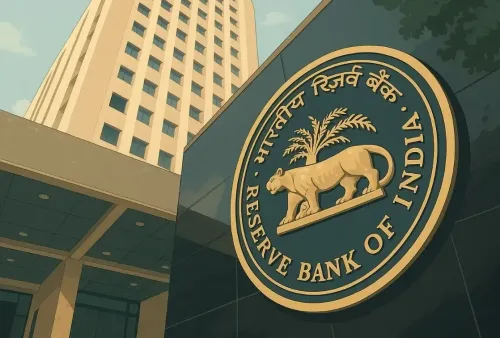
The Reserve Bank of India (RBI) has amended foreign exchange reporting requirements for small exporters and importers of services, significantly reducing compliance burdens for resident individuals and businesses handling transactions below ₹10 lakh. The changes, notified on Tuesday through the Foreign Exchange Management (Export and Import of Goods and Services) (Second Amendment) Regulations, 2026, took effect retrospectively from 1 October 2026.
What Changed for Service Exporters
Under the amended framework, resident individual service exporters will now be deemed to have submitted the Export Declaration Form (EDF) automatically, once they provide payment-related information to their authorised dealer bank for crediting proceeds to their accounts. This removes the need for a separate EDF filing, streamlining what was previously a multi-step process.
For exporters other than resident individuals — such as firms or companies — the same simplified treatment applies provided the inward remittance for the service does not exceed ₹10 lakh or its equivalent in foreign currency. Transactions above that threshold continue to follow existing reporting protocols.
Eased Import Reporting Under IDPMS
The RBI has also relaxed reporting requirements for service imports under the Import Data Processing and Monitoring System (IDPMS). Under the revised rules, authorised dealer banks are required to enter service import details in IDPMS within five working days of receiving the relevant details — but only for importers other than resident individuals, and only where the invoice or contract value exceeds ₹10 lakh.
This effectively removes the IDPMS reporting obligation entirely for resident individuals, and also exempts other importers undertaking service imports valued at up to ₹10 lakh. The notification further clarifies the definition of a resident individual as 'a person resident in India who is a natural person,' distinguishing them from companies and other business entities.
Background and Context
The amendments build on the principal FEMA regulations notified on 13 January, which were subsequently amended in September. The latest revision represents the second amendment to those regulations in 2026. Notably, India's services export sector has grown substantially in recent years, with IT, consulting, and freelance digital services accounting for a significant share of foreign exchange inflows. Compliance costs for small exporters and individual freelancers had long been flagged as a friction point by industry bodies.
Impact on Small Exporters and Freelancers
The changes are expected to directly benefit individual freelancers, consultants, and small businesses that export services — a segment that has expanded rapidly with India's growing gig and digital economy. By removing the EDF filing requirement for individuals and the IDPMS entry for sub-₹10 lakh transactions, the RBI is aligning compliance norms more closely with the scale and nature of such transactions.
Industry observers note that the retrospective effective date of 1 October 2026 also provides relief for those who had already completed transactions without full compliance under the older framework. Going forward, the simplification is likely to encourage more small service providers to route foreign payments through formal banking channels.
Point of View
Consultants, and micro-exporters now account for a meaningful share of foreign inflows, yet the compliance architecture had not kept pace. Removing the EDF burden for individuals and the IDPMS threshold for sub-₹10 lakh transactions is a sensible calibration, but the retrospective effective date raises a question: why the lag between October 1 and the November 3 notification? Businesses that completed transactions in that gap deserved clearer guidance sooner. The larger opportunity — simplifying FEMA compliance end-to-end for the gig economy — remains only partially addressed.
NationPress
3 Nov 2026
Frequently Asked Questions
What has the RBI changed for small service exporters?
The RBI has amended FEMA regulations so that resident individual service exporters are automatically deemed to have filed the Export Declaration Form (EDF) once they share payment details with their authorised dealer bank — no separate EDF submission is required. For non-individual exporters, the same simplified treatment applies if the inward remittance does not exceed ₹10 lakh.
When do the new RBI forex rules take effect?
The amended regulations took effect retrospectively from 1 October 2026, even though the RBI notified them on 3 November 2026. This means transactions completed after 1 October are also covered by the relaxed norms.
What is the IDPMS and how have the import rules changed?
The Import Data Processing and Monitoring System (IDPMS) is the RBI's platform for tracking service import payments. Under the revised rules, resident individuals are fully exempt from IDPMS reporting, and other importers are exempt if their service import invoice or contract value does not exceed ₹10 lakh. Banks must still file details within five working days for non-individual importers with transactions above that threshold.
Who benefits most from these changes?
Individual freelancers, independent consultants, and small businesses that export or import services in amounts below ₹10 lakh stand to benefit most. The changes reduce their paperwork and compliance costs when receiving or making foreign payments through authorised dealer banks.
How do these amendments relate to earlier FEMA regulations?
The latest changes represent the second amendment in 2026 to the principal FEMA (Export and Import of Goods and Services) Regulations, which were originally notified on 13 January. A first amendment was made in September; this November notification makes further targeted adjustments to EDF and IDPMS reporting thresholds.