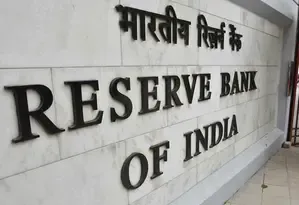
RBI bulletin: India's economy resilient amid global headwinds in July 2026
Synopsis
The RBI's August 2026 bulletin paints a cautiously optimistic picture: industrial output at a near two-year high, exports at a four-month high, and credit growth holding firm — even as headline inflation nudged above target and the merchandise trade deficit widened on electronic goods. The data suggests India's domestic engine is running, but global crosswinds from US tariffs and West Asia tensions haven't gone away.
Key Takeaways
The RBI 's monthly bulletin released on 25 August 2026 affirms India's economic resilience amid US tariffs and West Asia geopolitical risks.
Industrial production recorded its strongest growth in nearly two years in June 2026 , backed by broad-based manufacturing acceleration.
Merchandise exports hit a four-month high in 2026-27 so far, though the trade deficit widened due to electronic goods imports.
Headline CPI inflation edged above target, driven by supply-side factors; core inflation remained stable.
The Centre's fiscal deficit rose marginally in Q1:2026-27 year-on-year, accompanied by higher capital expenditure; state fiscal deficits were lower.
Southwest monsoon recovery in July brought kharif sowing closer to normal acreage, easing agriculture sector risks.
India's economy has demonstrated notable resilience against ongoing global headwinds, driven by buoyant domestic demand and accelerating manufacturing and services activity, according to the Reserve Bank of India (RBI)'s monthly bulletin released on Tuesday, 25 August 2026. The bulletin flags geopolitical frictions in West Asia and fresh US tariffs as the primary external risks, while affirming that robust macroeconomic fundamentals continue to cushion the domestic economy.
Domestic Demand and Industrial Activity
The momentum seen in Q1:2026-27 carried into July 2026, with domestic demand remaining buoyant across multiple indicators — including vehicle sales, tractor sales, and petroleum product consumption, which returned to positive growth after three consecutive months of contraction. Industrial production recorded its strongest growth in nearly two years in June 2026, underpinned by a broad-based acceleration in manufacturing. The services sector, too, exhibited resilience, the bulletin noted.
Agriculture and Food Security
A recovery in the southwest monsoon in July helped kharif sowing approach normal acreage, partially offsetting risks to the agriculture sector. The government has also announced an Open Market Sales Scheme for the current financial year, backed by a high stock of public foodgrains, aimed at augmenting supply and stabilising prices.
Inflation and Financial Conditions
Headline CPI inflation edged above the target during the period, primarily due to supply-side pressures. However, the bulletin noted that stable core inflation reaffirmed a lower pass-through of cost pressures into broader price levels — a signal that demand-side inflationary risks remain contained. Financial conditions were characterised by high credit growth, comfortable liquidity, and softening government securities (G-sec) yields, supported by a rebound in capital inflows. Liquidity conditions eased during the period, supporting credit expansion and ongoing investment activity.
External Sector and Trade
Foreign capital inflows rebounded in July, reinforcing the external sector's position. Both merchandise exports and imports grew strongly in July 2026, with exports clocking a four-month high in the 2026-27 fiscal so far. The merchandise trade deficit, however, widened in July — both sequentially and on a year-on-year basis — primarily reflecting a wider deficit in electronic goods.
Fiscal Position
The Centre's fiscal deficit increased marginally in Q1:2026-27 compared to the same period last year, accompanied by higher capital expenditure — a trend economists broadly view as growth-supportive. State-level fiscal positions fared better, with the gross fiscal deficit of states remaining lower during the same period. System liquidity improved through July and August; a temporary narrowing in the second half of July, caused by tax outflows, reversed in August as government cash balances were drawn down and measures to attract capital took effect. With global uncertainty far from resolved, India's near-term economic trajectory will hinge on how monsoon outcomes, global commodity prices, and US trade policy evolve in the months ahead.
Point of View
But a widening trade deficit driven by electronic goods imports signals that domestic manufacturing has yet to fully substitute for imports in high-value segments — the very gap PLI schemes were designed to close. The CPI overshoot, even if supply-driven, limits the RBI's room to ease further without risking credibility. Most critically, the bulletin's optimism is explicitly conditional on global stability that does not currently exist: US tariff escalation and West Asia tensions are live risks, not resolved ones. India's resilience is real, but it is being tested in real time.
NationPress
10 Oct 2026
Frequently Asked Questions
What does the RBI August 2026 bulletin say about India's economy?
The RBI's monthly bulletin released on 25 August 2026 states that India's economy has shown notable resilience to global headwinds, supported by buoyant domestic demand, strong industrial production, and rebounding capital inflows. It flags US tariffs and West Asia geopolitical tensions as the primary external risks.
How did India's industrial production perform according to the RBI bulletin?
Industrial production recorded its strongest growth in nearly two years in June 2026, driven by a broad-based acceleration in manufacturing. The services sector also exhibited resilience during the same period, according to the bulletin.
Why did India's merchandise trade deficit widen in July 2026?
The merchandise trade deficit widened in July 2026 both sequentially and on a year-on-year basis, primarily due to a widening deficit in electronic goods imports. Exports did grow to a four-month high, but import growth outpaced them.
What is the status of inflation in India as per the RBI bulletin?
Headline CPI inflation edged above the RBI's target, driven primarily by supply-side pressures. However, core inflation remained stable, indicating that cost pressures have not broadly passed through to consumer prices, the bulletin noted.
How is India's fiscal position shaping up in 2026-27?
The Centre's fiscal deficit rose marginally in Q1:2026-27 compared to the previous year, accompanied by higher capital expenditure. State-level fiscal deficits were lower during the same period, and system liquidity improved through July and August 2026.