RBI bulletin: India's economy held firm in April amid West Asia crisis

Synopsis
India's economy held its ground in April despite the West Asia conflict rattling global markets — corporate profits grew in double digits, food inflation nudged CPI to 3.5%, and FDI stayed positive for a second straight month. The RBI's bulletin is effectively a cautious green light: resilient for now, but supply-side risks and portfolio outflows demand vigilance.
Key Takeaways
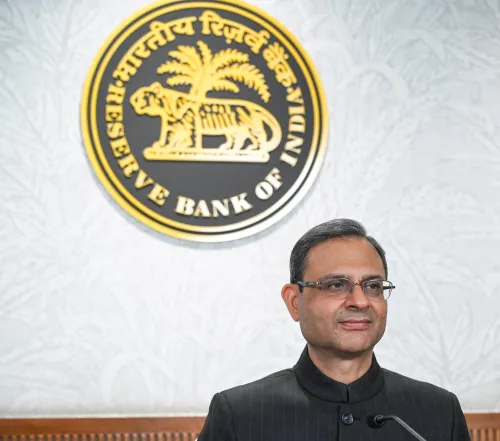
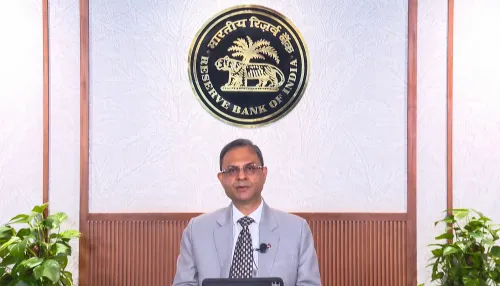
India's industrial and services sectors maintained strength in April 2026 , per the RBI 's monthly bulletin released on 22 May .
Listed private non-financial companies posted double-digit growth in aggregate sales and operating profit in Q4:2025-26 .
CPI inflation rose to 3.5 per cent in April, driven by food prices; core inflation remained steady.
Net FDI stayed positive for the second consecutive month in March; foreign portfolio investor outflows moderated in April–May.
The West Asia conflict continued to pressure commodity markets, trade flows, and supply chains.
Robust services exports, forex reserves, and policy buffers are expected to cushion India against external headwinds, the RBI said.
India's economic activity demonstrated resilience in April 2026, with industrial and services sectors sustaining strength across multiple segments, even as the global economy remained unsettled by the ongoing conflict in West Asia, according to the Reserve Bank of India (RBI)'s monthly bulletin released on Friday, 22 May. The bulletin underscores that domestic demand continues to anchor growth despite mounting external headwinds.
Industrial and Corporate Performance
Industrial and services activity held steady across several segments in April. Early results from listed private non-financial companies for Q4:2025-26 pointed to an improvement in business performance over the preceding quarter, with aggregate sales and operating profit both recording double-digit growth. This suggests that corporate India's earnings cycle, while not immune to global turbulence, retained underlying momentum.
Agriculture Sector and Food Security
In the agriculture sector, summer sowing advanced rapidly, supported by above-normal pre-monsoon rainfall and adequate reservoir storage levels. However, the bulletin cautioned that a higher probability of above-normal minimum temperatures and unseasonal rains in certain parts of the country could pose risks to the harvesting of remaining rabi crops. Notably, current public foodgrain stocks remain well above buffer norms, ensuring domestic food security is not immediately at risk.
Inflation and Capital Flows
CPI inflation rose to 3.5 per cent in April, driven primarily by food inflation, while core inflation held steady — indicating limited pass-through of higher input costs to broader prices. The RBI noted that although headline inflation remains firmly within the tolerance band, the transmission of cost pressures to domestic prices warrants close monitoring.
On the external front, net foreign direct investment (FDI) remained positive for the second consecutive month in March. Foreign portfolio investors continued to be net sellers in April and May, though the pace of outflows reportedly moderated. Financial conditions, crude oil prices, and capital flow volatility continue to pose challenges to the external sector outlook.
West Asia Crisis and External Risks
The West Asia conflict continued to exert pressure on commodity markets, global trade flows, and supply chains, contributing to volatility in financial markets, the bulletin observed. India, however, has entered this phase from a position of macroeconomic strength. Robust services exports, positive net FDI inflows, foreign exchange reserve buffers, and a range of proactive policy measures by the government and the RBI are expected to cushion the economy against external shocks.
Outlook
While the near-term outlook is somewhat clouded by supply-side pressures, the RBI's assessment is that India's domestic demand-led growth model provides a degree of insulation. All eyes will now be on the evolving trajectory of the monsoon, global commodity prices, and any further escalation in West Asia that could tighten supply chains further.
Point of View
And the West Asia conflict is not abating. India's dependence on imported crude means any sustained oil price spike would quickly erode the inflation comfort the RBI is currently enjoying. The bulletin's reference to 'supply-side pressures' clouding the near-term outlook is the real headline — it signals that the next monetary policy decision will be data-hostage in a way the last few were not.
NationPress
25 Sept 2026
Frequently Asked Questions
What did the RBI's May 2026 bulletin say about India's economy?
The RBI's monthly bulletin released on 22 May stated that India's economy showed resilience in April, with industrial and services sectors maintaining strength and listed private companies posting double-digit growth in sales and operating profit in Q4:2025-26. The bulletin noted that domestic demand remains the key driver of growth despite global uncertainties.
What is India's CPI inflation rate as of April 2026?
CPI inflation rose to 3.5 per cent in April 2026, driven mainly by food inflation. Core inflation remained steady, indicating limited pass-through of higher input costs, though the RBI flagged the need to monitor price transmission.
How is the West Asia conflict affecting India's economy?
According to the RBI bulletin, the West Asia conflict is exerting pressure on commodity markets, global trade flows, and supply chains, adding to financial market volatility. However, the RBI noted that India's forex reserve buffers, services exports, and policy measures are expected to cushion the impact.
What is the status of foreign investment flows into India?
Net FDI remained positive for the second consecutive month in March. Foreign portfolio investors were net sellers in April and May, though the pace of outflows moderated, according to the bulletin.
Is India's food security at risk given agricultural uncertainties?
Not immediately. While above-normal temperatures and unseasonal rains could pose risks to the harvesting of remaining rabi crops, the RBI bulletin noted that current public foodgrain stocks remain well above buffer norms, ensuring domestic food security.