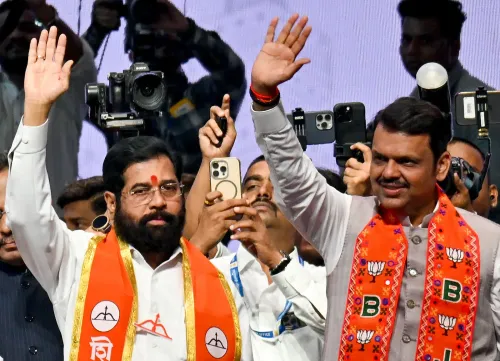
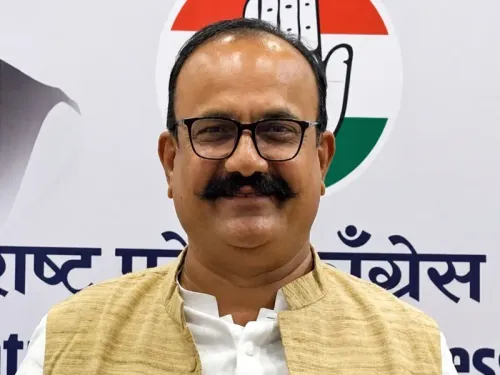
Rebels and factional splits threaten Mahayuti, MVA in Maharashtra Council polls
Synopsis
Maharashtra's five-seat Legislative Council vote on Friday is less about rival alliances clashing and more about alliances imploding from within. Rebels, absent consensus candidates, and misaligned partner moves have put both Mahayuti and MVA in damage-control mode — making vote-split management, not voter outreach, the decisive factor.
Key Takeaways
Maharashtra Legislative Council elections for five Graduate and Teachers' constituencies are scheduled for Friday, 24 October 2026 , using the preferential voting system.
In the Pune Graduate seat , the MVA faces an internal split with both NCP (SP) and Shiv Sena (UBT) fielding separate candidates, aiding the BJP's Dr Smita Jadhav .
In Pune Teachers' , the Shiv Sena (Shinde faction) backed independent candidate Sachin Sanap after withdrawing its own nominee, unsettling ally BJP.
In Amravati Teachers' , three BJP rebels and one Shinde Sena rebel are contesting against official Mahayuti candidates, backed by major teacher organisations.
In Nagpur Graduate , senior BJP leader Prof Anil Sole's name remains on the ballot despite withdrawal, posing a vote-drain risk for official candidate Sudhakar Kohale .
In Sambhajinagar Graduate , both NCP (SP) and Shiv Sena (UBT) have fielded separate candidates, splitting MVA votes against Mahayuti's Satish Chavan .
Maharashtra's Legislative Council elections for five Graduate and Teachers' constituencies — scheduled for Friday, 24 October 2026 — have turned into a high-stakes battleground, with widespread rebellion, internal factionalism, and tactical missteps threatening the electoral prospects of both the ruling Mahayuti alliance and the Opposition Maha Vikas Aghadi (MVA). As campaigning concluded on Wednesday evening, leaders from both camps scrambled to consolidate registered voters ahead of the preferential voting exercise.
Pune Graduate: MVA Divided, BJP Capitalises
Rebellion has broken out within the MVA in the Pune Graduate constituency. The Nationalist Congress Party (Sharad Pawar faction), commonly referred to as NCP (SP), has fielded Harshada Deshmukh-Jadhav, daughter of retired IAS officer Prabhakar Deshmukh. Sunil Modi of the Shiv Sena (Uddhav Balasaheb Thackeray) — a sitting nominated corporator in the Kolhapur Municipal Corporation and a former city chief — is also contesting from within the same broad opposition space, raising the spectre of a split in anti-Mahayuti votes.
Although NCP (SP) leaders insist their campaign is directed against the Bharatiya Janata Party (BJP), the absence of a consensus candidate within the MVA has created an opening for their rivals. The BJP has fielded Dr Smita Jadhav, daughter-in-law of the founder of Marathi newspaper Pudhari, and has deployed its full electoral machinery behind her candidacy.
Pune Teachers: Shinde Faction's Pivot Rattles BJP
A four-cornered contest has emerged in the Pune Teachers' constituency. The BJP nominated Kaustubh Gawde, while the Congress has renominated sitting MLA Jayant Asgaonkar. In a development that caused unease within the BJP, its Mahayuti ally Shiv Sena (Eknath Shinde faction) initially fielded Mangesh Chivate — a close confidant of Deputy Chief Minister Eknath Shinde — only to later withdraw his candidacy and throw support behind independent candidate Sachin Sanap. Dattatray Sawant, a former MLA representing the Rashtriya Samaj Paksha (RSP), is also in the contest.
Amravati Teachers: Cash-for-Vote Cloud and Multiple Rebels
The Amravati Teachers' constituency has become the most combustible seat in the cluster, with cash-for-vote allegations and a swarm of rebel candidates overshadowing official nominees. Three rebels from the BJP and one from the Shiv Sena (Shinde faction) are contesting against the alliance's official picks.
Major teacher organisations — the Vidarbha Madhyamik Shikshak Sangh, Vijukta, and the Maharashtra Rajya Shikshak Parishad — have extended support to the BJP rebels, directly undermining the party's official campaign. The NUTA organisation has backed Congress nominees alongside four other teacher candidates.
The Shinde Sena has fielded sitting legislator Kiran Sarnaik; Congress has nominated Aditi Pohre; Shiv Sena (UBT) has put forward Dattatray Lahane; and the Samajwadi Ganrajya Party has fielded Suresh Devkar. Former legislator Shrikant Deshpande, Sangita Shinde — sister of BJP MP Anil Bonde — and candidates Chandrashekhar Bhoyar and Sumit Pawar are also in the fray, compounding vote-split anxiety for both alliances.
Nagpur Graduate: BJP Ballot Paper Problem
The Nagpur Graduate constituency has emerged as a prestige contest between the BJP and Congress, complicated by internal dissatisfaction on both sides. The principal contest is between Congress candidate Abhijit Wanjari and BJP candidate Sudhakar Kohale. Senior BJP leader Prof Anil Sole withdrew his nomination, yet his name remains on the ballot paper — a technical anomaly that could drain votes away from the official Mahayuti candidate if his residual supporters mark preference for him regardless.
Sambhajinagar Graduate: MVA Splits Its Own Vote
In the Sambhajinagar Graduate constituency, the Mahayuti has fielded three-time sitting MLC Satish Chavan under the NCP banner. The MVA, however, has replicated its coordination failure here: both the NCP (SP) — which has fielded Dr Pratap Singh Patil — and the Shiv Sena (UBT) — which has fielded Dilip Ghorge — are contesting the same seat, effectively splitting the opposition vote between two alliance partners.
Voting across all five constituencies will be conducted on Friday through the preferential voting system. With candidates across party lines reportedly attempting last-minute outreach to registered voters, the management of preference ordering is expected to be as decisive as raw vote count — and the ability of alliances to enforce internal discipline will be the defining variable in each seat.
Point of View
But the rebellion patterns they expose are high-stakes for alliance credibility. Both Mahayuti and MVA have failed to enforce basic seat-sharing discipline — a warning sign ahead of any future state elections. The Shinde faction's pivot to an independent in Pune Teachers' is particularly telling: it suggests Mahayuti's internal fault lines have not healed since the last assembly contest. For the MVA, fielding two candidates in the same Sambhajinagar seat is not a coordination failure; it is an advertisement for structural dysfunction. The alliance that manages preferential-vote strategy better on Friday will win — but the larger loser may be the idea that either coalition is genuinely unified.
NationPress
22 Oct 2026
Frequently Asked Questions
When are the Maharashtra Legislative Council elections for Graduate and Teachers' constituencies?
Voting is scheduled for Friday, 24 October 2026, across five Graduate and Teachers' constituencies in Maharashtra. The elections will use the preferential voting system, where voters rank candidates in order of preference.
Which five constituencies are going to polls?
The five constituencies are Pune Graduate, Pune Teachers', Amravati Teachers', Nagpur Graduate, and Sambhajinagar Graduate. Each seat covers registered graduate or teacher voters in their respective regions.
How are rebel candidates affecting the Mahayuti alliance?
In Amravati Teachers', three BJP rebels and one Shinde Sena rebel are contesting against official Mahayuti nominees, with major teacher organisations backing the rebels. In Pune Teachers', the Shinde faction dropped its own candidate to back an independent, causing concern within the BJP.
How is the MVA's internal disunity playing out in these elections?
The MVA is fielding two separate candidates in the Sambhajinagar Graduate constituency — one from NCP (SP) and one from Shiv Sena (UBT) — effectively splitting the opposition vote. A similar lack of consensus in the Pune Graduate seat has raised fears that anti-Mahayuti votes will be divided.
What is the significance of the preferential voting system in these elections?
In preferential voting, electors rank candidates by order of preference rather than casting a single vote. This means alliance vote-transfer strategy — ensuring second and third preferences flow to the right candidate — can be as decisive as first-preference vote share, making internal coordination critical for all parties.