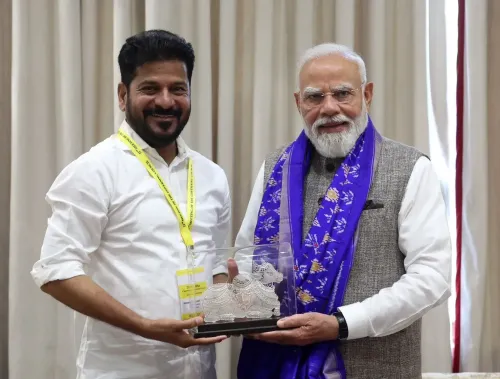
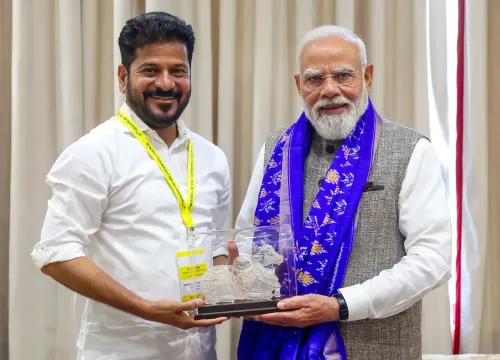
Revanth Reddy meets PM Modi, seeks nod for Telangana infra projects
Synopsis
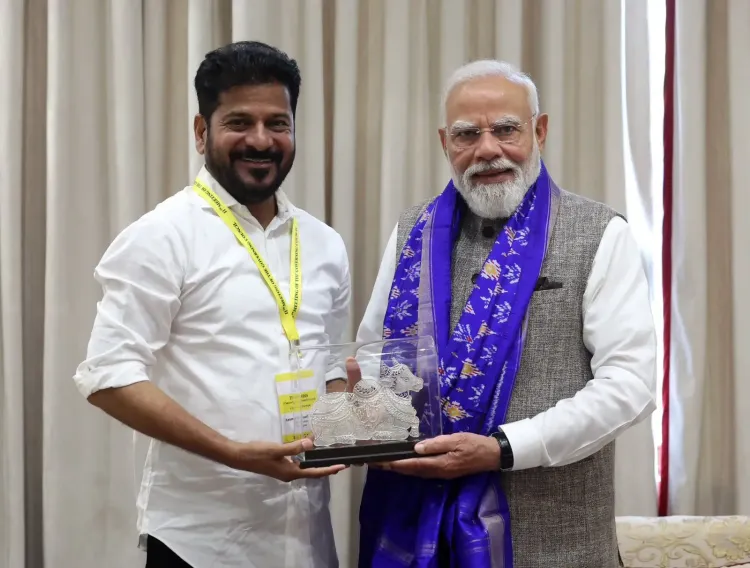
Telangana Chief Minister Revanth Reddy met PM Modi at the 11th NITI Aayog Governing Council Meet on June 11, 2026, requesting central approvals for the Hyderabad Metro expansion, Regional Ring Road, a 12-lane expressway to Andhra Pradesh's Bandar seaport, and airports at Warangal and Adilabad.
Key Takeaways
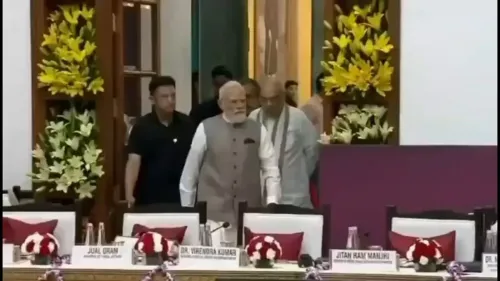
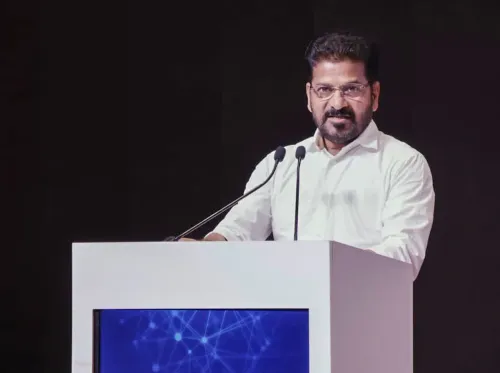
Telangana CM Revanth Reddy met PM Narendra Modi on June 11, 2026 at the 11th NITI Aayog Governing Council Meet in New Delhi.
He sought central support for the Hyderabad Metro Rail expansion and the Regional Ring Road around Hyderabad.
A proposed 12-lane expressway from Future City to Bandar seaport in Andhra Pradesh was among the projects flagged, requiring inter-state coordination.
Greenfield airports at Warangal and Adilabad were also included in the request to improve regional air connectivity.
Approvals depend on multiple Union ministries including Housing and Urban Affairs , Civil Aviation , and Road Transport and Highways .
The CM expressed hope for 'cooperation and positive response from the Centre.'
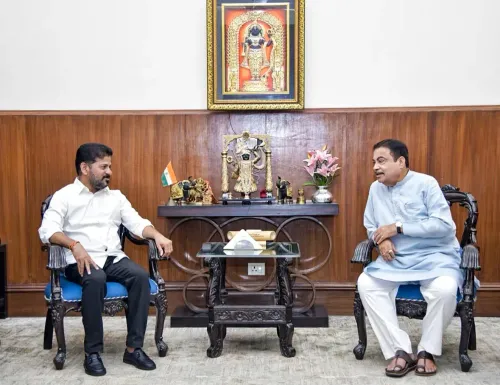
Telangana Chief Minister A. Revanth Reddy met Prime Minister Narendra Modi on the sidelines of the 11th NITI Aayog Governing Council Meet in New Delhi on Thursday, June 11, 2026, pressing for central approvals on a clutch of large-scale infrastructure projects for Telangana and a cross-state expressway.
Context
Revanth Reddy used the high-level forum to directly request the Prime Minister's intervention on five priority projects: the Hyderabad Metro Rail expansion, the Regional Ring Road, a proposed 12-lane expressway connecting Future City to Bandar seaport in Andhra Pradesh, and new airports at Warangal and Adilabad. He stated he was 'looking forward for the cooperation and positive response from the Centre.'
The meeting underscores how state governments leverage the NITI Aayog Governing Council's margins — where chief ministers and the Prime Minister are in the same room — to advance project clearances that would otherwise move through slower multi-ministry channels.
Policy Backdrop
NITI Aayog was constituted in January 2015 to replace the Planning Commission and institutionalise centre-state dialogue on development priorities, with the Prime Minister as its chairperson. Large urban transit projects fall under the Metro Rail Policy 2017, which sets out standardised funding and approval mechanisms, including viability-gap funding that requires Union government sign-off.
The 2014 Andhra Pradesh Reorganisation Act that created Telangana as a separate state also triggered a wave of proposals for ring roads, regional expressways, and greenfield airports in the newly formed state. Many of these proposals have remained in planning stages, awaiting central clearances and funding commitments.
The proposed 12-lane expressway from Future City to Bandar seaport is notable because it crosses state lines into Andhra Pradesh, making it a project that requires coordinated approval from both state governments and multiple Union ministries, including the Ministry of Road Transport and Highways and the Ministry of Ports.
Stakeholders and Impact
Urban commuters in Hyderabad stand to benefit most immediately from a Metro Rail expansion, as Phase 1 of the system became operational in 2017 and demand for further corridors has grown alongside the city's rapid expansion as a technology and pharmaceutical hub. The Regional Ring Road is aimed at decongesting the metropolitan area by routing heavy freight traffic away from the city core.
Airports at Warangal and Adilabad would open air connectivity to parts of Telangana currently dependent on road travel to Rajiv Gandhi International Airport in Hyderabad. The logistics sector and export-oriented industries in the state would be the primary beneficiaries of the expressway link to the Andhra Pradesh coast.
What's Next
The Chief Minister's appeal now awaits formal responses from the Ministry of Housing and Urban Affairs on the metro expansion, the Ministry of Civil Aviation on the proposed airports, and the Ministry of Road Transport and Highways on the ring road and expressway. Observers will watch whether any of these projects receive mention in upcoming Union Budget allocations or central scheme notifications.
If the Centre moves on even one or two of the listed projects, it would mark a significant step forward for Telangana's long-pending connectivity agenda — and signal the political dividend of direct engagement at the NITI Aayog table.
Point of View
Ring roads, a cross-state expressway, and two greenfield airports — signals that the Telangana government is prioritising connectivity as a visible governance deliverable ahead of future electoral cycles. The inclusion of the Future City-to-Bandar seaport expressway, which crosses into Andhra Pradesh, adds a layer of inter-state complexity that elevates the ask from a state request to a regional infrastructure negotiation. Whether the Centre responds will be a gauge of both political relations between the Congress-led state government and the BJP-led Union government, and the broader momentum of India's infrastructure push in southern states.
NationPress
26 Oct 2026
Frequently Asked Questions
What projects did Revanth Reddy request from PM Modi at NITI Aayog?
Revanth Reddy requested central support for the Hyderabad Metro Rail expansion, the Regional Ring Road, a 12-lane expressway from Future City to Bandar seaport in Andhra Pradesh, and airports at Warangal and Adilabad.
When did the 11th NITI Aayog Governing Council Meet take place?
The 11th NITI Aayog Governing Council Meet was held on June 11, 2026, in New Delhi, where Chief Minister Revanth Reddy met Prime Minister Modi on the sidelines.
What is the Regional Ring Road in Telangana?
The Regional Ring Road is a planned orbital expressway around Hyderabad designed to decongest the city by routing freight and through-traffic away from the urban core.
Why does the Future City to Bandar seaport expressway need central approval?
The proposed 12-lane expressway crosses state lines from Telangana into Andhra Pradesh, making it a multi-state project that requires Union government coordination and approval from the Ministry of Road Transport and Highways and the Ministry of Ports.
What is the status of airports at Warangal and Adilabad?
Both airports remain at the proposal stage. Their sanction and development depend on approvals from the Ministry of Civil Aviation and central funding commitments, which Revanth Reddy has now formally requested from PM Modi.