Telangana CM Revanth Reddy seeks ₹1 lakh crore each for six metro cities
Synopsis
Telangana CM Revanth Reddy walked into NITI Aayog's governing council with a ₹6 lakh crore ask — ₹1 lakh crore each for six cities that together produce a quarter of India's GDP. The M6 Cities Task Force pitch reframes urban spending as national investment, not state subsidy, and signals Telangana's intent to anchor the next phase of India's growth in knowledge, semiconductors, and world-class infrastructure.
Key Takeaways
Revanth Reddy addressed the 11th NITI Aayog Governing Council on 11 June in New Delhi .
He sought ₹1 lakh crore per city for an M6 Cities Task Force covering Delhi, Mumbai, Kolkata, Chennai, Hyderabad and Bengaluru .
The six cities house 10% of India's population and contribute nearly 25% of GDP , according to Revanth Reddy.
Hyderabad-specific asks include the Regional Ring Road , Metro Rail Phase II , Musi River Rejuvenation , a 12-lane expressway to Machilipatnam port, and a 30,000-acre Bharat Future City .
The University of London is setting up an offshore campus in Hyderabad; the state is also seeking an IIM and semiconductor facilities under the India Semiconductor Mission .
A 2024 SEEPCS survey covering 3.55 crore people across 242 castes underpins the state's education reform push.
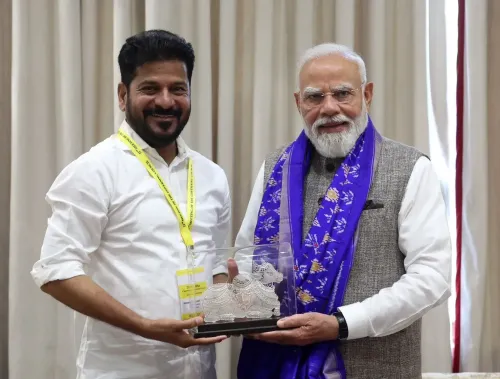
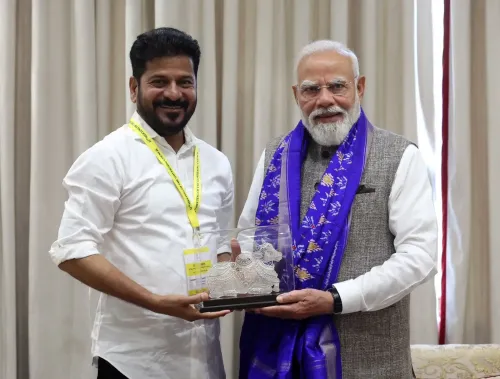
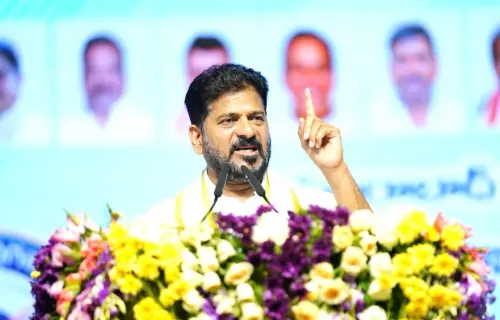
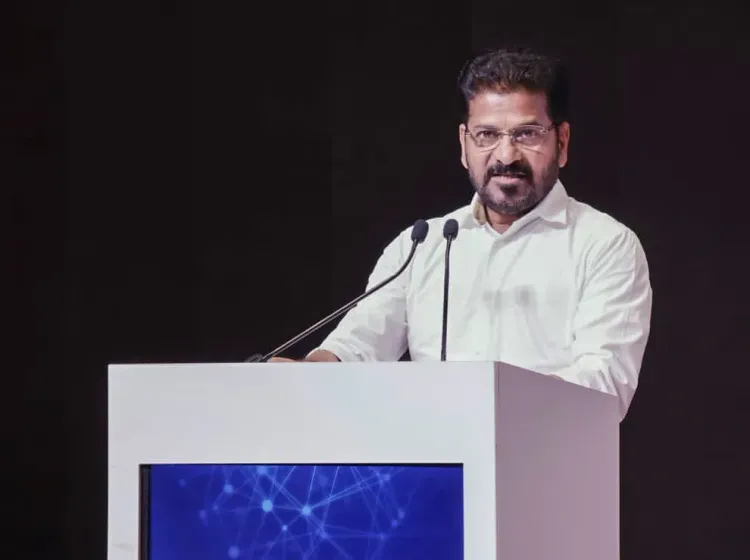
Telangana Chief Minister A. Revanth Reddy on Thursday, 11 June urged the Centre to constitute an M6 Cities Task Force and commit ₹1 lakh crore per city to elevate New Delhi, Mumbai, Kolkata, Chennai, Hyderabad, and Bengaluru to global standards. He made the appeal while addressing the 11th Governing Council meeting of NITI Aayog in New Delhi, framing the outlay not as expenditure but as a strategic investment in India's most productive urban assets.
The Case for an M6 Task Force
Revanth Reddy argued that these six metropolitan cities collectively house roughly 10 per cent of India's population and generate nearly a quarter of the country's GDP, yet fall short of global benchmarks in infrastructure, mobility, and liveability. He called for a nationally empowered task force with the authority to act swiftly across all six cities.
'We urge a national task force, empowered to act with speed, to develop all six to global standards, not as expenditure, but as investment in the assets that generate the revenues, jobs and standing of a developed India,' he said.
Hyderabad-Specific Demands
Beyond the six-city framework, Revanth Reddy placed a series of Hyderabad-centric requests before the council. He sought Centre backing for the Regional Ring Road, described as the backbone of the city's next growth phase, and a 12-lane expressway linking Bharat Future City to the Machilipatnam deep-water port in Andhra Pradesh, integrating the region into global supply chains.
He also requested approval for Hyderabad Metro Rail Phase II to support low-carbon urban mobility, and federal assistance for the Musi River Rejuvenation project aimed at restoring the city's historic waterway into a world-class riverfront. Separately, he sought recognition and financing for the 30,000-acre net-zero greenfield Bharat Future City project.
Semiconductor, Irrigation and Institution Asks
The Chief Minister requested approval for the S. Jaipal Reddy Palamuru-Rangareddy Lift Irrigation project and sought integration of an electronics ecosystem featuring an APMP facility, OSAT clusters, and a Micro-LED fabrication unit under the India Semiconductor Mission. He also called for an Indian Institute of Management (IIM) in Hyderabad to serve the state's growing aspirations in higher education.
Knowledge Economy and Education Push
Revanth Reddy outlined an ambition to position Telangana as a knowledge super-hub, stating that the government is actively working to attract international institutions — including Ivy League universities such as Harvard, MIT, Stanford, Oxford, Cambridge, and INSEAD — in line with the National Education Policy. He noted a first milestone: the University of London is setting up an offshore campus in Hyderabad.
He cited the state's SEEPCS (Socio-Economic, Educational, Employment, Political and Caste Survey), conducted in 2024, which covered 3.55 crore people across 242 distinct castes and reached close to 97 per cent of households in Telangana. The survey, he said, revealed significant quality shortfalls in the current public education system and declining trust in government schooling.
Alignment with Viksit Bharat 2047
Revanth Reddy positioned all his requests within the framework of Prime Minister Narendra Modi's Viksit Bharat 2047 vision, arguing that world-class city infrastructure and elite knowledge institutions are prerequisites for India to achieve developed-nation status. The next steps depend on whether the Centre responds with dedicated allocations or integrates these proposals into existing urban mission frameworks.
Point of View
Revanth Reddy reframes a state-level infrastructure ask as a national imperative — harder for the Centre to dismiss. But the ₹6 lakh crore aggregate is an opening bid, not a budget line, and the track record of NITI Aayog governing council requests translating into ring-fenced allocations is thin. The more consequential ask may be the semiconductor cluster and IIM — both of which align with existing central schemes and are far more likely to move. The SEEPCS data point is notable: a state government citing its own caste-and-education survey at a federal forum signals that Telangana intends to use granular social data as a policy lever, not just a political one.
NationPress
20 Sept 2026
Frequently Asked Questions
What is the M6 Cities Task Force proposed by Telangana CM Revanth Reddy?
It is a proposed national task force that would receive ₹1 lakh crore per city to develop six major metros — New Delhi, Mumbai, Kolkata, Chennai, Hyderabad, and Bengaluru — to global urban standards. Revanth Reddy presented the proposal at the 11th NITI Aayog Governing Council meeting on 11 June.
Why did Revanth Reddy argue for ₹1 lakh crore per city?
He argued that the six cities together house about 10 per cent of India's population and generate nearly a quarter of its GDP, making investment in their infrastructure a national economic priority rather than a state expenditure. He framed the outlay as investment in assets that drive revenues, jobs, and India's global standing.
What Hyderabad-specific projects did Revanth Reddy seek Centre support for?
He sought support for the Regional Ring Road, Hyderabad Metro Rail Phase II, Musi River Rejuvenation, a 12-lane expressway to Machilipatnam deep-water port, the 30,000-acre Bharat Future City, semiconductor facilities under the India Semiconductor Mission, and a new IIM in Hyderabad.
What is the SEEPCS survey cited by Revanth Reddy?
The SEEPCS — Socio-Economic, Educational, Employment, Political and Caste Survey — was conducted by Telangana in 2024, covering 3.55 crore people across 242 distinct castes and reaching close to 97 per cent of households in the state. Revanth Reddy cited its findings to highlight quality gaps in public education and declining trust in government schools.
How does Telangana's proposal connect to Viksit Bharat 2047?
Revanth Reddy explicitly aligned all his requests with Prime Minister Narendra Modi's Viksit Bharat 2047 framework, arguing that world-class city infrastructure and elite knowledge institutions are essential prerequisites for India to achieve developed-nation status by that target year.