Revanth Reddy Vows Quality Over Charity in Telangana Schools
Synopsis
Telangana Chief Minister A. Revanth Reddy on 20 June 2026 declared the state's public school programme is not government charity but a mission to raise children who will transform India, sharpening his administration's education-as-empowerment pitch.
Key Takeaways
Revanth Reddy posted on 20 June 2026 framing the Telangana Public School initiative as nation-building, not welfare.
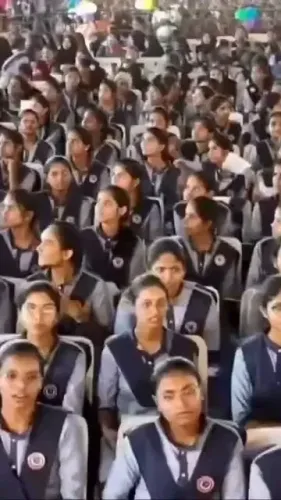
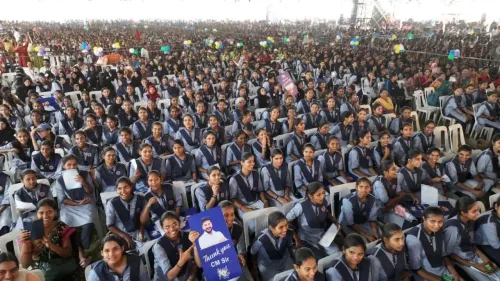
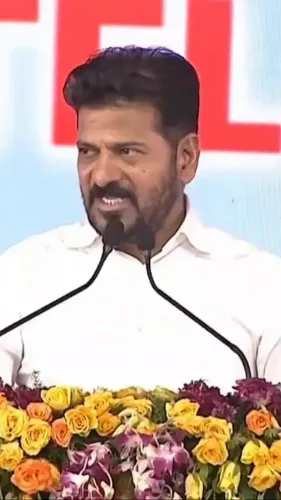
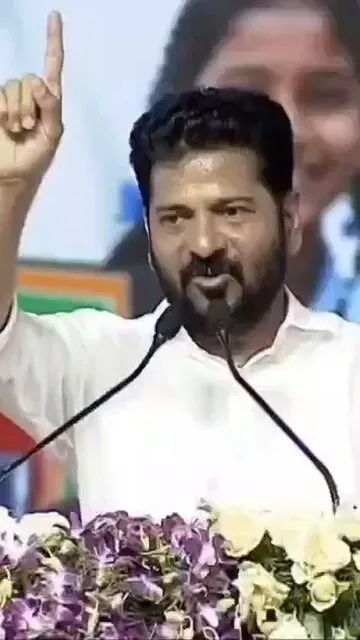
His Telugu message translates as: 'Not government charity… we will raise children who change the nation.' The post was accompanied by a video and a suite of hashtags including #EducationRevolution and #YoungIndiaSchools .
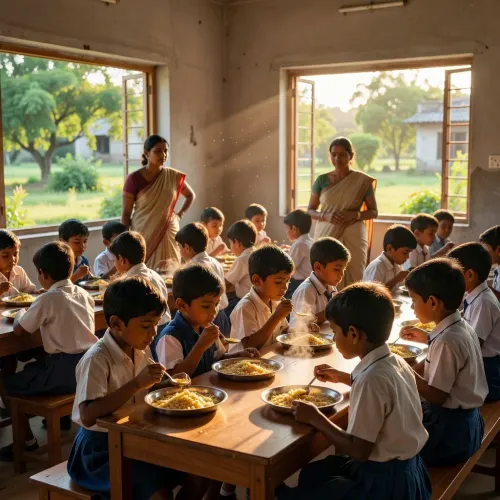
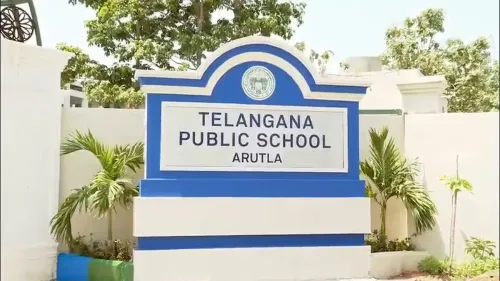
The Telangana Public School scheme aims to deliver education on par with private institutions through upgraded government schools.
The Congress administration in Telangana has positioned public education reform as a core pillar of governance since taking office in December 2023 .
Phased rollout progress, infrastructure budgets, and learning-outcome data will be key indicators to watch in coming academic years.
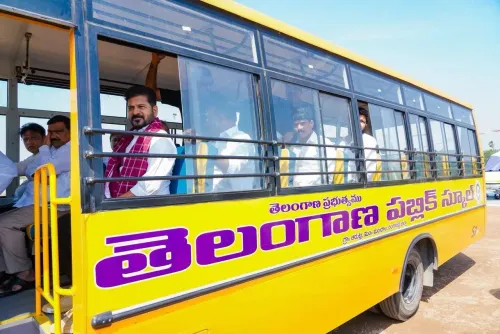
Telangana Chief Minister A. Revanth Reddy on Saturday, 20 June 2026, declared that the state's public school initiative is not about distributing government handouts but about producing children who will transform the nation — a pointed framing of the Congress administration's education agenda under the #TelanganaPublicSchool banner.
Context
Posting in Telugu, the Chief Minister wrote: 'ప్రభుత్వ బిక్ష కాదు…. దేశాన్ని మార్చే బిడ్డలను తయారు చేస్తాం' — 'Not government charity… we will raise children who change the nation.' The message, accompanied by a video, was shared under hashtags including #EducationRevolution, #FutureOfTelangana, #YoungIndiaSchools, and #TelanganaRising, signalling a deliberate brand-building push around the state's public education overhaul.
The phrase 'government charity' (ప్రభుత్వ బిక్ష) is a loaded political choice — it draws a sharp contrast between welfare-as-dependency and education-as-empowerment, positioning the Telangana Public School programme as a capability-building investment rather than a subsidy.
Policy Backdrop
The Telangana Public School scheme is a state initiative to upgrade government schools to a standard comparable with private institutions, addressing a long-standing gap in learning outcomes between public and private education. The Congress administration, which came to power in December 2023 after defeating the incumbent Bharat Rashtra Samithi (BRS), has framed public education reform as a cornerstone of its governance agenda.
At the national level, the National Education Policy 2020 set targets for universal foundational literacy, numeracy, and improved public-school quality across India. Telangana's initiative aligns with — but seeks to go beyond — that federal framework by explicitly positioning government schools as aspirational rather than last-resort institutions.
Several Indian states have launched model-government-school programmes in recent years to counter private-school dominance and reduce educational inequality. The broader pattern reflects competitive state-level positioning on human-capital development, particularly visible among opposition-ruled states since 2023.
Stakeholders and Impact
The primary beneficiaries are students enrolled in Telangana's government school system and their families — demographics that have historically been priced out of quality private schooling. For parents in semi-urban and rural Telangana, the promise of a publicly funded school delivering private-school-level outcomes carries significant economic and social weight.
The political stakes are equally high. By invoking the language of nation-building rather than welfare, Chief Minister Revanth Reddy is attempting to shift the electoral conversation around government schools from one of remediation to one of aspiration — a framing that could resonate with middle-class voters who currently opt for private institutions.
What's Next
Observers will watch the phased rollout of Telangana Public Schools closely, tracking annual budget allocations for infrastructure upgrades and teacher recruitment. Comparative learning-outcome data in subsequent academic years will be the ultimate measure of whether the administration's ambitious rhetoric translates into classroom results. The #EducationRevolution campaign suggests the government intends to keep public attention focused on this agenda in the months ahead.
Point of View
Both of which remain to be tested.
NationPress
20 Jun 2026
Frequently Asked Questions
What is the Telangana Public School scheme?
The Telangana Public School scheme is a state government initiative to upgrade government schools to a quality level comparable with private institutions, aiming to make public education aspirational rather than a last resort for families who cannot afford private schooling.
What did Revanth Reddy say about Telangana schools on 20 June 2026?
Chief Minister A. Revanth Reddy posted in Telugu stating 'Not government charity… we will raise children who change the nation,' framing the Telangana Public School programme as a capability-building mission rather than a welfare handout.
How is Telangana's education policy different from other states?
Telangana's Congress administration explicitly frames its public school initiative as an empowerment and nation-building project, distinguishing it from conventional welfare schemes — a positioning that reflects a broader trend of opposition-ruled states competing on human-capital development since 2023.
What is the National Education Policy 2020 and how does it relate to Telangana schools?
The National Education Policy 2020 set national targets for foundational literacy, numeracy, and improved public-school quality across India. Telangana's public school initiative aligns with these goals but goes further by branding government schools as aspirational institutions on par with private ones.
When did Revanth Reddy become Chief Minister of Telangana?
A. Revanth Reddy became Chief Minister of Telangana in December 2023, after the Indian National Congress defeated the incumbent Bharat Rashtra Samithi in the state assembly elections.