CM Revanth Reddy launches Telangana Public School in Arutla
Synopsis
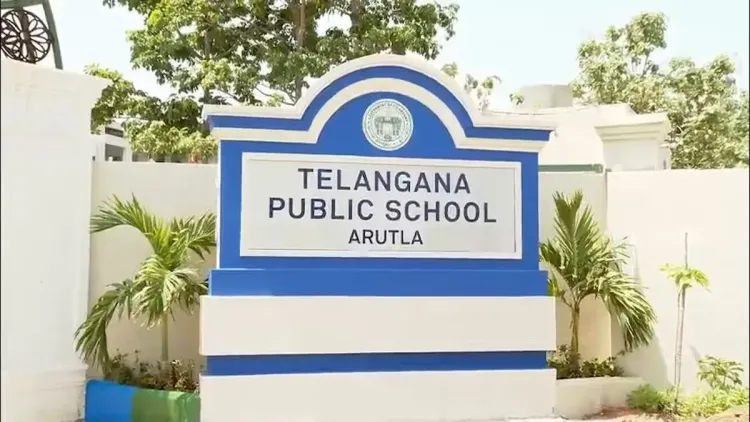
Telangana Chief Minister A. Revanth Reddy inaugurated the state's first Telangana Public School at Arutla on June 16, 2026, describing it as a revolutionary step in public education reform. He pledged to establish 100 such schools across Telangana, fulfilling a key Congress election promise.
Key Takeaways
Revanth Reddy inaugurated the first Telangana Public School at Arutla on June 16, 2026 .
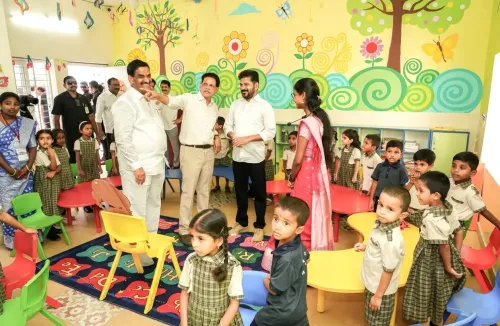
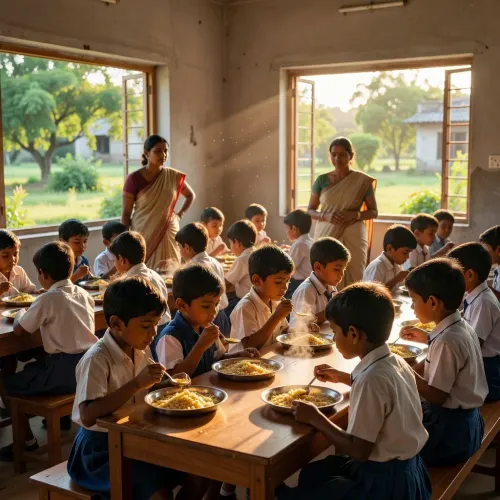
The school is designed with modern infrastructure, nutrition programmes, sports facilities, and a focus on holistic child development.
The initiative fulfils a Congress election manifesto promise from the December 2023 assembly polls to overhaul government schooling.
The CM announced plans to establish 100 Telangana Public Schools across the state in the coming period.
The school is branded under the #PrajaPalana ('people's governance') agenda, positioning it as a flagship welfare delivery scheme.
The launch reflects a broader national trend of state governments investing in public school modernisation to counter the shift toward private education.
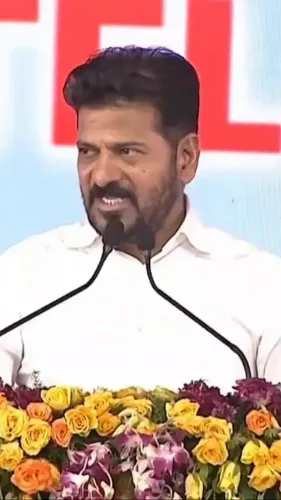
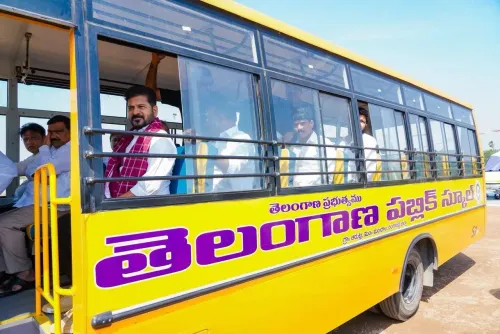
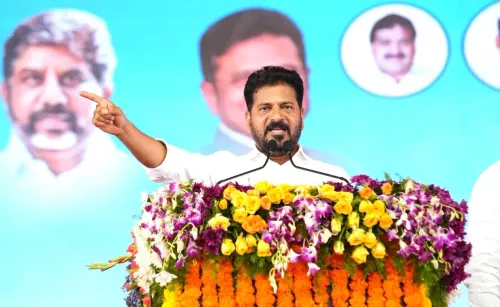
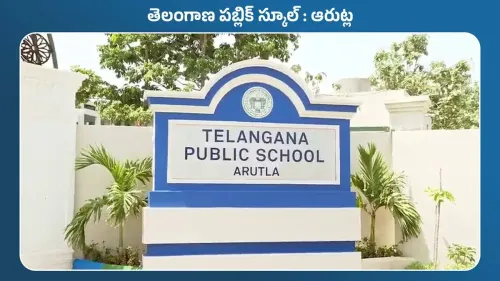
Telangana Chief Minister A. Revanth Reddy on Tuesday, June 16, 2026, unveiled the first Telangana Public School at Arutla, calling it the embodiment of his commitment to revolutionising the state's public education system. The inauguration marks what the Chief Minister described as a turning point in government schooling, promising to replicate the model across 100 locations statewide.
Context
Posting in Telugu on X, CM Revanth Reddy declared that 'India's future takes shape in classrooms' is no longer merely a slogan but a visible reality, citing the Arutla school as living proof. He described the institution as his 'manasa putrika' — a cherished personal vision — shaped with inputs from scholars and experts, and designed to feed children, impart literacy, and nurture holistic development. The Chief Minister thanked all stakeholders involved in bringing the school to life and congratulated the students.
Policy Backdrop
The Telangana Public School initiative traces its roots to the Indian National Congress election manifesto ahead of the December 2023 assembly polls, which promised a comprehensive overhaul of government schools to restore and surpass their earlier standards. After defeating the incumbent Bharat Rashtra Samithi government, CM Revanth Reddy inherited a schooling landscape that had seen the previous administration's Mana Ooru Mana Badi infrastructure programme and an expansion of residential schools between 2014 and 2023. The new model repositions government schools as institutions offering modern infrastructure, facilities for intellectual growth, nutrition, and sports — competing directly with private alternatives.
Across India, state governments have intensified efforts to strengthen public schooling as a welfare and equity measure, seeking to reverse the long-running migration of students toward private institutions. Telangana's initiative fits squarely within this national pattern, with the added political dimension of a new government seeking to differentiate its governance record.
Stakeholders and Impact
The primary beneficiaries are students from rural and semi-urban families who depend on government schools, particularly in villages such as Arutla where access to quality private schooling is limited. Parents of government-school children stand to gain from improved infrastructure, mid-day meal provisions, and extracurricular opportunities the new model promises. The initiative also carries symbolic weight for the Congress government, which is keen to demonstrate welfare delivery ahead of future electoral cycles.
Teachers and education administrators will be central to executing the model at scale. The Chief Minister's post, tagged #PrajaPalana — meaning 'people's governance' — signals that the school network is being positioned as a flagship of the administration's broader welfare agenda.
What's Next
CM Revanth Reddy explicitly stated that the Arutla inauguration is only the beginning, with the government aiming to establish 100 Telangana Public Schools across the state. Education budget allocations in the forthcoming state budget and the pace of subsequent school inaugurations will be the key indicators of how swiftly this commitment translates into ground-level change. Observers will also watch whether the model's quality benchmarks — modern facilities, nutrition, and holistic development — are consistently maintained as the network scales beyond the flagship site.
Point of View
Visible institution to validate his government's 'Praja Palana' narrative ahead of the electoral cycle. By framing the school as his personal vision and tagging it alongside a governance brand, the Chief Minister is deliberately linking welfare delivery to Congress's identity in the state. The pledge of 100 schools raises the stakes: delivery at scale will be scrutinised closely, and any gap between the flagship's quality and subsequent schools could become a political liability. Nationally, the move aligns Telangana with a growing cohort of states that are using public school upgrades as a high-visibility welfare instrument.
NationPress
16 Sept 2026
Frequently Asked Questions
What is the Telangana Public School launched by CM Revanth Reddy?
The Telangana Public School is a new model of government school with modern infrastructure, nutrition programmes, sports facilities, and a focus on holistic student development. The first school was inaugurated at Arutla by Chief Minister A. Revanth Reddy on June 16, 2026.
Where is the first Telangana Public School located?
The first Telangana Public School is located at Arutla, a village in Telangana, chosen as the launch site for the flagship school under CM Revanth Reddy's education reform initiative.
How many Telangana Public Schools are planned?
Chief Minister A. Revanth Reddy has announced plans to establish 100 Telangana Public Schools across the state, with the Arutla school being the first in the series.
What is the Praja Palana scheme linked to the Telangana Public School?
'Praja Palana' translates to 'people's governance' and is the overarching welfare governance brand of the Telangana Congress government led by CM Revanth Reddy. The Telangana Public School is positioned as one of its flagship initiatives.
How is the Telangana Public School different from earlier government schools?
The Telangana Public School is designed to go beyond standard government school facilities by offering modern infrastructure, mid-day meals, sports encouragement, and an environment focused on intellectual and overall development of children, aiming to match or exceed private school standards.