Revanth Reddy's 'Ram god of rich, Shiva of poor' remark draws BJP fire
Synopsis
Telangana CM Revanth Reddy's description of Lord Ram as 'God of the rich' and Lord Shiva as 'God of the poor' — paired with a Dravidian-versus-Aryan civilisational frame — has handed the BJP a ready-made cultural flashpoint. The BJP's swift counter-attack, accusing Reddy of acting on Rahul Gandhi's instructions to 'split Hindus,' signals this is no ordinary political spat but a calculated opening salvo in a deepening North-South identity battle.
Key Takeaways
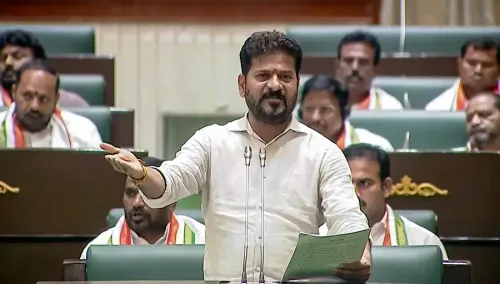
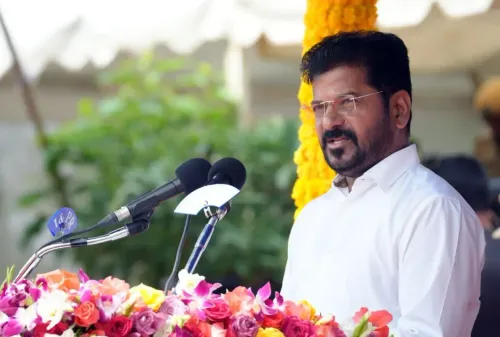
Telangana CM Revanth Reddy described Lord Shiva as the 'God of the poor' and Lord Ram as the 'God of the rich' at a media event in New Delhi on 29 September 2026 .
Reddy questioned why PM Narendra Modi and BJP leaders chant 'Jai Shri Ram' but not 'Har Har Mahadev' on public platforms.
He framed the remarks around a Dravidian-Aryan cultural distinction between South and North India.
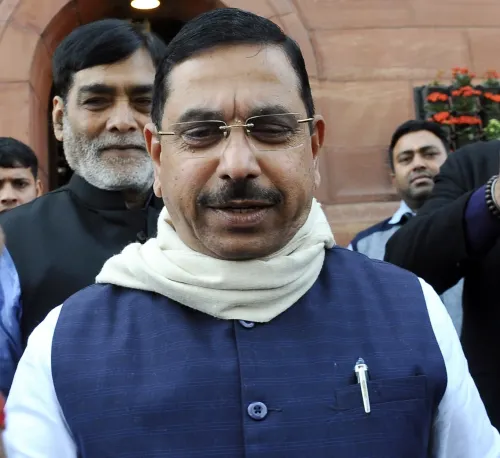
BJP National Spokesperson Pradeep Bhandari accused Reddy of acting on Rahul Gandhi's instructions to divide Hindus for vote-bank politics.
The BJP cited alleged past Congress opposition to the Somnath Temple , the Kashi Vishwanath Dham Corridor , and the 2018 suspension of workers for chanting 'Har Har Mahadev.'
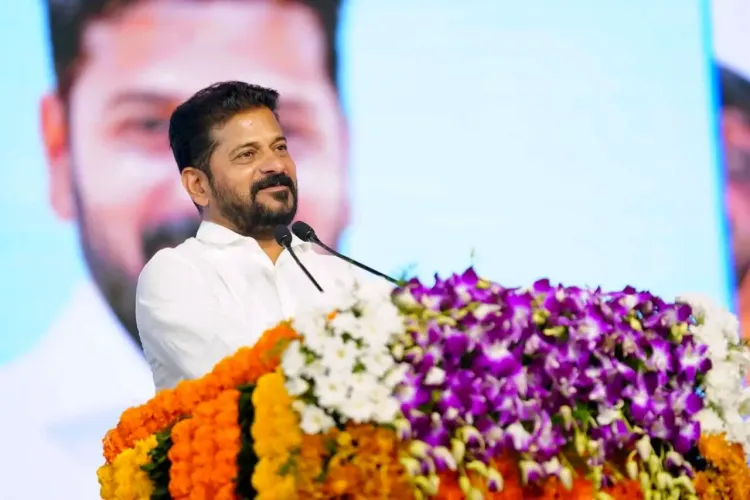
Telangana Chief Minister Revanth Reddy sparked a sharp political controversy on 29 September 2026 after drawing a religious and cultural contrast between North and South India at a media event in New Delhi, prompting an immediate and fierce backlash from the Bharatiya Janata Party (BJP). Reddy's remarks — centring on the divergent devotional traditions of the two regions — have reignited a broader debate about identity politics and the role of religion in electoral discourse.
What Revanth Reddy Said
Speaking at the national capital event, Reddy questioned why Prime Minister Narendra Modi and other BJP leaders repeatedly invoke the slogan 'Jai Shri Ram' but rarely, if ever, chant 'Har Har Mahadev' on public platforms.
'We are Dravidians. Here (North India), people are Aryans. We are devotees of Shiva, while people here are devotees of Lord Ram. BJP stole Ram. It's an emotion; a sentiment. Why does Modi ji not say, ‘Har Har Mahadev’? Have you ever seen BJP people say ‘Har Har Mahadev’ on stage? They only say, ‘Jai Sri Ram’. When we chant ‘Har Har Mahadev’, they don’t like it,' Reddy stated.
The Telangana Chief Minister also described Lord Shiva as the 'God of the poor' and Lord Ram as the 'God of the rich', while clarifying that both deities are revered by the people. The remarks came in the context of his broader argument about differing political cultures and social identities across North and South India.
BJP's Sharp Rebuttal
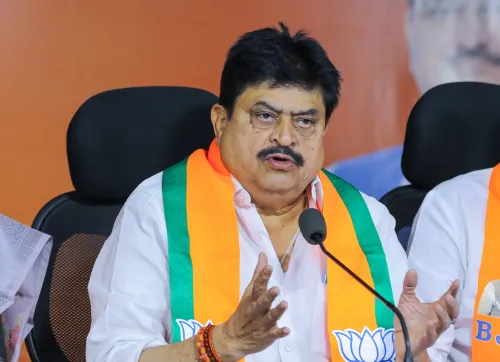
BJP National Spokesperson Pradeep Bhandari swiftly condemned the comments, alleging that Reddy had made them on the 'instructions of Rahul Gandhi' — the Congress leader and Leader of Opposition in the Lok Sabha — as part of what Bhandari characterised as 'vote-bank politics' and a 'sinister design to split Hindus between followers of Bhagwan Ram and Bhagwan Shiv.'
Taking to social media, Bhandari referred to the Indian National Congress (Congress) as a 'modern Muslim League Congress' and asserted that it would 'not succeed' in its alleged effort to create divisions within Hindu society. He further alleged that Congress had historically opposed several religious and temple-related initiatives, citing what he described as the party's opposition to the Somnath Temple construction, the Kashi Vishwanath Dham Corridor, and the suspension of three party workers in 2018 for chanting 'Har Har Mahadev.'
Bhandari also rejected Reddy's implicit suggestion that BJP leaders avoid Shiva devotion, stating: 'PM Modi is the only Prime Minister who chants — ‘Jai Shree Ram’ and ‘Har Har Mahadev’. Vote bank appeasers do not even know in Ramayana in ‘Lankakand’ before proceeding to Lanka, Bhagwan Ram had offered Prayers to Mahadev.'
The Political Context
Reddy's comments arrive amid a sustained effort by several southern and opposition-aligned leaders to articulate a distinct Dravidian political and cultural identity as a counterpoint to what they characterise as a BJP-driven, North India-centric nationalism. This is not the first time such a binary — Shaivite South versus Vaishnavite North — has been deployed in political discourse, though framing deities in terms of wealth and class is a notably sharper formulation.
Notably, the Congress has faced recurring accusations from the BJP of playing religious identity politics while simultaneously positioning itself as a secular party — a contradiction critics on both sides point to. Reddy's use of the Aryan-Dravidian civilisational frame adds a further layer of regional identity to what is otherwise a partisan exchange over religious symbolism.
What Happens Next
The controversy is likely to intensify as both parties seek political traction ahead of upcoming state and national electoral cycles. The BJP is expected to amplify Reddy's remarks as evidence of what it calls Congress's tendency to fragment Hindu society, while the Congress and allied parties may use the episode to sharpen the North-South cultural debate. All eyes will be on whether Rahul Gandhi or the Congress officially distances itself from or endorses Reddy's characterisation.
Point of View
Regardless of regional identity. The BJP's rapid reframing — positioning this as a Congress-directed plot to divide Hindus — is a well-rehearsed playbook, but it works precisely because remarks of this kind are easy to clip and circulate. The deeper issue is whether the Congress can afford to let the Dravidian identity argument run unchecked under its own roof: it sharpens southern base politics, but it also validates the BJP's narrative that the opposition weaponises religion. The episode also tests whether the North-South cultural binary, long a sociological observation, can be deployed as a durable electoral strategy — or whether it simply generates controversy without consolidating votes.
NationPress
29 Sept 2026
Frequently Asked Questions
What did Telangana CM Revanth Reddy say about Lord Ram and Lord Shiva?
Revanth Reddy described Lord Shiva as the 'God of the poor' and Lord Ram as the 'God of the rich' at a media event in New Delhi on 29 September 2026. He also questioned why BJP leaders, including PM Modi, exclusively chant 'Jai Shri Ram' on public stages rather than also chanting 'Har Har Mahadev.'
Why did Revanth Reddy make these remarks?
Reddy made the remarks to support his argument that there are fundamental differences in the political cultures and social identities of North and South India. He framed it around the Dravidian-Aryan distinction, contending that southern Indians are predominantly Shiva devotees while northerners are more aligned with Ram worship.
How did the BJP respond to Revanth Reddy's comments?
BJP National Spokesperson Pradeep Bhandari accused Reddy of making the remarks on Rahul Gandhi's instructions and labelled them an attempt to divide Hindus for vote-bank politics. Bhandari also alleged that Congress has historically opposed major Hindu temple projects and rejected the claim that PM Modi does not chant 'Har Har Mahadev.'
Did the Congress officially respond to the controversy?
As of the time of reporting, neither Rahul Gandhi nor the Congress officially responded to the BJP's allegations. The BJP accused Rahul Gandhi of directing Reddy's comments, a claim that has not been confirmed or denied by the party.
What is the significance of the Dravidian-Aryan framing used by Revanth Reddy?
The Dravidian-Aryan distinction is a socio-cultural framework long used to articulate a distinct southern Indian identity, particularly in Tamil Nadu politics. Reddy's invocation of it in New Delhi is notable as it brings a regional identity narrative onto a national platform, signalling an attempt to consolidate southern and opposition-aligned voter blocs against what he characterises as a North India-centric BJP politics.