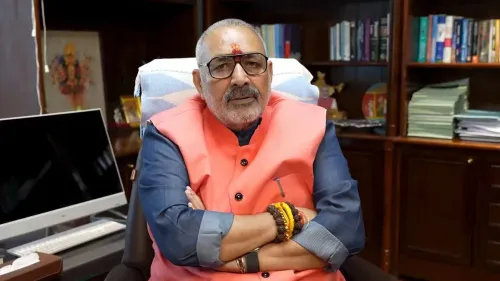
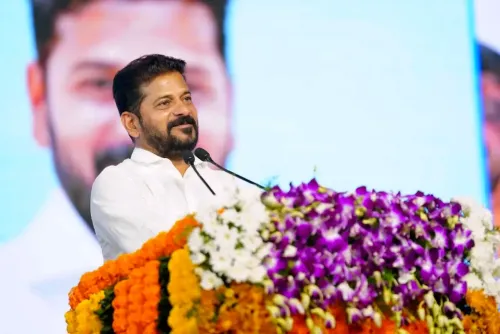
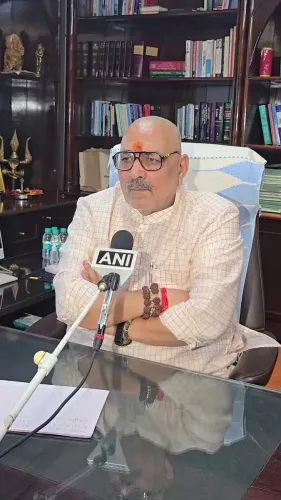
Giriraj Singh accuses Revanth Reddy of dividing Hindu deities

Synopsis
Union Textiles Minister Giriraj Singh attacked Telangana CM Revanth Reddy and Congress on 29 September 2026, accusing them of dividing Lord Ram and Lord Shiva along regional and class lines and branding it 'appeasement politics' targeting Hinduism.
Key Takeaways
Giriraj Singh accused Revanth Reddy and Congress of attempting to split Hindu deities along north-south and rich-poor lines.
Singh called it tushtikaran ki rajneeti (appeasement politics) with Hinduism as the perpetual target.
The BJP frames such statements as an attack on Sanatana as an indivisible cultural whole.
BJP has consistently accused Congress of minority-focused vote-bank politics, citing precedents going back to 1985–86 .
Telangana , governed by Congress under Revanth Reddy since late 2023 , is a recurring flashpoint for BJP's cultural-politics messaging.
Congress had not issued a public rebuttal at the time of publication.
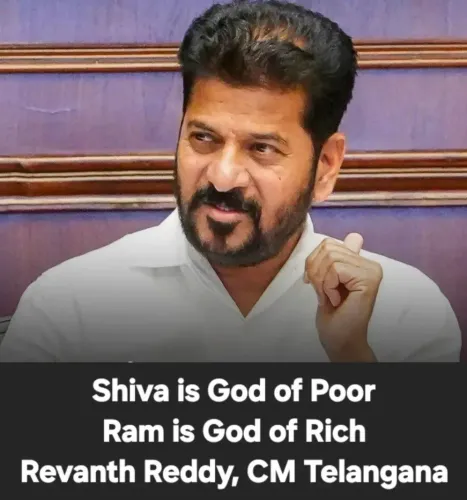
A charge of cultural sabotage — that is how Union Textiles Minister Giriraj Singh framed remarks attributed to Telangana Chief Minister Revanth Reddy on Tuesday, 29 September 2026, accusing the Congress leader of driving a wedge between Lord Ram and Lord Shiva along north-south and rich-poor lines.
Singh's post, written in Hindi, pulled no punches: 'Congress aur uske netaon ki mansikta hamesha se Sanatan ko baantne ki rahi hai' ('The mentality of Congress and its leaders has always been to divide Sanatana'). He charged that Revanth Reddy and the Congress party 'have no knowledge of the country's culture' and branded the episode an instance of tushtikaran ki rajneeti — appeasement politics — with Hinduism perpetually cast as the target.
The north-south, rich-poor framing Singh is pushing back against
The specific remarks by Revanth Reddy that triggered Singh's post could not be independently verified, but the BJP's counter-narrative is clear: any attempt to position Lord Ram as a northern or upper-class deity and Lord Shiva as a southern or common-people's god is, in the BJP's telling, a deliberate fracturing of a unified Hindu identity. Singh's language — invoking 'Sanatana' as an indivisible whole — is the standard BJP rebuttal to such framing.
This is not a new battlefield. BJP leaders have for years accused Congress of minority-focused politics that, they argue, comes at the expense of Hindu sentiment — pointing as far back as the 1985–86 reversal of the Shah Bano judgment as a template for what they call vote-bank appeasement. The pattern intensifies whenever a Congress-governed state government makes a statement touching on temples, pilgrimage, or theological tradition.
Why Revanth Reddy and Telangana are in the frame
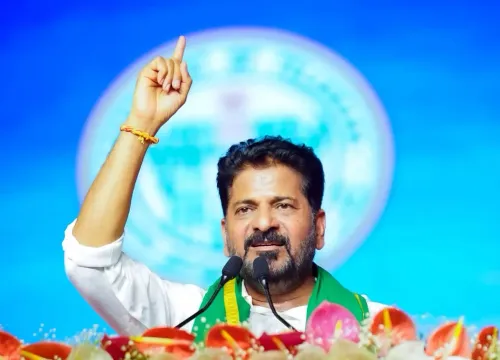
Revanth Reddy, who leads the Congress government in Telangana, has been a frequent target of BJP's cultural-politics messaging since his party won the state in late 2023. Telangana sits at the intersection of competing religious geographies — home to major Shaivite shrines as well as deep Vaishnava traditions — making any statement about inter-deity hierarchy politically combustible. Singh's intervention signals that BJP's central leadership intends to nationalise what may have been a state-level remark, feeding it into a broader pre-election cultural consolidation narrative.
The Congress party had not issued a public rebuttal to Singh's post at the time of publication.
When cultural lines are drawn this sharply in Indian politics, the fallout rarely stays contained to the original remark — the real contest is always over who gets to define the faith.
Point of View
Rich-poor binary, the BJP frames Congress not merely as politically opportunistic but as culturally illiterate — a charge designed to resonate far beyond Telangana. The Congress party faces a recurring asymmetry: any statement by a state leader on religious tradition can be amplified centrally by BJP, while a rebuttal risks either validating the controversy or appearing defensive on questions of faith. The Shah Bano callback, deployed again here, underscores how BJP intends to keep a thirty-year-old wound fresh as a symbol of structural Congress appeasement.
NationPress
30 Sept 2026
Frequently Asked Questions
What did Giriraj Singh say about Revanth Reddy?
Singh accused Revanth Reddy and Congress of trying to divide Lord Ram and Lord Shiva along north-south and rich-poor lines, calling it appeasement politics targeting Hinduism.
What remarks by Revanth Reddy triggered Giriraj Singh's post?
Singh's post references statements by Revanth Reddy that allegedly positioned Hindu deities along regional and class divisions; the exact remarks could not be independently verified at the time of publication.
What is 'Sanatana' and why is it at the centre of BJP-Congress clashes?
'Sanatana' or Sanatana Dharma broadly refers to the eternal principles underlying Hinduism. BJP invokes it to argue that Hindu tradition is a unified whole and that Congress rhetoric fragments it for electoral gain.
Who is Revanth Reddy?
Revanth Reddy is a senior Congress leader who has served as Chief Minister of Telangana since the party's victory in the state in late 2023.
What is BJP's long-standing charge against Congress on religious politics?
BJP has accused Congress of practicing minority appeasement at the expense of Hindu interests, citing episodes such as the government's 1985-86 reversal of the Shah Bano judgment as a founding example of this pattern.