Rijiju joins moot court competition, plants tree for EkPedMaaKeNaam
Synopsis
Union Minister Kiren Rijiju engaged with student participants at an International Moot Court Competition on 26 September 2026, championing critical thinking and civic skills, before joining the students in a tree plantation drive under the government's EkPedMaaKeNaam initiative.
Key Takeaways
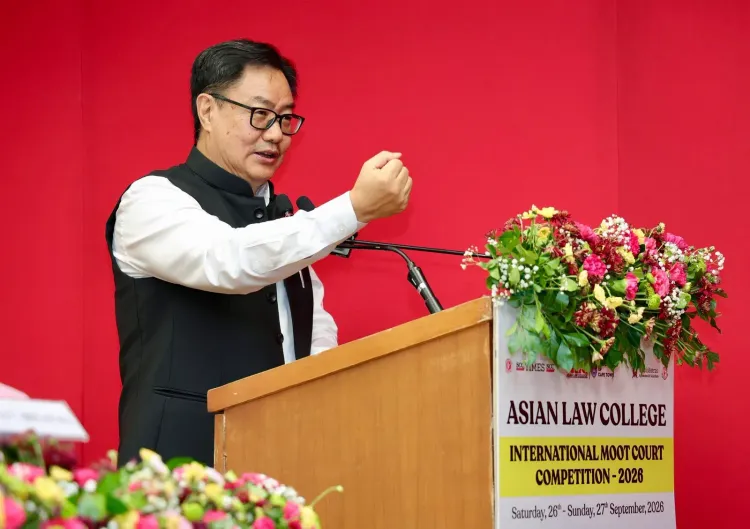
Kiren Rijiju attended an International Moot Court Competition on 26 September 2026 , engaging with student participants.
He praised moot courts for building critical thinking, confident expression, and civic skills in young Indians.
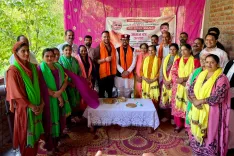
Rijiju joined students in a tree plantation drive under the #EkPedMaaKeNaam ('One Tree in Mother's Name') government campaign.
He framed India's youth as 'active participants in shaping the India of today,' not merely future leaders.
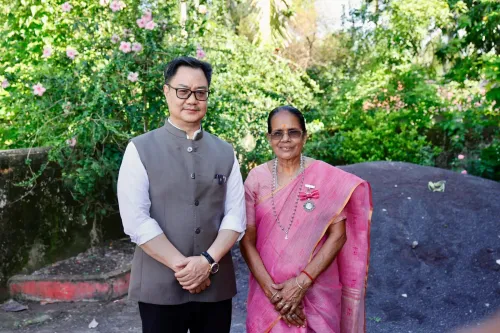
The post was accompanied by 8 photographs , giving the dual engagement wide visual circulation on social media.
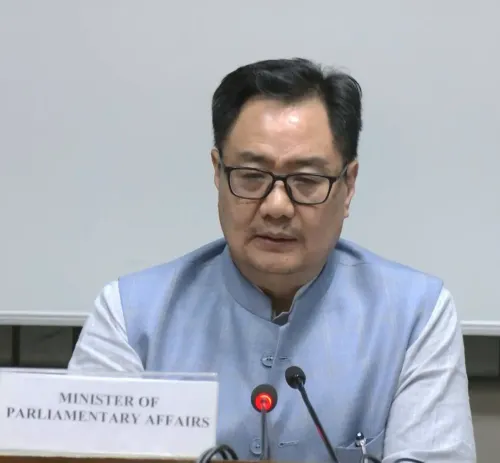
India's youth are not just leaders in waiting — Union Parliamentary Affairs and Minority Affairs Minister Kiren Rijiju made that point in action on Saturday, 26 September 2026, when he engaged with student participants at an International Moot Court Competition and joined them in a tree plantation drive under the government-backed #EkPedMaaKeNaam initiative.
What Rijiju saw at the moot court
The minister described the experience as 'enriching,' saying platforms like moot court competitions teach students to 'think critically, express their views with confidence, understand diverse perspectives and develop the skills needed to contribute meaningfully to society and to the nation.' The setting — young law students arguing before a simulated court — is precisely the kind of civic rehearsal that Indian ministers have increasingly sought to spotlight, recognising that legal reasoning and structured debate are foundational skills for public life.
Rijiju's broader message was pointed: 'India's youth are not just the leaders of tomorrow, they are active participants in shaping the India of today.' That framing shifts the usual intergenerational platitude into a present-tense call to engagement.
The EkPedMaaKeNaam sapling moment
After the courtroom energy, the minister stepped outside for something quieter. He joined students in a tree plantation drive under the #EkPedMaaKeNaam ('One Tree in Mother's Name') initiative — a government-backed campaign that asks citizens to dedicate a sapling to their mothers as a gesture connecting personal affection with environmental responsibility.
Tying a plantation drive to a moot court event was a deliberate symbolic stitch: the same students debating legal and civic questions were also asked to take physical ownership of a greener future. Rijiju called it 'connecting the spirit of youth participation with our shared responsibility towards a greener and more sustainable future.'
A pattern of campus-to-cause outreach
The dual engagement — education event followed by environmental action — reflects a now-familiar playbook among senior ministers: anchor a campus visit in a skills-oriented competition, then layer in a sustainability message that travels visually on social media. Eight photographs accompanied the post, giving the event significant visual reach. For Rijiju, whose constituency base in Arunachal Pradesh sits in one of India's most biodiverse and forested regions, the plantation optic carries an additional layer of authenticity.
He closed with a direct wish to the competing students — 'the very best for the competition and their journey ahead' — a reminder that beneath the policy messaging, the afternoon was, at its core, about young people arguing their best case in a room that took them seriously.
If those students argue half as well as they plant, India's courtrooms are in good hands.
Point of View
High visual yield, and easily tied to any youth-oriented event. More substantively, the minister's insistence that youth are shapers of 'the India of today' signals a deliberate pivot away from paternalistic 'future leader' rhetoric toward language that frames young voters as immediate political stakeholders. Whether that framing translates into deeper policy investment in legal education infrastructure is the question these photo-ops tend to leave unanswered.
NationPress
26 Sept 2026
Frequently Asked Questions
What is the EkPedMaaKeNaam initiative?
#EkPedMaaKeNaam ('One Tree in Mother's Name') is a government-backed tree plantation campaign that encourages citizens to dedicate a sapling to their mothers, linking personal sentiment with environmental responsibility.
Why did Kiren Rijiju attend a moot court competition?
Rijiju attended to engage with student participants, emphasising that platforms like moot courts build critical thinking, confident expression, and civic skills essential for contributing to society and the nation.
What did Kiren Rijiju say about India's youth?
He said India's youth are 'not just the leaders of tomorrow, they are active participants in shaping the India of today,' framing young people as present-tense contributors rather than future figures.
What is a moot court competition?
A moot court competition is a simulated court proceeding in which law students argue hypothetical cases before judges, developing legal reasoning, public speaking, and argumentation skills.
Which ministry does Kiren Rijiju head?
Kiren Rijiju is the Union Minister of Parliamentary Affairs and Minister of Minority Affairs, and is a senior BJP leader from Arunachal Pradesh.