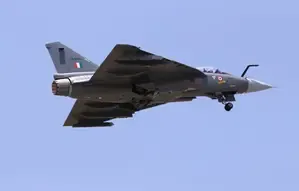
Rijiju Hails Tejas Mk1A as Pillar of India's Air Defence
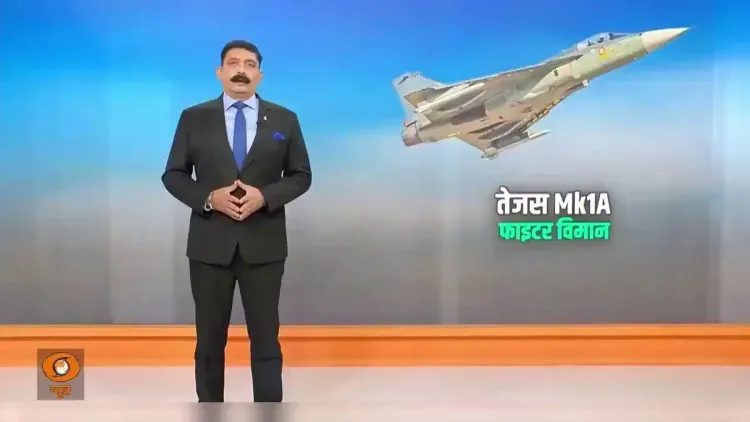
Synopsis
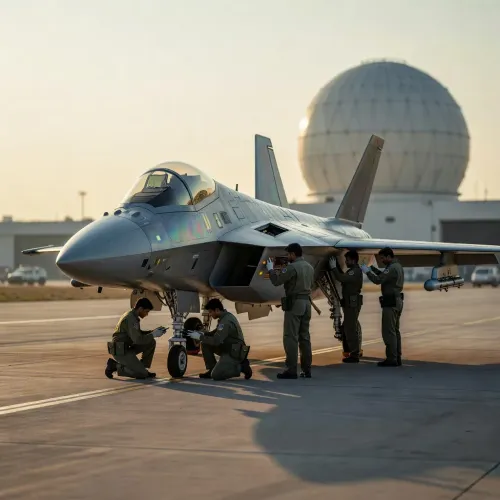
Union Minister Kiren Rijiju on 24 May 2026 hailed the Tejas Mk1A as a pillar of India's long-term air defence strategy, citing its AESA radar, BVR missiles, and indigenous avionics as proof of India's self-reliance in defence manufacturing.
Key Takeaways
Kiren Rijiju publicly championed the Tejas Mk1A as a cornerstone of India's long-term air defence strategy on 24 May 2026 .
The aircraft is equipped with AESA radar , BVR missiles , and indigenous avionics systems developed under Indian programmes.
A contract for 83 Tejas Mk1A jets was signed with HAL in 2021 , one of the largest orders placed with an Indian aerospace manufacturer.
The Tejas Mk1A is designated as the primary replacement for the ageing MiG-21 fleet in the Indian Air Force .
The programme is a flagship example of the Atmanirbhar Bharat and Make in India frameworks applied to defence manufacturing.
The LCA Tejas programme dates to 1983 and achieved Final Operational Clearance in 2019 after over three decades of development.
Union Parliamentary Affairs Minister Kiren Rijiju on Sunday, 24 May 2026, championed the Tejas Mark 1 Alpha fighter aircraft as a cornerstone of India's long-term defence strategy, calling it a powerful symbol of self-reliance, indigenous technology, and the capability of Indian scientists.
Context
Posting in Hindi, Rijiju described the Tejas Mk1A as an advanced evolution of the original Tejas fighter, equipped with state-of-the-art AESA radar, Beyond Visual Range (BVR) missiles, and indigenous avionics systems. He wrote that the aircraft would take the Indian Air Force's combat power to new heights. Translated from Hindi, his post reads: 'Tejas Mark 1 Alpha: an important protagonist of India's long-term defence strategy' — framing the platform not merely as a weapons system but as a statement of national technological ambition.
The minister specifically highlighted the aircraft's role as the designated replacement for the MiG-21, the Soviet-era fighter that has formed the backbone of Indian air defence for decades. He called the Tejas Mk1A the 'naya yoddha' ('new warrior') that will form a strong foundation for India's air security in the years ahead.
Policy Backdrop
The Light Combat Aircraft (LCA) Tejas programme was formally launched in 1983 under the Aeronautical Development Agency (ADA) with the explicit goal of developing an indigenous multi-role fighter. The aircraft received its Initial Operational Clearance in 2013, entered Indian Air Force squadron service in 2016, and achieved Final Operational Clearance in 2019 — a journey spanning over three decades of domestic research and development.
The Mk1A variant represents a significant leap from the baseline platform. A landmark contract for 83 Tejas Mk1A aircraft was signed with Hindustan Aeronautics Limited (HAL) in 2021, incorporating upgraded AESA radar, advanced electronic warfare suites, and beyond-visual-range missile capability. The programme sits at the intersection of the Make in India initiative — launched in 2014 — and the Atmanirbhar Bharat framework, both of which prioritise reducing India's dependence on imported defence platforms.
HAL, the state-owned aerospace manufacturer responsible for Tejas production and system integration, has been tasked with ramping up output to meet Indian Air Force modernisation timelines as legacy Soviet-era squadrons are phased out.
Stakeholders and Impact
For the Indian Air Force, the Tejas Mk1A addresses a pressing operational gap: the retirement of the MiG-21 fleet, which has been in service since the 1960s, leaves the force requiring capable, modern replacements across multiple squadrons. The Mk1A's indigenous avionics and sensor suite also reduce lifecycle dependency on foreign original equipment manufacturers, strengthening long-term operational sovereignty.
The domestic defence industry — particularly HAL and its network of private-sector suppliers — stands to benefit substantially from the 83-aircraft order, which is one of the largest single contracts awarded to an Indian aerospace manufacturer. Broader indigenisation goals under Atmanirbhar Bharat mean that components, software, and systems developed for Tejas are expected to seed capabilities across India's wider defence industrial base.
What's Next
Parliamentary scrutiny of HAL's production ramp-up schedule and delivery timelines for the 83 Mk1A aircraft is anticipated during the upcoming monsoon session. Analysts and defence observers will also watch for any policy signals regarding a follow-on order or the progression of the more advanced Tejas Mk2 variant, which is intended to carry greater payload and feature an upgraded engine. Rijiju's post signals that the government intends to keep the Tejas programme prominently in the public discourse as a flagship achievement of India's defence indigenisation drive.
Point of View
The government signals that decades of investment in indigenous defence are now yielding operational results — a counter to persistent criticism about slow delivery timelines and import dependency. The framing of Indian scientists as the heroes of the Tejas story also serves a soft-power function, projecting technological confidence domestically and to strategic partners. Sustained ministerial amplification of the Tejas programme suggests the government is building a public mandate for further indigenisation investment, including potential follow-on orders for the Mk2 variant.
NationPress
11 Oct 2026
Frequently Asked Questions
What is the Tejas Mk1A fighter aircraft?
The Tejas Mk1A is an advanced variant of India's indigenous Light Combat Aircraft, developed by ADA and manufactured by HAL, featuring upgraded AESA radar, BVR missiles, and indigenous avionics compared to the baseline Tejas.
How many Tejas Mk1A jets has India ordered?
India signed a contract with HAL in 2021 for 83 Tejas Mk1A aircraft, making it one of the largest orders placed with an Indian aerospace manufacturer.
Which aircraft is the Tejas Mk1A replacing?
The Tejas Mk1A is designated to replace the MiG-21, the Soviet-era fighter that has served in the Indian Air Force since the 1960s.
What is the connection between Tejas and Atmanirbhar Bharat?
The Tejas programme is a flagship example of Atmanirbhar Bharat and Make in India in the defence sector, prioritising indigenous design, domestic manufacturing by HAL, and local integration of sensors, weapons, and avionics to reduce import dependence.
When did the Tejas programme start and when did it enter service?
The LCA Tejas programme was launched in 1983 under the Aeronautical Development Agency. It received Initial Operational Clearance in 2013, entered Indian Air Force squadron service in 2016, and achieved Final Operational Clearance in 2019.