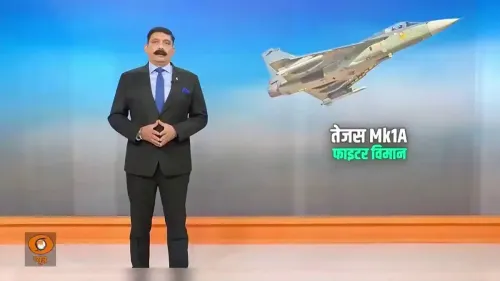
CM Samrat Choudhary Hails Tejas Mk1A as Symbol of Aatmanirbhar Bharat
Synopsis
Bihar Chief Minister Samrat Choudhary on 24 May 2026 hailed the Tejas Mk1A as the defining symbol of Aatmanirbhar Bharat, crediting India's scientists and engineers for the indigenous fighter aircraft's achievement in elevating the country's defence capabilities.
Key Takeaways
Bihar CM Samrat Choudhary publicly celebrated the Tejas Mk1A as a symbol of India's self-reliance in defence on 24 May 2026 .
The LCA programme was approved in 1983 ; the first Tejas Mk1 squadron reached initial operational status with the IAF in 2016 .
The Ministry of Defence signed a contract with HAL for 83 Tejas Mk1A aircraft in February 2021 .
The Aatmanirbhar Bharat Abhiyan , launched in May 2020 , lists defence indigenisation as a core pillar.
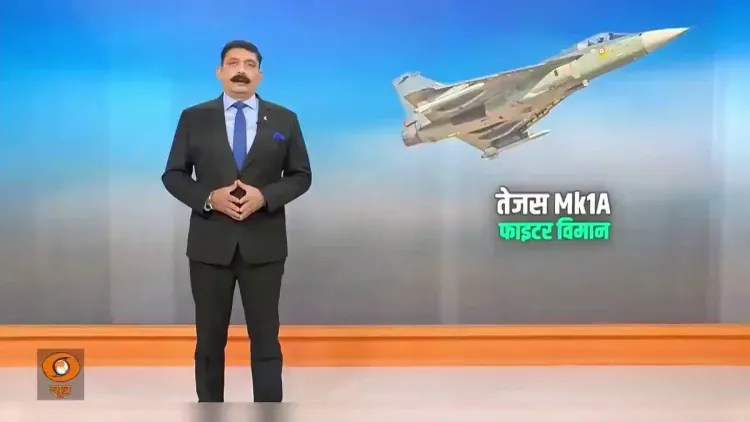
The Tejas Mk1A features upgraded radar, advanced avionics and improved weapons systems over the baseline variant.
Next milestones include phased IAF inductions and potential follow-on orders or export deals at future Aero India events.
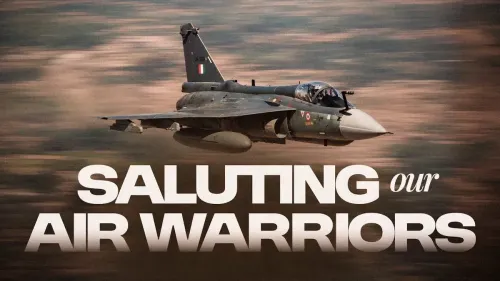
Bihar Chief Minister Samrat Choudhary on Sunday, 24 May 2026, took to X to celebrate the Tejas Mk1A fighter aircraft as a defining symbol of India's self-reliance in defence, calling it not merely a combat jet but 'a new identity of the resolve and capability of Aatmanirbhar Bharat.'
Context
Posting in Hindi, CM Choudhary wrote: 'तेजस मार्क 1A सिर्फ एक लड़ाकू विमान नहीं, आत्मनिर्भर भारत के संकल्प और सामर्थ्य की नई पहचान है' ['Tejas Mark 1A is not merely a fighter aircraft — it is a new identity of Aatmanirbhar Bharat's resolve and capability']. He credited India's scientists, engineers and youth for pushing the country's defence sector to 'new heights.' The post was accompanied by a video and drew on the broader national narrative of indigenous technological achievement.
Policy Backdrop
The Light Combat Aircraft (LCA) programme was formally approved in 1983, tasking the Aeronautical Development Agency (ADA) — a laboratory under DRDO — with designing India's first indigenous supersonic fighter. The first Tejas Mk1 squadron achieved initial operational status with the Indian Air Force (IAF) in 2016, marking a landmark after decades of development. The programme accelerated under the Make in India initiative post-2014 and again under the Aatmanirbhar Bharat Abhiyan, launched in May 2020 with defence indigenisation as a core pillar.
The most significant procurement milestone came in February 2021, when the Ministry of Defence signed a contract with Hindustan Aeronautics Limited (HAL) for 83 Tejas Mk1A aircraft — the most advanced production variant, featuring upgraded radar, avionics and weapons systems. The deal represented one of the largest single defence contracts placed with a domestic manufacturer in India's history.
Stakeholders and Impact
The Indian Air Force is the primary beneficiary, with the Tejas Mk1A inductions intended to fill critical squadron shortfalls as ageing legacy fleets are phased out. HAL, as the series manufacturer, stands to benefit from sustained production orders and the development of an export pipeline. The broader domestic defence industrial base — including suppliers of avionics, composites and propulsion components — gains from the programme's indigenisation mandates.
For political leaders such as CM Choudhary, championing the Tejas narrative aligns with the ruling coalition's emphasis on national pride and technological sovereignty. His post frames the aircraft as 'a symbol of the strength, confidence and self-reliance of New India,' connecting a defence milestone to a wider political identity.
What's Next
Attention now turns to the phased induction of the 83 contracted Mk1A aircraft into IAF squadrons, with delivery timelines and production ramp-up at HAL's Bengaluru facility closely watched. Potential follow-on orders — including a larger Mk2 variant and export prospects — are expected to feature prominently at future editions of Aero India and in upcoming annual defence budgets. The Tejas programme's trajectory will serve as a key benchmark for India's broader ambition to become a top-tier defence exporter by the end of this decade.
Point of View
Reinforcing a pattern where BJP leaders at every tier use defence milestones as proof points of governance competence. The Tejas programme, spanning four decades and multiple governments, has now been fully co-opted into a singular 'New India' narrative — a framing that serves both strategic communication and genuine policy continuity. Whether the production and induction timelines deliver on the promise will ultimately test the credibility of that narrative.
NationPress
9 Oct 2026
Frequently Asked Questions
What is the Tejas Mk1A fighter aircraft?
The Tejas Mk1A is an advanced variant of India's indigenous Light Combat Aircraft, featuring improved active electronically scanned array radar, enhanced avionics and expanded weapons capability. It is built by Hindustan Aeronautics Limited (HAL) under a February 2021 contract for 83 aircraft for the Indian Air Force .
Why did Bihar CM Samrat Choudhary post about the Tejas Mk1A?
CM Samrat Choudhary posted on 24 May 2026 to celebrate the aircraft as a symbol of Aatmanirbhar Bharat , crediting India's scientists, engineers and youth for the country's growing defence self-reliance.
What is Aatmanirbhar Bharat in defence?
Aatmanirbhar Bharat Abhiyan is a national self-reliance initiative launched in May 2020 that places defence indigenisation at its core, aiming to reduce India's historically high dependence on weapons imports through domestic design and production.
When did the Tejas programme begin?
The Light Combat Aircraft programme was formally approved in 1983 , with the Aeronautical Development Agency leading design. The first Tejas Mk1 squadron achieved initial operational status with the Indian Air Force in 2016 .
How many Tejas Mk1A aircraft has India ordered?
The Ministry of Defence signed a contract with HAL in February 2021 for 83 Tejas Mk1A aircraft, one of the largest single defence contracts placed with a domestic manufacturer in India's history.