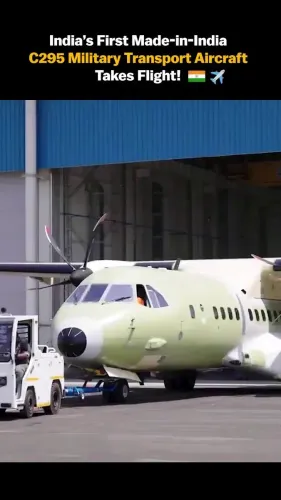
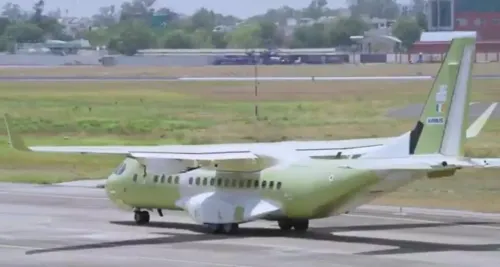
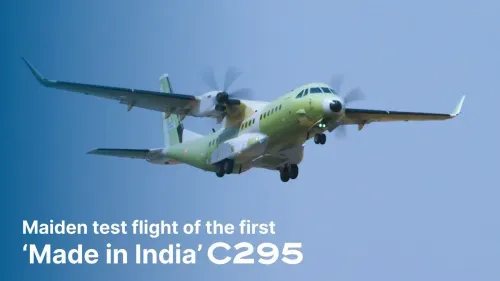
Anurag Thakur Hails C295 First Flight as Atmanirbhar Bharat Milestone
Synopsis
BJP MP Anurag Thakur has celebrated the maiden flight of the C295, India's first domestically assembled military aircraft, built in Vadodara through an Airbus-Tata partnership under the Atmanirbhar Bharat initiative. He credited PM Modi's leadership for turning the self-reliance vision into reality.
Key Takeaways
BJP MP Anurag Thakur posted on June 11, 2026 hailing the first flight of the C295 transport aircraft.
The C295 is India's first military aircraft to be manufactured domestically, assembled at a Vadodara facility by Tata Advanced Systems in partnership with Airbus .
India signed a contract for 56 C295 aircraft with Airbus in September 2021 under the Atmanirbhar Bharat framework.
The Indian Air Force is the end user; the aircraft will replace older tactical transport platforms.
The Vadodara plant is the first private-sector final assembly line for military aircraft in India.
The programme is seen as a model for future defence public-private partnerships involving technology transfer.
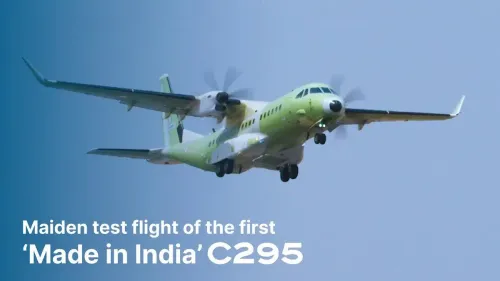
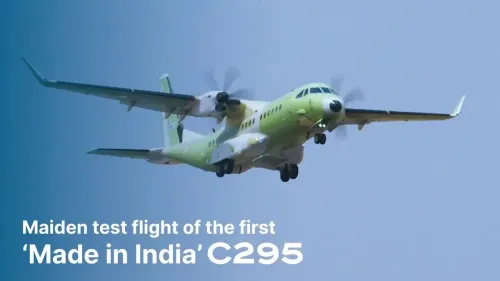
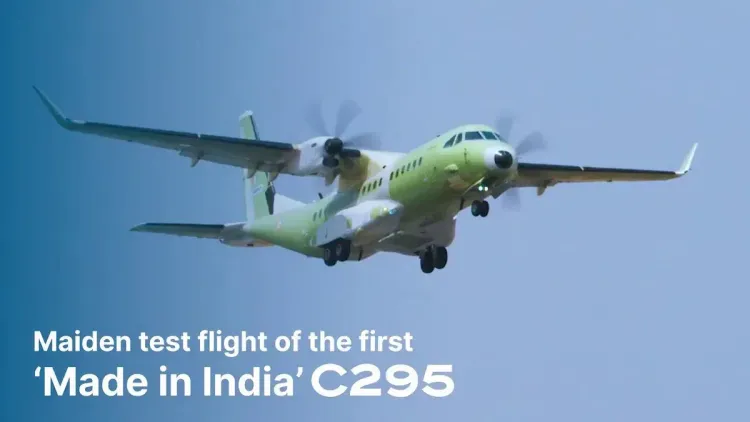
BJP MP Anurag Thakur on Thursday, June 11, 2026, celebrated the maiden flight of the C295 transport aircraft — India's first domestically manufactured military aircraft — calling it a defining moment in the country's defence self-reliance journey. The aircraft, assembled at a final assembly line in Vadodara, Gujarat, is the product of a landmark partnership between Airbus and the Tata Group.
Context
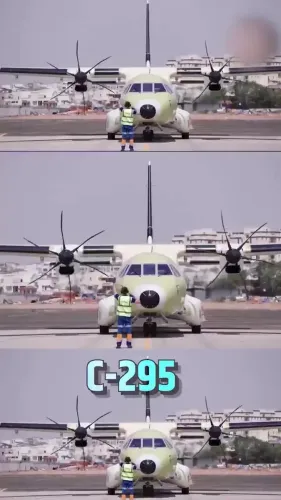
Thakur, the Lok Sabha MP from Hamirpur, Himachal Pradesh and former Union Minister of Information and Broadcasting, posted on X that 'the dreams of Atmanirbhar Bharat have finally begun to unfold and spread their wings, soaring high in the sky.' He described the C295's flight as a 'historic milestone in India's defence manufacturing journey' that 'adds muscle to the nation's security preparedness.' The post was accompanied by a video of the aircraft.
The C295 is a medium tactical transport aircraft designed for troop and cargo movement. Its domestic manufacture represents a significant shift from India's historically import-dependent defence procurement model.
Policy Backdrop
The Atmanirbhar Bharat initiative was announced by Prime Minister Narendra Modi in May 2020, with defence identified as a priority sector for indigenisation. A formal contract for 56 C295 aircraft was signed with Airbus in September 2021, with a stipulation that a substantial number be manufactured on Indian soil through a technology-transfer arrangement with the Tata Group.
The Vadodara facility — set up by Tata Advanced Systems — is the first private-sector final assembly line for military aircraft in India. The project is seen as a template for future public-private defence partnerships involving technology transfer and local industrial capacity building.
Stakeholders and Impact
The primary beneficiary of the C295 programme is the Indian Air Force (IAF), which will use the aircraft to replace ageing fleets in its tactical transport role. The programme is also expected to generate significant employment and build supplier ecosystems across India's aerospace industry.
For the Tata Group, the programme marks its deepest entry into military aerospace manufacturing. For Airbus, it represents a strategic bet on India as a defence manufacturing hub, with potential to use the country as an export base for the platform in the future.
What's Next
The next critical milestone will be the formal delivery of the first C295 aircraft to the Indian Air Force, followed by progressive induction of the fleet. Policymakers and industry observers will watch whether the Vadodara model — combining a global OEM with an Indian private conglomerate — can be replicated for other platforms such as fighter jets and helicopters.
If the programme meets its delivery timelines, it could meaningfully accelerate India's goal of becoming a top-five global defence manufacturer and exporter, a target the government has publicly set for the coming decade.
Point of View
Arriving at a moment when the government is keen to demonstrate industrial outcomes — not just policy announcements. Thakur's post signals that the BJP intends to use this milestone actively in political messaging around self-reliance. The Airbus-Tata model, if it delivers on schedule, could set a precedent that reshapes how India structures future defence acquisitions — shifting leverage toward domestic industry. The broader question is whether this programme can sustain momentum through delivery timelines and quality benchmarks, which will ultimately determine its legacy.
NationPress
26 Oct 2026
Frequently Asked Questions
What is the C295 aircraft and why is it significant for India?
The C295 is a medium tactical military transport aircraft. Its significance lies in the fact that it is the first military aircraft to be assembled in India, at a facility in Vadodara set up by Tata Advanced Systems in partnership with Airbus, marking a milestone in domestic defence manufacturing.
Where is the C295 being manufactured in India?
The C295 is being assembled at a final assembly line in Vadodara, Gujarat, operated by Tata Advanced Systems in collaboration with Airbus.
What is the Atmanirbhar Bharat initiative in defence?
Atmanirbhar Bharat, launched in May 2020 by PM Narendra Modi, is a self-reliance initiative that prioritises domestic manufacturing across sectors. In defence, it aims to reduce import dependence by encouraging indigenous production and technology transfer through public-private partnerships.
How many C295 aircraft is India getting and who will use them?
India signed a contract for 56 C295 aircraft in September 2021. They are intended for the Indian Air Force to replace older tactical transport aircraft in its fleet.
What did Anurag Thakur say about the C295 flight?
Anurag Thakur said the C295's flight showed that 'the dreams of Atmanirbhar Bharat have finally begun to unfold,' calling it a 'historic milestone in India's defence manufacturing journey' and crediting PM Modi's leadership for turning the vision into reality.