Kishan Reddy hails maiden flight of Made-in-India C295 aircraft
Synopsis
Union Coal and Mines Minister G. Kishan Reddy has welcomed the maiden test flight of the first Made-in-India C295 transport aircraft, assembled by Tata Advanced Systems and Airbus at their Vadodara facility, calling it a milestone for Aatmanirbhar Bharat and India's indigenous defence manufacturing ambitions.
Key Takeaways
Union Coal and Mines Minister G.
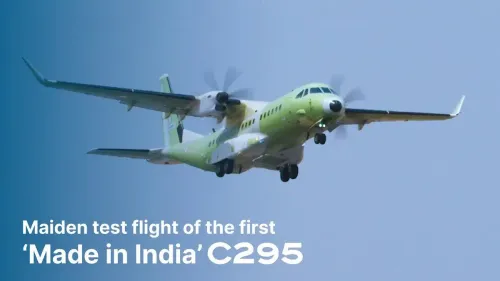
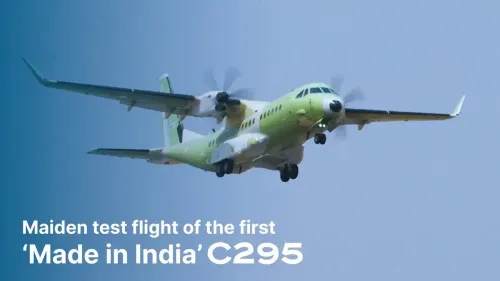
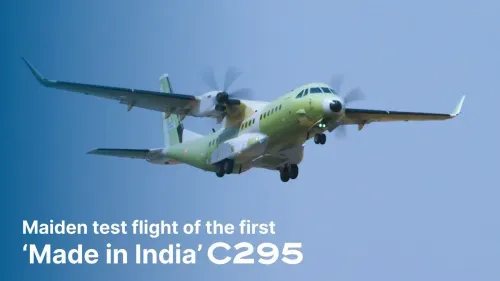
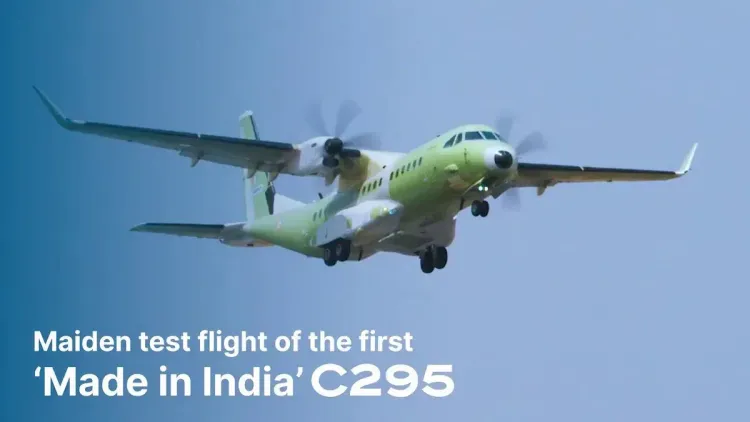
Kishan Reddy hailed the maiden test flight of the first Made-in-India C295 transport aircraft on June 11, 2026 .
The aircraft was assembled at the Tata Advanced Systems and Airbus final assembly line in Vadodara, Gujarat .
The programme covers 56 C295 aircraft for the Indian Air Force under a contract signed in September 2021 .
The initiative is part of the Aatmanirbhar Bharat self-reliance campaign, launched in May 2020 , with a focus on defence indigenisation.
The Vadodara facility is India's first final assembly line for a military transport aircraft, combining technology transfer with local manufacturing.
Successful completion of the programme could open pathways for export orders and expansion of India's aerospace manufacturing ecosystem.
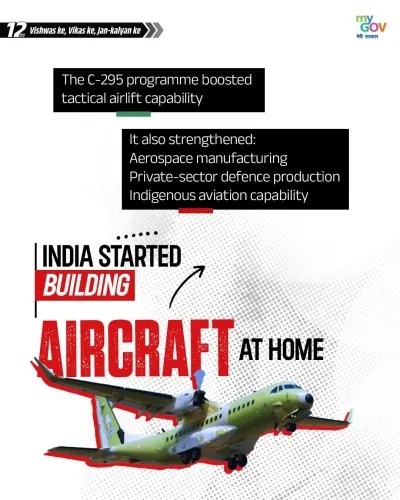
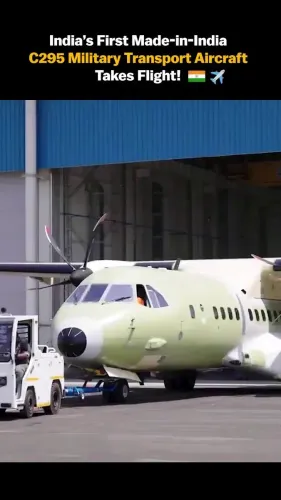
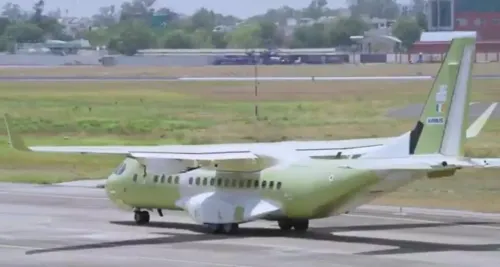
Union Coal and Mines Minister G. Kishan Reddy on Thursday, June 11, 2026, welcomed the maiden test flight of the first Made-in-India C295 transport aircraft, calling it a significant milestone in India's aerospace and defence manufacturing journey. The aircraft, assembled at the Tata Advanced Systems and Airbus facility in Vadodara, Gujarat, marks a landmark moment in India's push for defence self-reliance.
Context
In his post, Kishan Reddy described the event as 'a major step towards strengthening indigenous capabilities and advancing the vision of Aatmanirbhar Bharat.' He highlighted the role of global partnerships and Indian innovation, stating that the achievement 'reflects the power of global partnerships, Indian innovation, and the growing strength of India's manufacturing ecosystem.'
The C295 is a tactical military transport aircraft. The Vadodara facility, set up by Tata Advanced Systems in partnership with European aerospace major Airbus, serves as the final assembly line for the Indian-built variant — the first such assembly line for a military transport aircraft in India.
Policy Backdrop
The Aatmanirbhar Bharat initiative, launched in May 2020, placed defence indigenisation at its core, aiming to reduce India's dependence on imported military hardware. A formal contract for 56 C295 aircraft was signed in September 2021 between the Indian government, Airbus, and Tata Advanced Systems, mandating local production and technology transfer.
Under the arrangement, a set number of aircraft are to be manufactured entirely in India, with the Vadodara plant responsible for assembly, integration, and testing. The programme is designed not only to fulfil Indian Air Force (IAF) requirements but also to build a domestic aerospace supply chain capable of supporting future programmes.
India has pursued similar joint-venture structures across strategic sectors, requiring global original equipment manufacturers to partner with Indian firms and absorb technology locally — a model intended to raise the share of indigenously produced defence equipment over time.
Stakeholders and Impact
The Indian Air Force is the primary beneficiary of the 56-aircraft programme, with the C295 set to replace ageing transport fleets and expand tactical airlift capacity. For Tata Advanced Systems, the maiden flight signals a transition from assembly partner to a manufacturer with demonstrated production capability in a complex aerospace platform.
Airbus's participation reflects a broader industry trend of global OEMs deepening local partnerships to access India's growing defence market. The Vadodara facility also positions India as a potential hub for regional aerospace manufacturing, with observers watching whether the line could eventually serve export orders or additional Airbus programmes.
Vadodara and Gujarat stand to benefit from the industrial activity, with the facility generating skilled employment and anchoring a cluster of aerospace component suppliers in the region.
What's Next
With the maiden test flight completed, attention turns to the full flight-test programme, airworthiness certification, and the timeline for formal induction of Made-in-India C295s into IAF squadrons. Delivery schedules for the remaining aircraft under the 56-unit contract will be closely watched by both the defence establishment and the domestic aerospace industry.
The success of the C295 programme could serve as a template for future indigenisation efforts, reinforcing the case for technology-transfer-backed joint ventures as India works to raise the share of domestically produced equipment in its defence inventory.
Point of View
Even across ministerial portfolios — signalling that defence indigenisation is a whole-of-government political priority, not merely a defence ministry brief. The C295 programme is one of the most visible proof points of the 2021 technology-transfer model, and its first domestic flight gives the ruling party a tangible deliverable to highlight ahead of any electoral cycle. For India's aerospace sector, the broader significance lies in whether the Vadodara line can transition from assembling a single contracted batch to anchoring a commercially sustainable, export-capable manufacturing ecosystem. The pace of IAF induction and the government's willingness to place follow-on orders domestically will be the real test of the programme's long-term industrial impact.
NationPress
26 Oct 2026
Frequently Asked Questions
What is the Made-in-India C295 aircraft?
The C295 is a tactical military transport aircraft being manufactured in India by Tata Advanced Systems in partnership with Airbus at a final assembly line in Vadodara, Gujarat, under a 56-aircraft contract with the Indian government signed in September 2021.
Where is the C295 aircraft being manufactured in India?
The C295 is being assembled at the Tata Advanced Systems and Airbus facility in Vadodara, Gujarat, which is India's first final assembly line for a military transport aircraft.
What is the Aatmanirbhar Bharat initiative in defence?
Aatmanirbhar Bharat, launched in May 2020, is the Indian government's self-reliance campaign that prioritises indigenous defence manufacturing and technology absorption through joint ventures with global original equipment manufacturers, reducing dependence on imported military hardware.
Why did Kishan Reddy comment on a defence event when he is the Coal and Mines Minister?
Senior cabinet ministers in India frequently comment on major national milestones across sectors, particularly those aligned with flagship government programmes like Aatmanirbhar Bharat, reflecting a whole-of-government communication approach.
When will the Indian Air Force receive the Made-in-India C295 aircraft?
The formal induction timeline into Indian Air Force squadrons depends on completion of the full flight-test programme and airworthiness certification; specific delivery schedules for the remaining aircraft under the 56-unit contract are yet to be publicly confirmed.