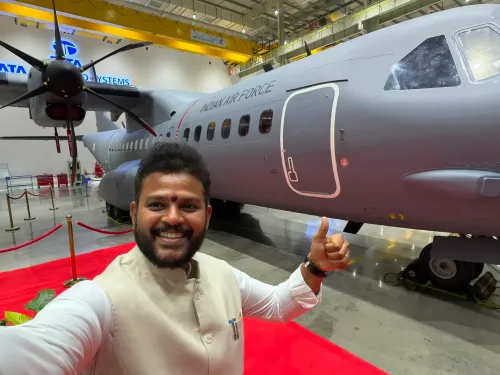
CM Bhupendra Patel Hails India's First Made-in-India C295 Test Flight
Synopsis
Gujarat Chief Minister Bhupendra Patel on June 11, 2026 hailed the maiden test flight of the first Made-in-India Airbus C295 military transport aircraft from Vadodara, calling it a milestone for Aatmanirbhar Bharat and crediting the Tata Advanced Systems-Airbus joint venture for advancing India's domestic defence manufacturing ambitions.
Key Takeaways
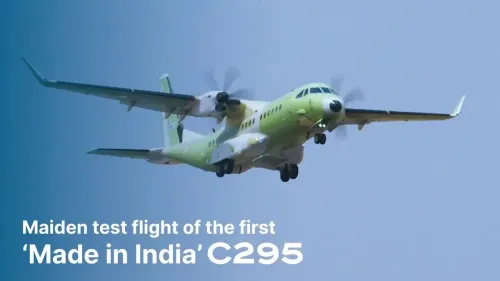
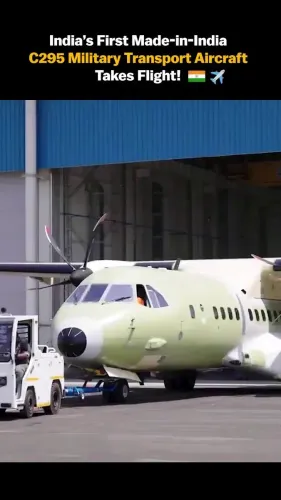
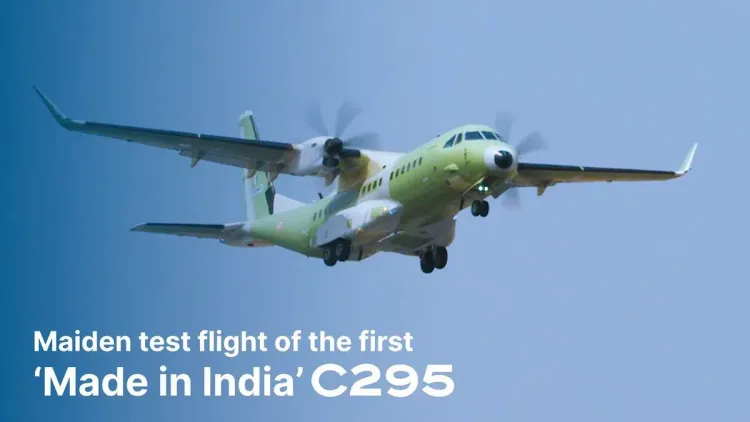
The first Made-in-India Airbus C295 military transport aircraft completed its maiden test flight from Vadodara, Gujarat on June 11, 2026 .
Gujarat CM Bhupendra Patel congratulated Airbus , Tata Advanced Systems , and all associated stakeholders on the milestone.
India signed a contract in September 2021 for 56 C295 aircraft , with 40 to be manufactured domestically through the Tata-Airbus joint venture in Vadodara.
The C295 is earmarked to replace the Indian Air Force's legacy Avro fleet, modernising India's tactical airlift capability.
The programme is a flagship output of the Aatmanirbhar Bharat and Make in India defence indigenisation policy.
Gujarat is being positioned as a key hub for advanced aerospace and defence manufacturing under national and state policy.
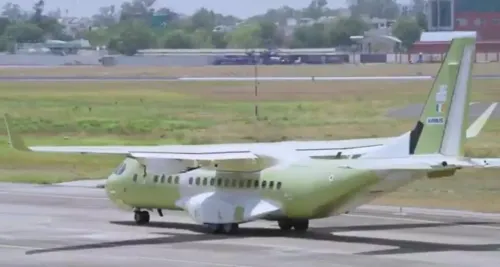
Gujarat Chief Minister Bhupendra Patel on Thursday, June 11, 2026, celebrated the successful maiden test flight of the first 'Made in India' Airbus C295 military transport aircraft from Vadodara, calling it a proud milestone for both Gujarat and India.
Context
The test flight marks a concrete output of the joint venture between Tata Advanced Systems and Airbus at their final assembly line in Vadodara, Gujarat. CM Patel described the achievement as a significant step towards Prime Minister Narendra Modi's vision of Aatmanirbhar Bharat and Make in India, extending congratulations to both Airbus and Tata Advanced Systems along with all associated stakeholders.
The C295 is a medium tactical transport aircraft intended to replace the Indian Air Force's ageing Avro fleet, and this maiden flight from Vadodara signals that domestic assembly has reached an advanced operational stage.
Policy Backdrop
In September 2021, India signed a government-to-government contract for 56 C295 aircraft with Airbus. Under the terms of that agreement, 40 of the 56 aircraft are to be manufactured in India through the Tata-Airbus joint venture, with the remaining 16 delivered in fly-away condition from Airbus's facilities in Spain.
The programme sits at the heart of India's defence indigenisation policy under Aatmanirbhar Bharat, which encourages foreign original equipment manufacturers to partner with Indian firms and increase domestic value addition in military platforms. The Vadodara facility represents one of the first instances of a complete military aircraft being assembled in India under such a framework.
Gujarat has received focused policy support to develop aerospace and advanced manufacturing clusters, positioning the state as a node in India's broader ambition to reduce dependence on defence imports.
Stakeholders and Impact
The Indian Air Force is the primary beneficiary, as the C295 fleet will modernise its tactical airlift capability once deliveries from the Vadodara line commence at scale. For Tata Advanced Systems, the milestone validates its capacity to undertake complex aerospace final assembly within India, potentially opening the door to further defence manufacturing contracts.
Airbus gains a foothold in one of the world's fastest-growing defence markets, while the broader Indian aerospace supply chain — comprising components manufacturers, systems integrators, and maintenance providers — stands to benefit from the programme's long production run.
For Gujarat, the Vadodara facility reinforces the state's identity as a destination for high-technology manufacturing investment, building on existing industrial infrastructure in the region.
What's Next
Attention will now turn to the pace of serial production at the Vadodara assembly line and the timeline for delivering the domestically built aircraft to the Indian Air Force. Successful progression through flight-test certification and induction milestones will determine how quickly the C295 replaces the legacy Avro fleet in service.
Analysts will also watch whether the programme's success prompts follow-on orders for additional C295 variants or catalyses similar joint-venture arrangements for other military platforms, further deepening India's domestic defence production ecosystem.
Point of View
And CM Patel's swift public endorsement underscores Gujarat's strategic interest in anchoring that transition. The Tata-Airbus model — a foreign OEM partnering with an Indian conglomerate under a government-mandated offset framework — is increasingly the template New Delhi is applying across platforms, from helicopters to fighters. For the BJP, the optics of a 'Made in India' military aircraft taking to the skies from a Gujarat tarmac neatly aligns state-level industrial ambition with the Prime Minister's signature economic narrative. The real test, however, lies in whether serial production can be scaled and certified fast enough to meet the Indian Air Force's operational timelines.
NationPress
26 Oct 2026
Frequently Asked Questions
What is the Made-in-India Airbus C295 aircraft?
The C295 is a medium tactical transport aircraft being assembled in India by Tata Advanced Systems in partnership with Airbus at a facility in Vadodara, Gujarat, under a 2021 government contract for 56 aircraft intended to replace the Indian Air Force's ageing Avro fleet.
Where is the C295 aircraft manufactured in India?
The C295 is assembled at the Tata Advanced Systems-Airbus joint venture final assembly line located in Vadodara, Gujarat.
How many C295 aircraft will be made in India?
Under the September 2021 contract, 40 of the 56 ordered C295 aircraft are to be manufactured domestically in India, with the remaining 16 delivered in fly-away condition from Airbus facilities abroad.
What is Aatmanirbhar Bharat in defence?
Aatmanirbhar Bharat, or 'self-reliant India,' is a policy framework promoted by Prime Minister Narendra Modi that encourages domestic manufacturing of defence equipment through joint ventures between foreign original equipment manufacturers and Indian companies, reducing India's dependence on imports.
Why did Gujarat CM Bhupendra Patel comment on the C295 flight?
CM Bhupendra Patel highlighted the milestone because the C295 assembly line is located in Vadodara, Gujarat, positioning the state as a hub for advanced aerospace manufacturing and aligning with both state industrial policy and the national Make in India initiative.