Shekhawat Hails First Test Flight of Made-in-India C-295
Synopsis
Union Minister Gajendra Singh Shekhawat celebrated the first test flight of the Made-in-India C-295 military transport aircraft, assembled by Tata Advanced Systems and Airbus in Vadodara. Described as India's first private-sector-built military aircraft, the milestone advances the Atmanirbhar Bharat defence indigenisation agenda under a 56-aircraft contract signed in 2021.
Key Takeaways
Union Culture and Tourism Minister Gajendra Singh Shekhawat hailed the first test flight of the Made-in-India C-295 military transport aircraft on 27 June 2026 .
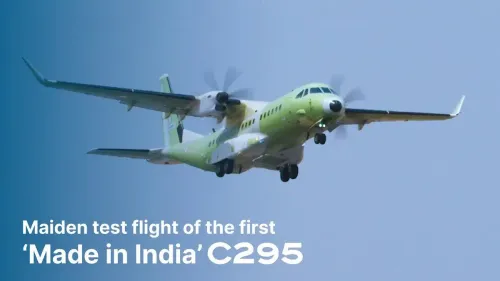
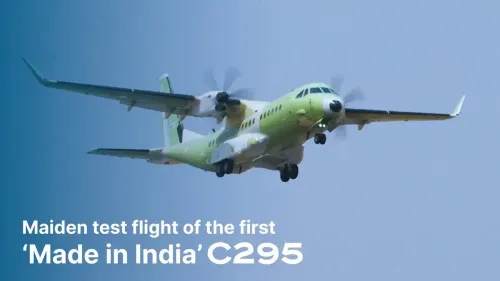
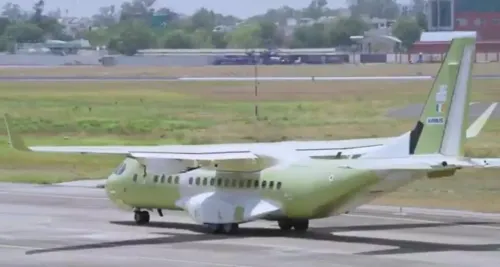
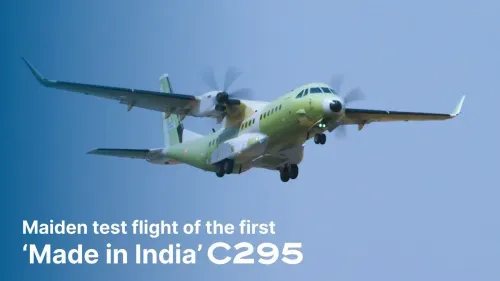
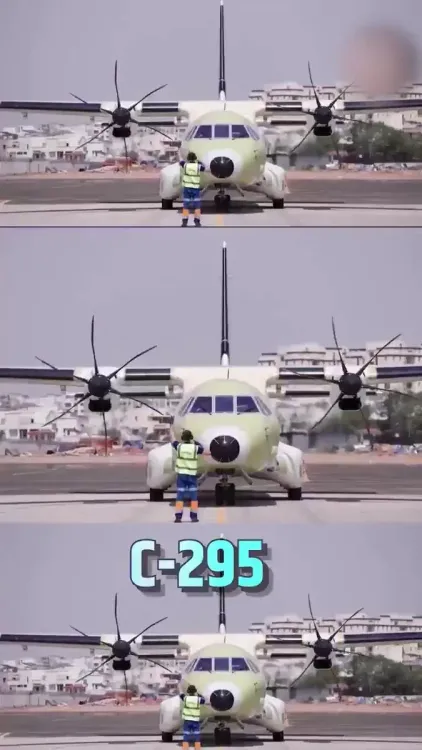
The aircraft completed its first test flight from the Tata Advanced Systems Limited and Airbus final assembly line in Vadodara, Gujarat .
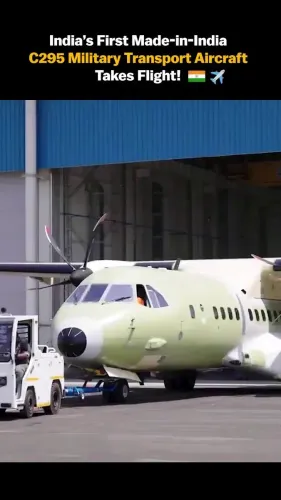
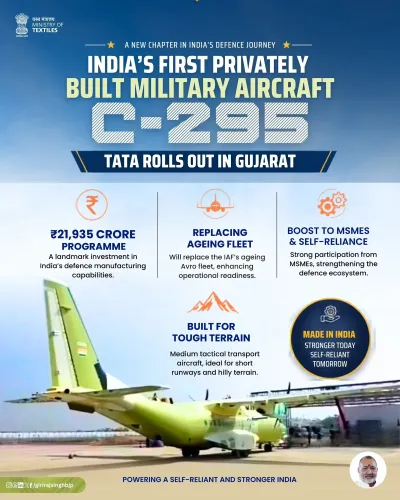
It is described as the first military aircraft to be manufactured by India's private sector .
The programme stems from a 2021 government contract for 56 C-295 aircraft , with 40 to be assembled locally by TASL .
The milestone is a key outcome of the Atmanirbhar Bharat initiative launched in 2020 to reduce defence import dependence.
The Indian Air Force is the primary end-user, with phased induction of India-assembled aircraft planned for its transport squadrons.
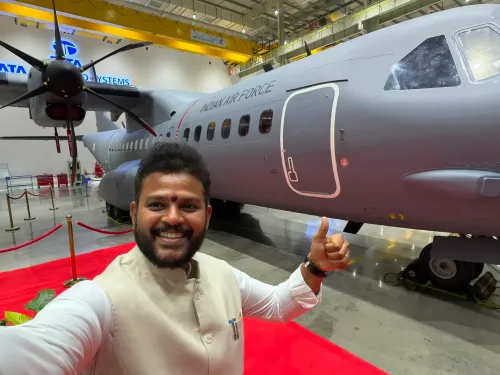
Union Culture and Tourism Minister Gajendra Singh Shekhawat on Saturday, 27 June 2026, celebrated a landmark moment in Indian defence manufacturing, highlighting the successful first test flight of the 'Made in India' C-295 military transport aircraft from its final assembly line in Vadodara, Gujarat.
Context
Shekhawat shared the milestone on X, writing: 'Made in India C-295 ne bhari nayi udaan... Atmanirbhar Bharat ki disha mein Bharat ne racha naya itihas!' ('The Made in India C-295 has taken a new flight... India has scripted new history on the path of Atmanirbhar Bharat!'). The post underscores the significance of the aircraft completing its first test flight from the Tata Advanced Systems Limited (TASL) and Airbus final assembly line at Vadodara.
According to the post, this aircraft is described as the first military aircraft built by India's private sector. The achievement is seen as a demonstration that India is transitioning from being a buyer of defence equipment to becoming a major manufacturing hub for modern military aircraft.
Policy Backdrop
The C-295 programme traces its roots to a 2021 government contract for 56 C-295 aircraft from Airbus. Under the terms of that deal, 16 aircraft were to be delivered in fly-away condition, while the remaining 40 were to be assembled in India by Tata Advanced Systems Limited at its facility in Vadodara.
The project sits at the heart of the Atmanirbhar Bharat initiative, launched in 2020, which set out to reduce India's dependence on defence imports and build indigenous manufacturing capability. Successive revisions to the Defence Acquisition Procedure have progressively opened military aerospace to private sector participation, enabling joint ventures between Indian firms and established global original equipment manufacturers.
Stakeholders and Impact
The primary beneficiary of the programme is the Indian Air Force (IAF), which is set to induct the India-assembled C-295 aircraft into its transport squadrons in a phased manner. For Tata Advanced Systems Limited, the successful test flight marks a historic entry into military aircraft manufacturing — a domain previously dominated by state-owned entities.
Airbus, as the technology and design partner, stands to deepen its footprint in India's growing defence industrial base. More broadly, the milestone signals to global original equipment manufacturers that India's private sector is capable of undertaking complex military platform assembly, potentially attracting further joint-venture investments in the sector.
What's Next
The test flight is the first step in a broader certification and induction process. Remaining flight trials and regulatory certification milestones must be completed before the India-assembled aircraft can formally join IAF squadrons. The pace at which Tata Advanced Systems ramps up production at Vadodara will determine how quickly the 40 locally assembled aircraft are delivered.
The success of this programme is also likely to shape India's appetite for additional private-sector defence manufacturing partnerships, with the Tata-Airbus model now serving as a template for future indigenisation efforts across platforms ranging from helicopters to surveillance aircraft.
Point of View
Which has staked considerable credibility on converting the Atmanirbhar Bharat narrative into tangible industrial outcomes. A senior minister from a non-defence portfolio amplifying the milestone reflects a deliberate whole-of-government communication strategy around defence self-reliance ahead of electoral cycles. The Tata-Airbus model — private sector assembling a foreign-designed platform under technology transfer — represents a pragmatic middle path between full indigenisation and outright import, and its success or failure will set the benchmark for similar joint ventures. If certification and induction timelines hold, India's positioning as a regional defence manufacturing hub gains credibility with both domestic audiences and prospective foreign partners.
NationPress
25 Sept 2026
Frequently Asked Questions
What is the Made-in-India C-295 aircraft?
The C-295 is a military transport aircraft being assembled in India by Tata Advanced Systems Limited in partnership with Airbus at a final assembly line in Vadodara, Gujarat . It is described as the first military aircraft to be built by India's private sector.
When did the Made-in-India C-295 complete its first test flight?
According to the post by Union Minister Gajendra Singh Shekhawat , the first test flight from the final assembly line was completed successfully, with the announcement made on 27 June 2026 .
What is India's C-295 deal with Airbus?
In 2021 , the Government of India signed a contract for 56 C-295 aircraft with Airbus . Of these, 16 were to be delivered in fly-away condition and 40 were to be assembled locally by Tata Advanced Systems Limited in Vadodara .
What is the Atmanirbhar Bharat initiative in defence?
Atmanirbhar Bharat , launched in 2020 , is a national self-reliance initiative that includes a major push to reduce India's dependence on defence imports by building indigenous manufacturing capacity and encouraging private sector participation in military production.
Who will use the Made-in-India C-295 aircraft?
The Indian Air Force (IAF) is the primary user of the C-295 under the 2021 contract. The India-assembled aircraft are planned for phased induction into IAF transport squadrons.