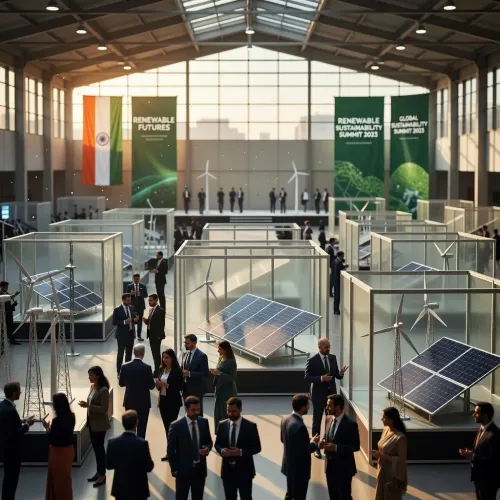
Rijiju: Bharat RE Summit 2026 special amid global energy shock
Synopsis
At the Bharat RE Summit 2026, Union Minister Kiren Rijiju quoted PM Modi calling this year's summit uniquely significant, saying the 2026 global energy shock has made the importance of renewables in India's development journey clearer than ever.
Key Takeaways
Kiren Rijiju quoted PM Narendra Modi at the Bharat RE Summit 2026 on 2 November 2026 , calling the event 'special' due to current global energy circumstances.
PM Modi said 2026 's energy-shock debate has made the role of renewable energy in India's development journey 'even clearer.' India's Panchamrit strategy, announced at COP26 (2021) , targets 500 GW of non-fossil fuel capacity by 2030 and net-zero by 2070 .
Geopolitical disruptions since 2022 have intensified India's push to cut fossil-fuel import dependence through domestic renewables scale-up.
Successive Union Budgets have prioritised solar, wind, domestic manufacturing, and grid integration under India's clean-energy mission.
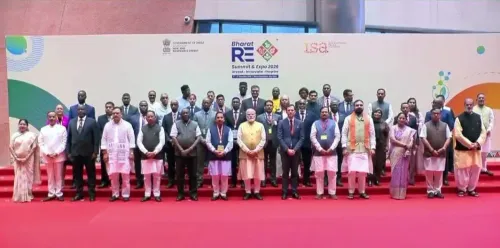
An energy shock that rattled households, industries, and governments through 2026 has made one question impossible to ignore: what does renewable energy truly mean for India's future? Union Parliamentary Affairs Minister Kiren Rijiju put that question front and centre on Monday, 2 November 2026, quoting Prime Minister Narendra Modi at the #BharatRESummit2026 and calling this edition of the summit uniquely significant.
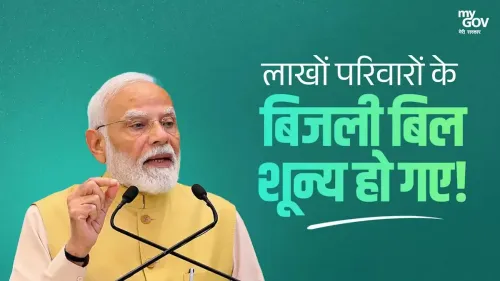
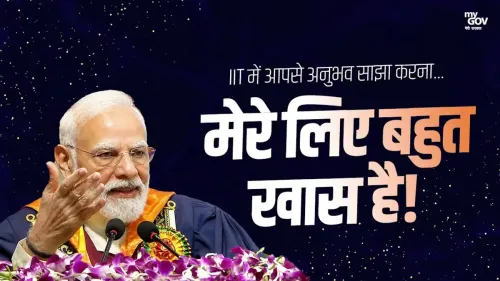
Rijiju shared PM Modi's words directly: 'इस बार की यह समिट विशेष है, क्योंकि विशेष परिस्थितियों में हो रही है' — 'This summit is special, because it is happening in special circumstances.' The Prime Minister pointed to how 2026's energy-shock debate has only sharpened the case for renewables in everyday Indian life and in the country's broader development journey.
Why 2026's energy shock changed the conversation
Geopolitical turbulence since 2022 exposed the fragility of fossil-fuel import dependence across the world. India, which runs one of the fastest-growing large economies on the planet, felt those tremors acutely — in fuel costs, in industrial input prices, in the monthly electricity bills of ordinary citizens. That backdrop has given the Bharat RE Summit 2026 a gravity that earlier editions did not carry in quite the same way.
The Prime Minister's framing — that this year made the importance of renewable energy 'even clearer' — signals that the summit is not merely a showcase of capacity numbers but a policy reckoning. The energy shock has effectively done what years of climate advocacy could not: made the economic argument for renewables viscerally obvious to every stakeholder, from grid planners to village households.
Panchamrit targets and the road India is already on
India committed at COP26 in 2021 to the Panchamrit strategy — 500 GW of non-fossil fuel capacity by 2030 and net-zero emissions by 2070. Successive Union Budgets have channelled resources into solar and wind expansion, domestic manufacturing of panels and turbines, and grid integration. The Bharat RE Summit sits squarely within that policy arc, serving as an annual temperature-check on how fast India is moving and where the bottlenecks remain.
With the renewable energy industry and hundreds of millions of power consumers watching, the capacity addition figures expected in upcoming status reports — and any fresh targets or incentives that emerge from parliamentary debates — will be the real measure of whether the momentum holds.
Rijiju's signal from the summit floor
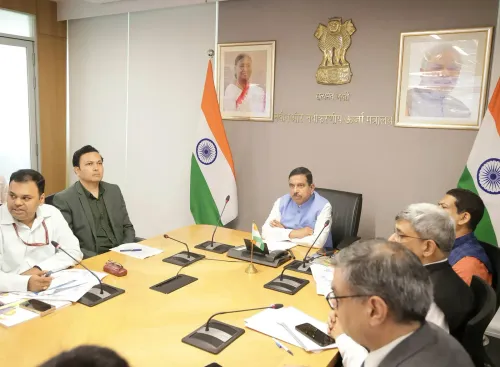
That it was Rijiju — a senior BJP leader and Union Minister — amplifying the Prime Minister's words at an energy summit underscores how clean-energy ambition has become a whole-of-government message in New Delhi. Parliamentary affairs and minority affairs may be his portfolio, but his presence at #BharatRESummit2026 reflects the political consensus the government is projecting: India's renewable transition is not a niche environment story; it is the central story of the country's development decade.
The energy shock of 2026 handed India's policymakers a live, undeniable exhibit. The question the summit must now answer is what India does with that moment of clarity.
Point of View
Not just international climate forums. Rijiju's presence at the summit also reflects the BJP's effort to project a whole-of-government identity around renewables — making clean energy a mainstream development narrative rather than an environmental niche. Watch whether the summit's momentum translates into concrete capacity announcements or budget-cycle incentives in the months ahead.
NationPress
2 Nov 2026
Frequently Asked Questions
What is the Bharat RE Summit 2026?
The Bharat RE Summit 2026 is a renewable energy summit held in India that brings together policymakers, industry and stakeholders to discuss the country's clean-energy ambitions. The 2026 edition has been called especially significant by PM Modi amid a global energy-shock environment.
What did PM Modi say at the Bharat RE Summit 2026?
PM Modi said the summit is special because it is happening in special circumstances, noting that 2026's energy-shock debate has made the importance of renewable energy in India's life and development journey even clearer.
What is India's Panchamrit renewable energy target?
India's Panchamrit strategy, announced at COP26 in 2021, commits the country to achieving 500 GW of non-fossil fuel electricity capacity by 2030 and reaching net-zero emissions by 2070.
Why is Kiren Rijiju at a renewable energy summit?
Union Minister Kiren Rijiju attended the Bharat RE Summit 2026 as a senior BJP leader and Cabinet minister, reflecting the government's whole-of-government approach to projecting India's clean-energy agenda as a core development priority.
How has the 2026 energy shock affected India's renewable energy push?
Geopolitical disruptions since 2022 exposed the risks of fossil-fuel import dependence. By 2026, the resulting energy-price volatility has strengthened the economic and policy case for India to accelerate domestic solar, wind, and grid investments to reduce vulnerability.