Rijiju: Cabinet Clears ₹36,441 Cr Khelo India Revamp for 2026–31

Synopsis
The Union Cabinet has approved a revamped Khelo India Scheme with a ₹36,441 crore outlay for FY 2026–31, along with an enhanced Assistance to National Sports Federations Scheme — the government's largest multi-year sports funding commitment, announced by Minister Kiren Rijiju on 31 July 2026.
Key Takeaways
The Union Cabinet approved the revamped Khelo India Scheme on 31 July 2026 with a total outlay of ₹36,441 crore for FY 2026–27 to FY 2030–31 .
The enhanced Assistance to National Sports Federations (ANSF) Scheme for FY 2026–31 was also approved, providing multi-year grants for coaching, competitions, and athlete support.
Khelo India was originally launched in 2017 to promote grassroots sports participation and elite athlete pathways across Indian states.
The five-year funding window aligns with the 2028 Los Angeles Olympics , giving athletes and federations planning certainty for medal campaigns.
The revamped scheme continues the central government's model of central-state co-investment in sports infrastructure, targeting young athletes in tier-2 cities and rural areas.
Thirty-six thousand crore rupees. That is the scale of India's new bet on sport — and on Friday, the Union Cabinet made it official. Union Parliamentary Affairs and Minority Affairs Minister Kiren Rijiju announced on 31 July 2026 that the Cabinet, under Prime Minister Narendra Modi, has approved a revamped Khelo India Scheme with a total outlay of ₹36,441 crore covering FY 2026–27 to FY 2030–31 — the most ambitious multi-year sports funding commitment the country has seen.
What the Cabinet cleared — and why the number matters
Two decisions came through in a single Cabinet sitting. The first: the revamped Khelo India Scheme, backed by ₹36,441 crore over five financial years. The second: an enhanced Assistance to National Sports Federations (ANSF) Scheme for the same FY 2026–31 window, which channels direct grants to recognised national federations for coaching, competitions, and athlete support.
The numbers are not just large — they signal intent. Spread across five years, the Khelo India outlay averages over ₹7,000 crore annually, a substantial step up from the programme's earlier funding cycles and a clear signal that grassroots sport is now a fiscal priority, not a footnote.
Khelo India's journey from 2017 to a ₹36,441 crore mandate
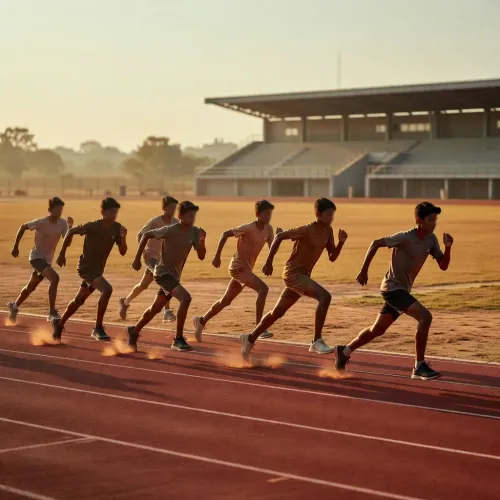
Khelo India was launched in 2017 as a flagship central programme built around two goals: mass participation at the grassroots and a structured pathway to elite competition. It operates through state governments, sports academies, and annual multi-sport games — the Khelo India Youth Games and University Games — that have become genuine talent pipelines.
The programme received a component revision around 2021–22, tightening its focus on infrastructure and federation linkages. The FY 2026–31 revamp goes further, folding in the strengthened ANSF to ensure that federations — the bodies that actually run national squads — have predictable, multi-year funding rather than year-to-year uncertainty.
The 2028 Olympics clock is already ticking
The timing of this approval is deliberate. The 2028 Los Angeles Olympics sits squarely within the new funding window, and the Cabinet's five-year horizon gives athletes, coaches, and federations the planning certainty they need to build genuine medal campaigns. It also extends the logic of the Target Olympic Podium Scheme (TOPS), which has long provided elite-level support — Khelo India and ANSF now strengthen the base from which TOPS draws its talent.
The central-state coordination model embedded in Khelo India means state governments co-invest in infrastructure, widening the programme's geographic reach beyond traditional sporting hubs. Young athletes in tier-2 cities and rural districts are the intended primary beneficiaries.
Rijiju frames it as Modi government's sporting vision
Rijiju, himself from Arunachal Pradesh — a state that has benefited from Khelo India's push into the Northeast — described the decisions as 'a major boost to India's sporting ecosystem.' The framing is consistent with the BJP government's long-running effort to position sport as a pillar of national development alongside education and health.
Operational guidelines and annual budget releases for FY 2026–27 will be the next checkpoint — that is where the architecture of the revamped scheme becomes visible, and where the gap between announcement and implementation either closes or widens.
India has spent a decade building the scaffolding. With ₹36,441 crore now committed, the question is no longer whether the country is serious about sport — it is whether the delivery machinery is ready to match the ambition.
Point of View
441 crore Khelo India approval is the clearest signal yet that the Modi government views sports investment as a long-term sovereignty statement — not merely a welfare programme. By locking in a five-year outlay that straddles the 2028 Olympics, the Cabinet is effectively placing a reputational bet on India's podium performance in Los Angeles. The simultaneous enhancement of the ANSF Scheme addresses a chronic weak link: national federations have historically struggled with funding unpredictability, which cascades into poor athlete preparation. Whether the administrative machinery — state governments, sports bodies, and the Sports Ministry — can absorb and deploy capital at this scale without the usual implementation drag will define whether this announcement becomes a turning point or another well-funded missed opportunity.
NationPress
31 Jul 2026
Frequently Asked Questions
What is the Khelo India Scheme and what was approved on 31 July 2026?
Khelo India is India's flagship central sports development programme, launched in 2017 to promote grassroots participation and elite athlete pathways. On 31 July 2026, the Union Cabinet approved a revamped version of the scheme with a total outlay of ₹36,441 crore for the five-year period FY 2026–27 to FY 2030–31.
What is the Assistance to National Sports Federations (ANSF) Scheme?
The ANSF Scheme is a central government programme that provides grants to recognised national sports federations for coaching, competitions, and athlete support. An enhanced version of the scheme for FY 2026–31 was approved alongside the Khelo India revamp on 31 July 2026.
How much money has the government allocated to Khelo India for 2026–31?
The Union Cabinet approved a total outlay of ₹36,441 crore for the revamped Khelo India Scheme covering FY 2026–27 to FY 2030–31, averaging over ₹7,000 crore per year.
Who announced the Khelo India Cabinet approval?
Union Parliamentary Affairs and Minority Affairs Minister Kiren Rijiju announced the Cabinet decision on 31 July 2026, describing it as 'a major boost to India's sporting ecosystem' under Prime Minister Narendra Modi's leadership.
How does the revamped Khelo India Scheme connect to the 2028 Olympics?
The five-year funding window (FY 2026–31) covers the lead-up to and immediate aftermath of the 2028 Los Angeles Olympics, giving athletes, coaches, and national federations multi-year financial certainty to build sustained medal campaigns.