Rijiju: Cabinet Clears ₹8,970 Cr Guwahati-Tezpur Highway
Synopsis
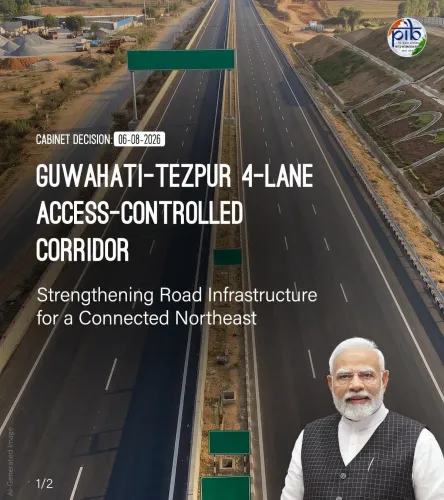
The Union Cabinet on August 6, 2026, approved a 135.871 km, 4-lane access-controlled Guwahati-Tezpur Corridor on NH-15 in Assam at ₹8,970.20 crore on BOT Toll mode, advancing the Centre's Northeast connectivity agenda under Bharatmala Pariyojana.
Key Takeaways
The Union Cabinet approved the Guwahati-Tezpur Corridor on August 6, 2026 .
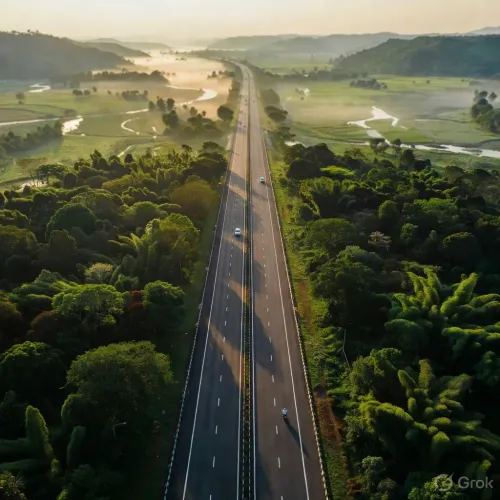
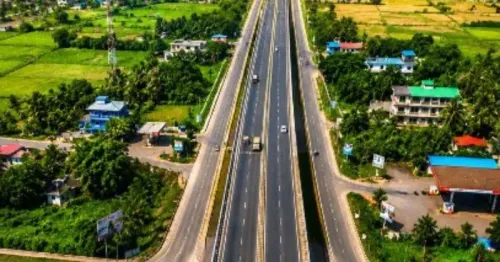
The corridor spans 135.871 km as a 4-lane access-controlled highway on NH-15 in Assam .
Total capital cost is ₹8,970.20 crore , to be developed on Built-Operate-Transfer (BOT) Toll mode under NH(O).
The project aligns with the Bharatmala Pariyojana framework for economic corridors in the Northeast.
Next steps include NHAI issuing RFQ/RFP for the BOT concession, followed by land acquisition and environmental clearances.
The corridor supports India's Act East connectivity goals by linking Assam's commercial hub to the Arunachal Pradesh gateway.
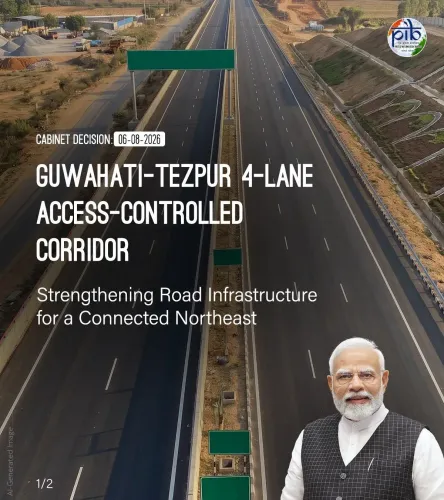
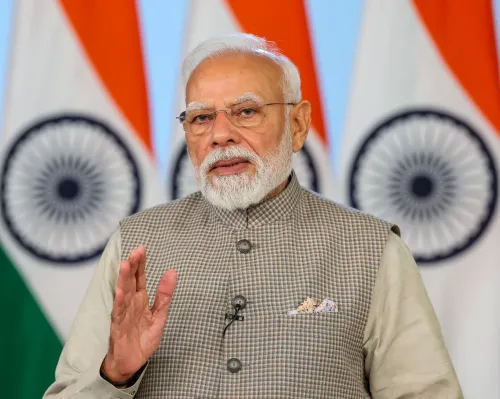
A ₹8,970.20 crore bet on the Northeast just cleared the highest table in Indian governance. The Union Cabinet, chaired by Prime Minister Narendra Modi, on Thursday, August 6, 2026, approved the development of a 135.871 km, 4-lane access-controlled Guwahati-Tezpur Corridor on NH-15 in Assam — a project that promises to redraw travel and trade between two of the state's most consequential cities.
What the Cabinet cleared — and how it gets built
The project will be executed on a Built-Operate-Transfer (BOT) Toll basis under NH(O) — meaning a private concessionaire finances construction, recoups costs through tolling over a concession period, and eventually transfers the asset to the government. Union Parliamentary Affairs and Minority Affairs Minister Kiren Rijiju, announcing the decision on X, described it as part of #CabinetDecisions under PM Modi's leadership. BOT toll mode is the Centre's preferred financing instrument for high-traffic corridors where user-fee recovery makes private investment viable — and the Guwahati-Tezpur stretch, connecting Assam's commercial capital to the gateway of the Tezpur-Arunachal belt, fits that profile squarely.The Northeast connectivity push behind this approval
This corridor sits inside a long arc of central policy aimed at integrating India's Northeast. The Bharatmala Pariyojana, launched in 2015, made 4-lane access-controlled economic corridors on BOT terms its signature instrument — and successive approvals since have brought that ambition closer to Assam's landscape. Earlier phases of the National Highways Development Project (NHDP) — Phase III and Phase IV from 2006 onward — had already identified Assam stretches later folded into Bharatmala's wider network. The Guwahati-Tezpur approval continues that lineage, adding a corridor that cuts through a region where road quality directly determines how quickly goods, people, and emergency services move. For Assam commuters and logistics operators, the stakes are tangible: a 4-lane access-controlled highway dramatically reduces journey times compared to the existing undivided carriageway, and the corridor's alignment positions it as a feeder into India's broader Act East connectivity framework — the policy spine linking India to Southeast Asia through the Northeast.What comes next: contracts, land, and the clock
Cabinet approval is the starting gun, not the finish line. The National Highways Authority of India (NHAI) must now issue a Request for Qualification and a Request for Proposal to invite private bidders for the BOT concession. Land acquisition notifications and environmental clearances in Assam will follow — historically the two pressure points that determine whether a highway project meets its construction timeline. With a capital outlay of ₹8,970.20 crore on the table, the project will draw serious attention from the infrastructure concessionaire market. A corridor of this scale, connecting two cities that anchor Assam's economic and strategic geography, does not just move vehicles — it moves the needle on what the Northeast can become. The clock starts now.Point of View
High-traffic corridor, Northeast optics — arriving at a moment when the Centre has been keen to demonstrate infrastructure delivery in electorally and strategically significant border states. BOT toll financing signals confidence that traffic volumes on this stretch can sustain private investment, which itself is a statement about how the region's economic weight is being reassessed in Delhi. The project also reinforces the Act East policy's infrastructure spine, where road connectivity to Arunachal Pradesh and beyond is as much a strategic calculation as a developmental one. Whether NHAI can convert this Cabinet nod into a awarded contract without the land-acquisition delays that have dogged similar Northeast projects will be the real test of execution.
NationPress
6 Aug 2026
Frequently Asked Questions
What is the Guwahati-Tezpur Corridor approved by the Cabinet?
It is a 135.871 km, 4-lane access-controlled highway on NH-15 in Assam , connecting Guwahati and Tezpur, approved by the Union Cabinet on August 6, 2026 at a cost of ₹8,970.20 crore .
What is BOT Toll mode and why is it used for this project?
Built-Operate-Transfer (BOT) Toll mode means a private concessionaire funds and builds the highway, recovers costs through user tolls over a concession period, and then transfers the asset to the government. It is used when traffic volumes are high enough to make toll revenue a viable repayment mechanism.
How does this highway project connect to Bharatmala Pariyojana?
Bharatmala Pariyojana , launched in 2015 , is the Centre's flagship highway programme focused on 4-lane access-controlled economic corridors on BOT terms. The Guwahati-Tezpur Corridor falls within this policy framework for Northeast connectivity.
What are the next steps after Cabinet approval for the Assam highway?
NHAI must issue a Request for Qualification and Request for Proposal to invite private bidders. Land acquisition and environmental clearances in Assam will also need to be completed before construction can begin.
Why is the Guwahati-Tezpur highway strategically important?
The corridor connects Assam's commercial capital Guwahati to Tezpur, a gateway to Arunachal Pradesh , supporting India's Act East policy by improving road links toward Southeast Asia and strengthening the Northeast's economic and strategic integration.