Rijiju calls for peace as Assam-Arunachal MPs urge border dialogue
Synopsis
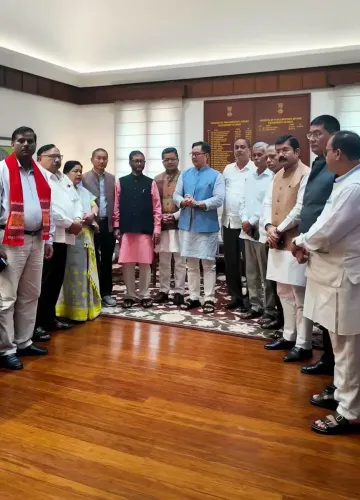
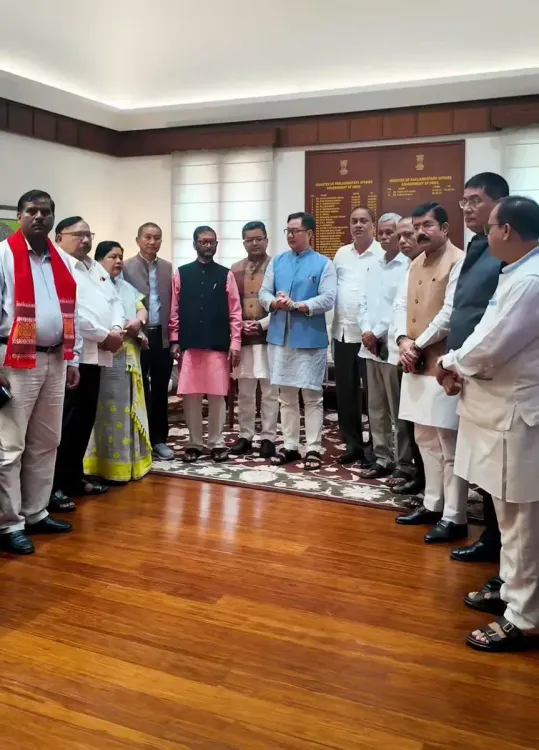
Union Minister Kiren Rijiju on August 13, 2026 amplified a joint appeal by MPs from Assam and Arunachal Pradesh calling for peace along their disputed border and urging that all land disputes be settled through peaceful negotiation, continuing a long-standing pattern of dialogue-first diplomacy in the Northeast.
Key Takeaways
Union Parliamentary Affairs Minister Kiren Rijiju posted on August 13, 2026 amplifying a joint appeal by MPs from Assam and Arunachal Pradesh .
The appeal calls for maintaining peace along the shared border and settling all land disputes through peaceful negotiation only.
The Assam-Arunachal Pradesh border dispute dates to colonial-era demarcations and the post- 1972 reorganisation of northeastern states; Arunachal attained full statehood in 1987 .
The dispute involves claims over several hundred square kilometres and directly affects border communities and tribal populations.
Successive central governments have favoured bilateral dialogue and status-quo maintenance over litigation or confrontation.
Rijiju, a senior BJP leader from Arunachal Pradesh, lends both ministerial and personal weight to the call for peace.
A shared appeal from lawmakers on both sides of one of India's most enduring inter-state disputes landed on Thursday, August 13, 2026 — and it carried a message that has echoed across the Northeast for decades: talk, don't fight. Union Parliamentary Affairs Minister Kiren Rijiju amplified a joint call by Members of Parliament from Assam and Arunachal Pradesh, urging that peace be maintained along their shared border and that any land dispute be resolved through peaceful negotiation alone.
Posting on X, Rijiju wrote: 'MPs of Assam and Arunachal Pradesh appeal for maintaining of peace along the border. We must live together harmoniously as brothers and sisters and settle any land dispute through peaceful negotiation only.'
A border dispute older than statehood itself
The tension between these two northeastern neighbours is not new — it is, in fact, older than Arunachal Pradesh itself as a state. When Arunachal attained full statehood in 1987, it inherited boundary claims with Assam over several hundred square kilometres that had never been cleanly resolved. The roots go deeper still, into colonial-era demarcations and the post-1972 reorganisation of northeastern states that redrew maps without always settling ground realities. For the border communities and tribal populations who live along this line — farming the same hills, sharing the same rivers — the dispute is not an abstraction. It is a question of land, livelihood, and identity.Why MPs from both states are speaking in one voice
What makes Thursday's statement notable is its joint character. Lawmakers from both Assam and Arunachal Pradesh are publicly aligning behind the principle of dialogue — a signal that cross-party, cross-state consensus on de-escalation remains intact. Successive central governments have consistently pushed for bilateral talks and status-quo maintenance over litigation or confrontation, and Rijiju's amplification of this message fits squarely within that tradition. Such public appeals from Northeast MPs and ministers typically coincide with periods of local tension or ahead of significant parliamentary activity. The Assam-Arunachal boundary committee remains the formal institutional channel for these negotiations, and any follow-up statements from the two state governments will be closely watched. Rijiju — himself a senior BJP leader from Arunachal Pradesh and a long-standing voice for the Northeast in the Union Cabinet — carries particular moral weight in this conversation. His intervention is both a ministerial signal and a personal one. Peace on the border is not a given. It is a choice that has to be made, and remade, by the people and representatives on both sides — and on August 13, they made it again.Point of View
Which governs both states, maintaining this consensus is as much a governance imperative as it is an electoral one, given the sensitivity of identity and land among tribal communities. The statement also keeps the spotlight on the Assam-Arunachal boundary committee as the legitimate institutional forum, nudging both state governments toward the table rather than the courts.
NationPress
13 Aug 2026
Frequently Asked Questions
What is the Assam-Arunachal Pradesh border dispute about?
The dispute involves competing claims over several hundred square kilometres along the shared border, rooted in colonial-era demarcations and the post-1972 reorganisation of northeastern states. It has remained unresolved since Arunachal Pradesh attained full statehood in 1987.
What did Kiren Rijiju say about the Assam-Arunachal border?
Rijiju amplified a joint appeal by MPs from both states on August 13, 2026, calling for peace along the border and urging that all land disputes be settled exclusively through peaceful negotiation.
Who is Kiren Rijiju?
Kiren Rijiju is the Union Minister of Parliamentary Affairs and Minister of Minority Affairs, and a senior BJP leader from Arunachal Pradesh.
How has the Indian government handled the Assam-Arunachal border issue?
Successive central governments have encouraged bilateral talks and status-quo maintenance rather than litigation or confrontation, with the Assam-Arunachal boundary committee serving as the formal negotiating channel.
Why do Northeast inter-state border disputes remain unresolved?
Many disputes in the Northeast trace back to colonial-era boundary drawings and the post-1972 state reorganisation, which redrew administrative maps without fully settling ground-level land and community claims.