Rijiju meets 19 Maratha Light Infantry at Nakhu residence
Synopsis
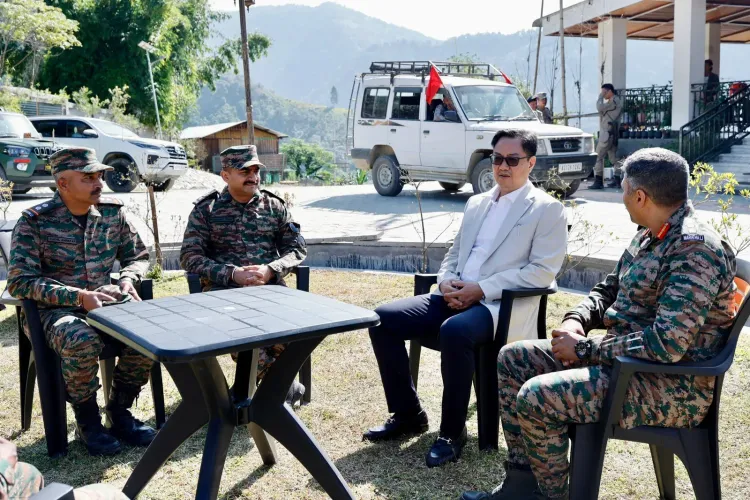
Union Minister Kiren Rijiju met officers and personnel of the 19 Maratha Light Infantry at his Nakhu residence in Arunachal Pradesh, highlighting the Army's twin role of securing India's China border and running community welfare programmes for local border populations.
Key Takeaways
Union Minister Kiren Rijiju met Col.
Rohit Sharma (CO), Lt.
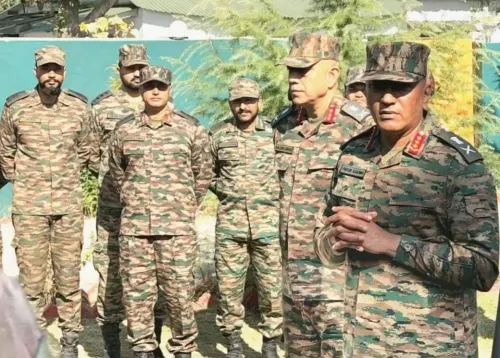
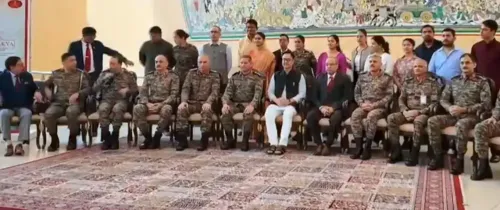
Prashant Singh (2IC), Subedar Sushilkumar and other personnel of 19 Maratha Light Infantry at his Nakhu residence on October 26, 2026 .
Rijiju specifically acknowledged the Army's dual role: national security and social programmes for local border communities.
The 19 Maratha Light Infantry is part of one of the Indian Army's oldest regiments, with active deployments across the Northeast.
Arunachal Pradesh shares a sensitive border with China and hosts significant forward military infrastructure.
The Indian Army has run community outreach in the Northeast under programmes like Operation Sadbhavana since the late 1990s .
As a Union Minister from Arunachal Pradesh, Rijiju's public acknowledgment reinforces civil-military ties ahead of the winter Parliament session.
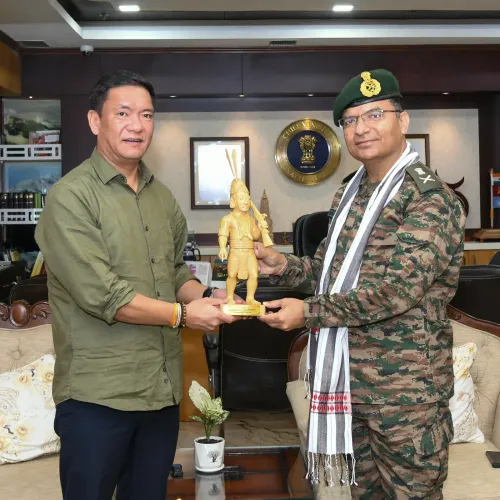
At his residence in Nakhu, Arunachal Pradesh, Union Parliamentary Affairs Minister Kiren Rijiju sat down with the officers and jawans of the 19 Maratha Light Infantry on Monday, October 26, 2026 — a visit that underscored just how tightly the Army's presence is woven into life along India's most watched frontier.
The officers across the table
Rijiju met Col. Rohit Sharma, Commanding Officer; Lt. Col. Prashant Singh, Second-in-Command; and Subedar Sushilkumar, along with other unit personnel. The minister noted that the Army is 'securing our nation and also serving the local people through various social programs' — a dual mandate that defines military presence in India's northeastern border districts.
19 Maratha Light Infantry and the Northeast beat
The 19 Maratha Light Infantry is part of one of the Indian Army's oldest and most decorated infantry regiments, with roots stretching back to the 18th century. Units of the Maratha Light Infantry have been deployed across multiple operational theatres, and rotations through the Northeast — with its difficult terrain and strategic sensitivity — are a core part of the regiment's contemporary role.
Arunachal Pradesh shares a long, contested border with China, making it home to some of the Army's most forward deployments. Infantry battalions here operate at the intersection of hard security and community outreach, and the state's border districts have been a sustained focus of civil-military engagement for decades.
Operation Sadbhavana's quiet reach
The Army's social programmes Rijiju referred to are not new. Since the late 1990s, the Indian Army has run civic action and community development initiatives in border districts of the Northeast under programmes including Operation Sadbhavana. Medical camps, infrastructure assistance, educational support, and skill development for local communities have all been part of that framework — designed to strengthen ties between border populations and the state.
For a region where geography can isolate villages from government services, these programmes carry real weight. The Army, in many of these communities, is not just a security presence — it is often the most visible face of the Indian state itself.
A border leader's signal
Rijiju is not just any minister visiting a local unit — he is among the most prominent political voices from Arunachal Pradesh on the national stage. His acknowledgment of the Army's community role is a deliberate signal: that in frontier states, civil-military coordination is not a policy footnote but a lived daily reality. Political leaders from border states routinely make such engagements visible, reinforcing the Army's dual mandate in public discourse and, occasionally, in parliamentary debate.
With the winter session of Parliament approaching, whether Rijiju carries these themes into the legislative chamber will be worth watching.
The jawans of Nakhu are doing two jobs at once — and one of India's most senior ministers just made sure the country noticed.
Point of View
Part political messaging to Delhi about the strategic weight of the Northeast. The explicit nod to social programmes is notable: it frames the Army not merely as a security instrument but as a development partner, a framing that has historically underpinned budget and policy arguments for sustained military infrastructure in the region. With tensions along the China border remaining a live issue in Indian strategic discourse, even a routine courtesy call carries layered significance. Whether Rijiju translates this ground-level engagement into legislative advocacy during the winter session will indicate how deeply the civil-military welfare agenda is being pushed from the frontier into Parliament.
NationPress
26 Oct 2026
Frequently Asked Questions
What is the 19 Maratha Light Infantry?
The 19 Maratha Light Infantry is a battalion of the Maratha Light Infantry regiment of the Indian Army, one of the oldest infantry regiments with origins in the 18th century, deployed across multiple theatres including the northeastern frontier.
Why is Kiren Rijiju significant in the context of Arunachal Pradesh?
Kiren Rijiju is a senior BJP leader from Arunachal Pradesh and currently serves as Union Minister of Parliamentary Affairs and Minority Affairs, making him one of the most prominent national political voices from the state.
What is Operation Sadbhavana?
Operation Sadbhavana is an Indian Army initiative launched in the late 1990s to conduct civic action and community development programmes — including medical camps, education support, and infrastructure assistance — in border districts of the Northeast.
Where is Nakhu in Arunachal Pradesh?
Nakhu is a locality in Arunachal Pradesh, the northeastern Indian state bordering China, where Union Minister Kiren Rijiju has his residence and where the meeting with 19 Maratha Light Infantry personnel took place.
What is the Army's role in Arunachal Pradesh?
The Indian Army maintains significant forward deployments in Arunachal Pradesh due to its long, sensitive border with China, and also runs community welfare and civic action programmes for local border populations through initiatives like Operation Sadbhavana.