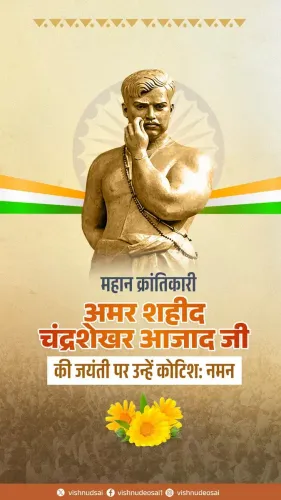
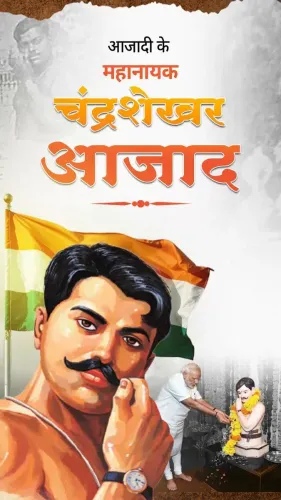
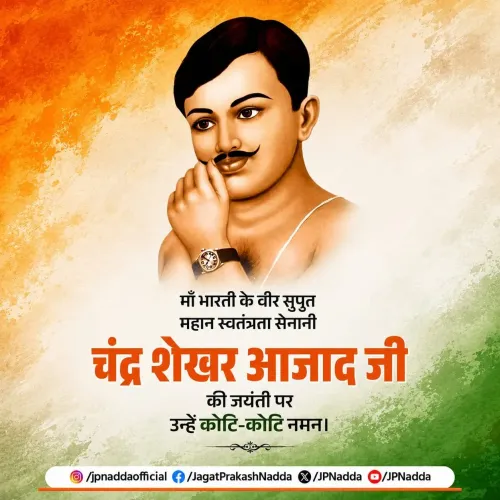
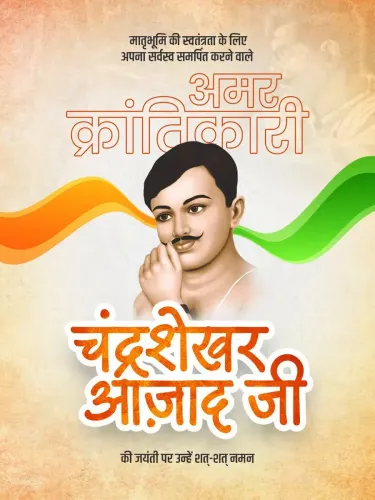
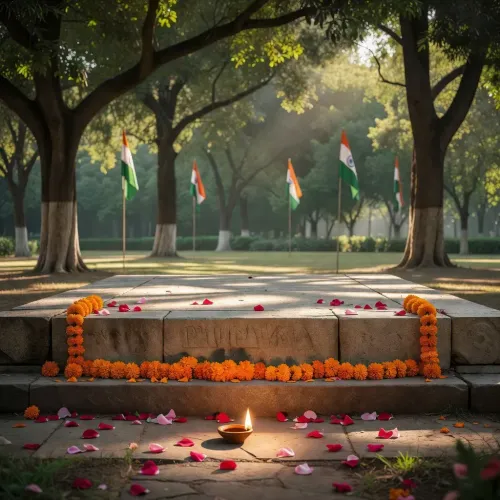
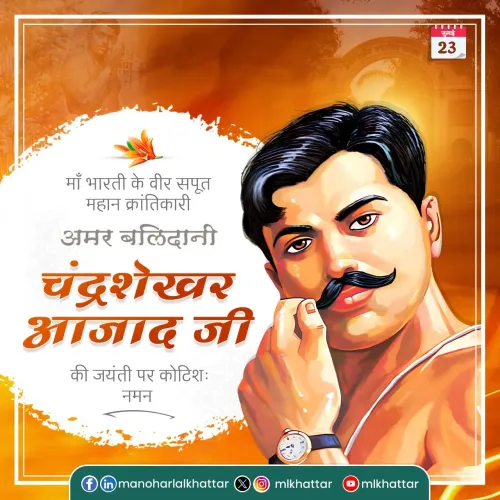
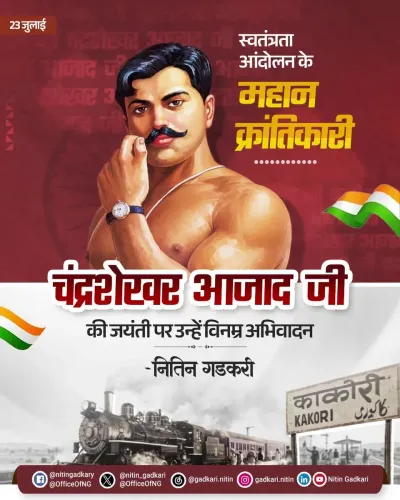
Rijiju pays tribute to Chandrashekhar Azad on birth anniversary
Synopsis
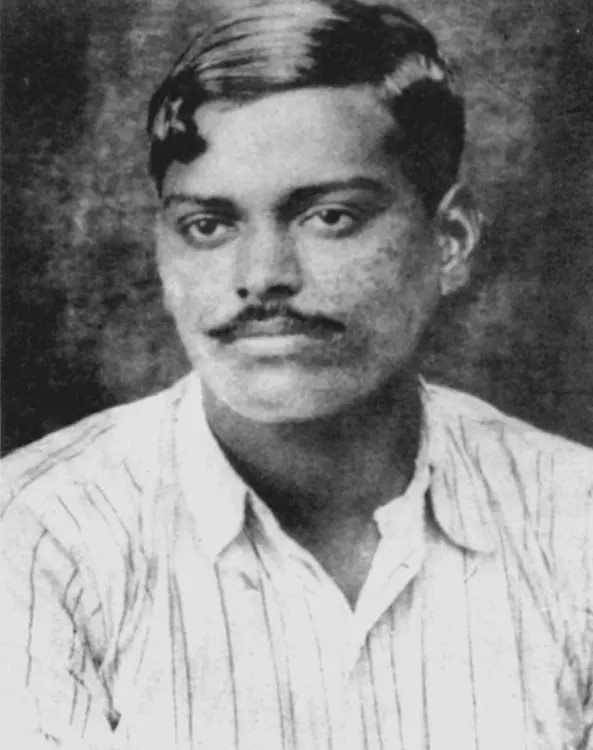
Union Minister Kiren Rijiju on 23 July 2026 paid tribute to revolutionary Chandrashekhar Azad on his birth anniversary, invoking his courage against British rule and his resolve to sacrifice everything for India's freedom as an enduring inspiration for national service.
Key Takeaways
Kiren Rijiju , Union Minister of Parliamentary Affairs and Minority Affairs, posted a tribute to Chandrashekhar Azad on his birth anniversary on 23 July 2026 .
Chandrashekhar Azad was born on 23 July 1906 and led armed resistance against British colonial rule as commander of the Hindustan Socialist Republican Association (HSRA) .
Azad died on 27 February 1931 at Alfred Park, Allahabad , shooting himself to avoid capture, fulfilling his vow never to be taken alive.
The tribute aligns with the Government of India's Azadi Ka Amrit Mahotsav programme, which since 2021 has institutionalised commemorations of independence-era freedom fighters.
Rijiju's post called Azad's sacrifice an enduring source of inspiration for national service and patriotism among all Indians.
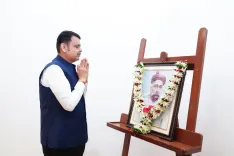
Union Parliamentary Affairs Minister Kiren Rijiju on Thursday, 23 July 2026, paid homage to revolutionary freedom fighter Chandrashekhar Azad on his birth anniversary, hailing him as a brave son of Mother India whose sacrifice continues to inspire generations.
Posting in Hindi on X, Rijiju wrote: 'माँ भारती के वीर सपूत, महान क्रांतिकारी चंद्रशेखर 'आज़ाद' जी की जयंती पर कोटि-कोटि नमन।' ('Countless salutations on the birth anniversary of the brave son of Mother India, the great revolutionary Chandrashekhar 'Azad'.'). He added that Azad's indomitable courage against British rule, his unparalleled valour, and his resolve to dedicate everything for India's freedom 'continues to inspire all of us towards national service and patriotism.'
Context
Chandrashekhar Azad was born on 23 July 1906 in what is present-day Madhya Pradesh. He rose to become one of the most feared revolutionary figures of the Indian independence movement, leading armed operations against British colonial authorities and famously vowing never to be captured alive. He died on 27 February 1931 in a police encounter at Alfred Park, Allahabad — today renamed Chandrashekhar Azad Park in his honour — having fired his last bullet at himself to keep his pledge.
Azad served as commander of the Hindustan Socialist Republican Association (HSRA), working alongside figures such as Bhagat Singh and Sukhdev. His life and death have remained potent symbols of radical sacrifice in India's national memory.
Policy Backdrop
Since 2021, the Government of India has systematically marked the birth and death anniversaries of revolutionary freedom fighters under the Azadi Ka Amrit Mahotsav programme, launched to commemorate 75 years of Indian independence. The initiative has given renewed institutional visibility to figures like Azad, who led armed resistance rather than solely civil disobedience.
Ruling party ministers regularly issue public tributes on such anniversaries through social media, reinforcing themes of sacrifice, national duty, and patriotism as part of a broader cultural and political emphasis on India's independence-era legacy.
Stakeholders and Impact
The tribute is directed primarily at Indian citizens and youth, invoking Azad's example as a moral benchmark for contemporary public service. References to 'national service and patriotism' in the post echo a recurring rhetorical framework used by the ruling dispensation to connect historical sacrifice with present-day civic responsibility.
Azad's legacy holds particular resonance in states such as Madhya Pradesh and Uttar Pradesh, where commemorative events are typically organised on his birth anniversary. His image transcends party lines and is claimed across India's political spectrum as a symbol of uncompromising resistance.
What's Next
The birth anniversary of Chandrashekhar Azad on 23 July is expected to see state-level commemorations and tributes from political leaders across parties. References to revolutionary freedom fighters of his era are also likely to feature in speeches during the upcoming monsoon session of Parliament. The Azadi Ka Amrit Mahotsav framework, under which such commemorations are institutionalised, continues to shape how the government presents India's independence history to the public.
Point of View
Connecting the ruling party's governance messaging to a legacy of uncompromising resistance. Within the Azadi Ka Amrit Mahotsav framework, such tributes serve a dual function: honouring historical figures while simultaneously framing contemporary public service as a continuation of that sacrifice. As India's independence centenary approaches, these commemorations are likely to grow in institutional scale and political salience.
NationPress
23 Jul 2026
Frequently Asked Questions
When is Chandrashekhar Azad's birth anniversary?
Chandrashekhar Azad was born on 23 July 1906 , and his birth anniversary is observed every year on 23 July across India with tributes and commemorative events.
Who was Chandrashekhar Azad?
Chandrashekhar Azad was a prominent Indian revolutionary freedom fighter who commanded the Hindustan Socialist Republican Association (HSRA) and led armed actions against British colonial authorities. He died on 27 February 1931 in Allahabad, having vowed never to be captured alive.
What did Kiren Rijiju say about Chandrashekhar Azad?
Union Minister Kiren Rijiju said Azad's indomitable courage against British rule and his resolve to dedicate everything for India's freedom 'continues to inspire all of us towards national service and patriotism.'
What is Azadi Ka Amrit Mahotsav?
Azadi Ka Amrit Mahotsav is a Government of India programme launched in 2021 to commemorate 75 years of Indian independence , under which birth and death anniversaries of freedom fighters — including revolutionaries like Azad — are formally marked.
Where did Chandrashekhar Azad die?
Chandrashekhar Azad died on 27 February 1931 at Alfred Park in Allahabad (now Prayagraj ), Uttar Pradesh, in a police encounter. The park has since been renamed Chandrashekhar Azad Park in his memory.