Rijiju: PM Modi Completes 21 Addresses to Foreign Legislatures
Synopsis
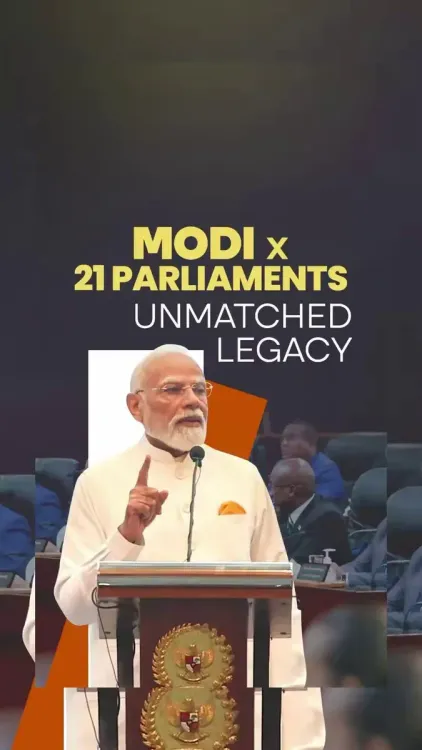
Union Parliamentary Affairs Minister Kiren Rijiju on July 7, 2026, marked PM Modi's address to Indonesia's Parliament as his 21st speech to a foreign legislature, highlighting India's expanding democratic partnerships and global diplomatic footprint.
Key Takeaways
PM Narendra Modi addressed the Parliament of Indonesia on July 7, 2026 , during an official visit.
This was his 21st address to a foreign legislature, as noted by Union Minister Kiren Rijiju .
Previous addresses include two speeches to the United States Congress and addresses to parliaments in Australia , the United Kingdom , Fiji , Uganda , and Sri Lanka , among others.
Indonesia is the world's largest Muslim-majority democracy and a key Indo-Pacific partner for India.
Rijiju framed the milestone as evidence of India's commitment to 'democratic partnerships' and 'inclusive progress' globally.
The visit, tagged #PMModiInIndonesia , is expected to produce bilateral agreements on defence, trade, and digital cooperation.
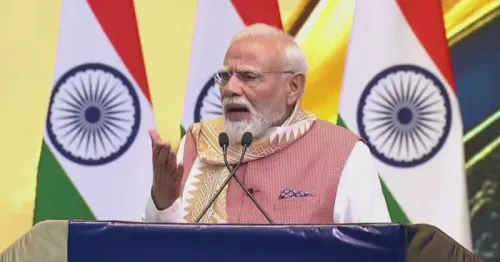
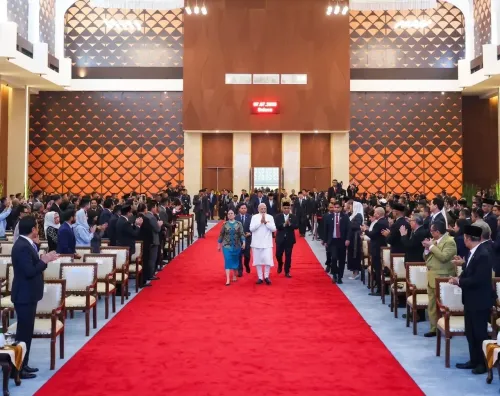
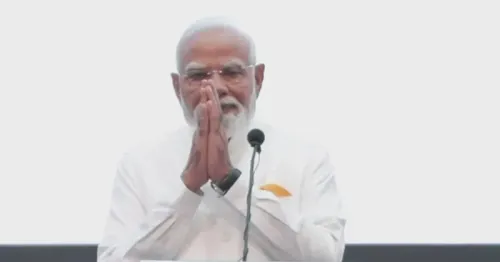
Union Parliamentary Affairs Minister Kiren Rijiju on Tuesday, July 7, 2026, hailed Prime Minister Narendra Modi's address to the Parliament of Indonesia as a landmark moment, noting it marked the 21st such address by the Prime Minister to a foreign legislature. Rijiju described the milestone as a demonstration of India's expanding democratic outreach and global partnerships.
Posting on X, Rijiju wrote that 'each address has strengthened India's democratic partnerships, expanded global friendships, and showcased our shared vision for peace, cooperation and inclusive progress.' The post was accompanied by a video and carried the hashtag #PMModiInIndonesia, signalling the address was part of an official state visit to Indonesia.
Context
Addressing a foreign parliament is among the highest diplomatic honours a visiting head of government can receive, typically reserved for nations with strong bilateral ties and mutual respect for democratic institutions. Prime Minister Modi's address to the Dewan Perwakilan Rakyat (DPR) — Indonesia's House of Representatives — in Jakarta placed India and Indonesia's relationship in the company of the world's most consequential bilateral partnerships.
Indonesia is the world's largest Muslim-majority democracy and the fourth most populous nation, making it a strategically vital partner for India in the Indo-Pacific region. The two countries share membership in the G20 and the ASEAN-India framework, and have deepened defence, trade, and maritime cooperation in recent years.
Policy Backdrop
Prime Minister Modi's track record of addressing foreign legislatures reflects a deliberate diplomatic strategy of engaging directly with the elected representatives of partner nations — bypassing the formality of executive-only summits to build people-to-people and institution-to-institution bonds. Previous addresses have spanned parliaments across North America, Europe, Africa, Southeast Asia, and the Pacific.
Notable earlier addresses include those to the United States Congress (delivered twice), the Parliament of Australia, the British Parliament, and legislatures in Uganda, Fiji, and Sri Lanka, among others. Each address has typically been followed by the signing of bilateral agreements or the announcement of new cooperation frameworks, underscoring their substantive diplomatic weight beyond ceremonial value.
Minister Rijiju, who oversees Parliamentary Affairs, framed the milestone in the language of democratic solidarity — a consistent theme in India's foreign policy messaging under the current government, which positions India as the 'Mother of Democracy' on the global stage.
Stakeholders and Impact
For India-Indonesia ties specifically, a parliamentary address signals a step-up in the relationship beyond routine bilateral visits. Indonesia under President Prabowo Subianto has been deepening strategic engagement with major democracies, and India's outreach fits into a broader Indo-Pacific architecture that both nations are invested in shaping.
Domestically, the milestone carries political significance for the BJP-led government, which has consistently highlighted PM Modi's global standing as a marker of India's rising international stature. The 21-address figure, as highlighted by a senior minister, is likely to feature in the ruling party's communication around India's diplomatic achievements.
What's Next
The #PMModiInIndonesia visit is expected to yield bilateral outcomes in areas such as defence cooperation, digital infrastructure, and trade. As PM Modi's parliamentary address count continues to grow, each addition reinforces India's strategy of legislative diplomacy — a soft-power tool that complements conventional summit meetings and multilateral engagements. The Indonesia address may well set the template for further outreach across the Global South and ASEAN in the months ahead.
Point of View
Casting the 21-address milestone as a quantifiable metric of PM Modi's global stature ahead of what is likely a domestically significant diplomatic season. The choice to highlight 'democratic partnerships' signals India's continued effort to position itself as a leading voice of the democratic Global South, a narrative that carries weight in both foreign policy and domestic electoral messaging. The Indonesia address is particularly significant given Jakarta's centrality to the Indo-Pacific strategic order and the ASEAN grouping, where India seeks greater influence. As a senior BJP leader who manages the government's parliamentary strategy, Rijiju's amplification of this milestone also reflects the party's broader communication playbook of anchoring India's foreign policy wins to the Prime Minister's personal diplomatic record.
NationPress
7 Jul 2026
Frequently Asked Questions
How many foreign parliaments has PM Modi addressed?
As of July 7, 2026 , PM Modi has addressed 21 foreign legislatures , with his latest address delivered to the Parliament of Indonesia during an official state visit.
Which foreign parliaments has PM Modi spoken to?
PM Modi has addressed parliaments across multiple continents, including the United States Congress (twice), and legislatures in Australia , the United Kingdom , Sri Lanka , Fiji , and Uganda , among others over his tenure as Prime Minister.
Why did PM Modi visit Indonesia in July 2026?
PM Modi visited Indonesia as part of an official state visit tagged #PMModiInIndonesia , during which he addressed the Indonesian Parliament, reflecting the deepening strategic and democratic ties between the two nations.
What did Kiren Rijiju say about PM Modi's Indonesia visit?
Union Parliamentary Affairs Minister Kiren Rijiju said PM Modi's address to Indonesia's Parliament was his 21st historic address to a foreign legislature , adding that 'each address has strengthened India's democratic partnerships and expanded global friendships.'
What is the significance of a PM addressing a foreign parliament?
Addressing a foreign parliament is a rare diplomatic honour, signalling deep bilateral trust. It allows a visiting leader to speak directly to a nation's elected representatives, reinforcing people-to-people ties and democratic solidarity beyond executive-level summits.