Piyush Goyal Hails Book on Forgotten Heroes of Indian Science
Synopsis
Union Commerce Minister Piyush Goyal received a copy of 'Forgotten Heroes of Indian Science' by Anand Ranganathan and Sheetal Ranganathan on 7 July 2026, praising the book as a guiding light for young Indians pursuing the Viksit Bharat vision and a testament to India's enduring scientific legacy.
Key Takeaways
Union Commerce and Industry Minister Piyush Goyal received a copy of 'Forgotten Heroes of Indian Science' on 7 July 2026 .
The book is co-authored by Anand Ranganathan , a scientist and science communicator, and Sheetal Ranganathan .
Goyal called the featured scientists 'our Heroes' whose 'unwavering dedication has saved countless lives and shaped the trajectory of modern science.' The minister linked the book to India's Viksit Bharat vision of becoming a developed nation by 2047 , calling its subjects 'a guiding light' for young innovators.
The endorsement connects to existing policy frameworks including Startup India (2016) and Atmanirbhar Bharat (2020), which emphasise indigenous scientific capability.
Goyal argued that India's scientific temper 'is not a recent phenomenon but a legacy that spans generations.'
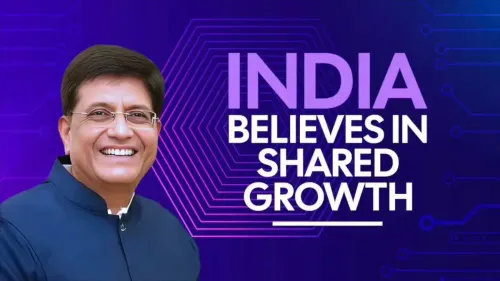
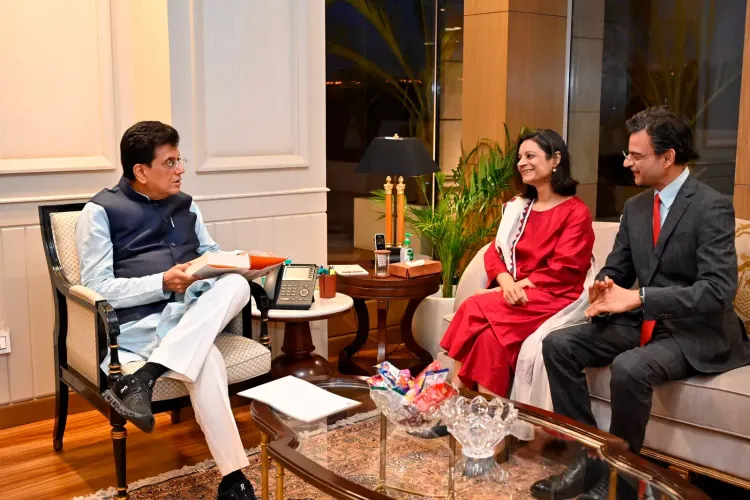
Union Commerce and Industry Minister Piyush Goyal on Tuesday, 7 July 2026 welcomed a copy of 'Forgotten Heroes of Indian Science', a new book authored by Anand Ranganathan and Sheetal Ranganathan, calling it a commendable effort to illuminate the contributions of Indian scientific minds whose work shaped modern science and saved countless lives.
Context
Receiving the book, Minister Goyal praised the authors for their 'endeavour to shed light on the great Indian minds who toiled relentlessly to improve the lives of our people.' He described the scientists featured in the volume as 'our Heroes, whose unwavering dedication has saved countless lives and shaped the trajectory of modern science,' adding that 'stories like these deserve to be told and retold.'
Anand Ranganathan is an Indian scientist and science communicator known for his work in virology and public health. Sheetal Ranganathan co-authored the volume, focusing on recovering overlooked Indian scientific contributions for a wider readership.
Policy Backdrop
The minister's endorsement fits squarely within a broader governmental push to anchor India's innovation ambitions in historical pride. Goyal noted that 'India's scientific temper is not a recent phenomenon but a legacy that spans generations,' framing the book as a contribution to the country's 'innovation economy and the resilient and entrepreneurial spirit of scientists in industry and startups.'
This messaging echoes the thrust of the Startup India initiative, launched in 2016, and the Atmanirbhar Bharat programme announced in 2020, both of which sought to channel indigenous talent and knowledge toward self-reliant economic growth. Successive administrations have drawn on India's deep scientific heritage — from ancient mathematics and metallurgy to twentieth-century breakthroughs — to build a narrative of continuity between historical achievement and present-day ambition.
The Viksit Bharat vision, which aims to transform India into a fully developed nation by 2047, places innovation, youth participation and indigenous research and development at its core. Goyal explicitly linked the book to this goal, writing that 'for our youngsters who dream of contributing to our Viksit Bharat journey, these forgotten heroes are a guiding light.'
Stakeholders and Impact
The primary audience the minister addressed is India's young scientific community — students, researchers, startup founders and industry scientists who are expected to drive the next phase of technological growth. By presenting historical figures as role models, the government reinforces the idea that a culture of scientific inquiry is native to India rather than imported.
Science communicators, educators and policy planners in bodies such as NITI Aayog and the Department of Science and Technology are likely to find the book's framing useful as they design programmes to inspire the next generation of innovators. Publishers and authors working in the space of popular science history also benefit from high-profile ministerial visibility of this kind.
What's Next
The minister's public endorsement may prompt wider circulation of the volume in academic institutions, science festivals and government-backed reading programmes. Observers will watch whether themes from the book find their way into national science award citations, expansions of the INSPIRE scholarship programme, or parliamentary discussions on Viksit Bharat science targets. The episode also signals that cultural and historical narratives around science will remain a consistent accompaniment to hard policy measures as India works toward its 2047 development milestone.
Point of View
Using cultural endorsement to reinforce the government's narrative that India's push for technological self-reliance is rooted in a centuries-old tradition rather than a reactive policy shift. By invoking Viksit Bharat in the same breath as historical scientists, the minister draws a direct line between heritage and ambition — a rhetorical move designed to motivate youth while legitimising current R&D spending priorities. The gesture also elevates science communication as a policy-adjacent activity, suggesting the government views public enthusiasm for science as infrastructure in its own right. For a minister who oversees both commerce and industry, framing scientific history as a contribution to the 'innovation economy' signals that cultural capital and economic strategy are being deliberately fused.
NationPress
7 Jul 2026
Frequently Asked Questions
What is the book 'Forgotten Heroes of Indian Science' about?
'Forgotten Heroes of Indian Science' by Anand Ranganathan and Sheetal Ranganathan profiles Indian scientists whose contributions to modern science and public health have been largely overlooked, aiming to revive their stories for a new generation of readers.
Why did Piyush Goyal praise the book?
Piyush Goyal praised the book for shedding light on Indian scientific minds who 'toiled relentlessly to improve the lives of our people,' and for inspiring young Indians working toward the Viksit Bharat vision of a developed India by 2047.
Who is Anand Ranganathan?
Anand Ranganathan is an Indian scientist, author and public commentator known for his work in virology and science communication, and is one of the two authors of 'Forgotten Heroes of Indian Science.'
What is Viksit Bharat and how does this book relate to it?
Viksit Bharat is the government's vision to transform India into a fully developed nation by 2047 through innovation, self-reliance and youth participation. Goyal linked the book to this goal by calling its subjects a 'guiding light' for young Indians who aspire to contribute to the journey.
What government programmes support India's science and innovation goals?
Key programmes include Startup India, launched in 2016 to promote entrepreneurship among researchers and youth, and Atmanirbhar Bharat, announced in 2020 to strengthen domestic scientific and manufacturing capabilities.