Rijiju quotes PM Modi on seva-centric governance
Synopsis
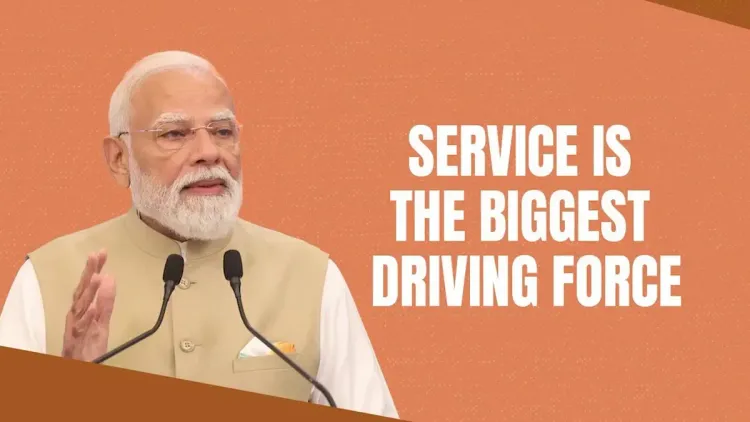
Union Minister Kiren Rijiju quoted PM Narendra Modi on 24 September 2026, framing citizen-centric governance as an act of service under the hashtags #SevaSankalpAbhiyan and #SevaYatra, reinforcing the BJP government's decade-long 'seva' communication arc.
Key Takeaways
Kiren Rijiju shared a quote attributed to PM Narendra Modi on 24 September 2026 on seva-centred governance.
The quote states that when governance values embrace service, every policy places the citizen at its core — invoking Nagarik Devo Bhava .
The post is tagged under #SevaSankalpAbhiyan and #SevaYatra , signalling a coordinated campaign, details of which remain to be officially confirmed.
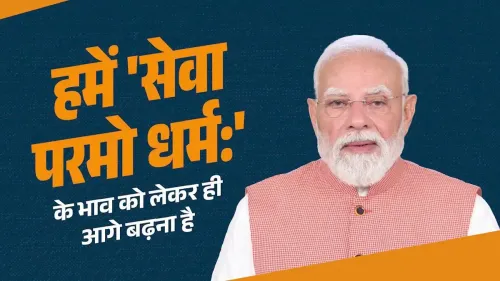
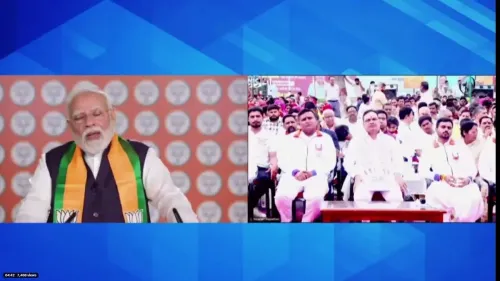
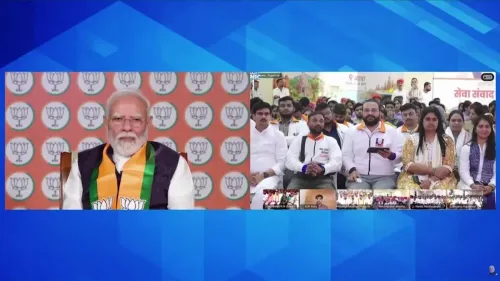
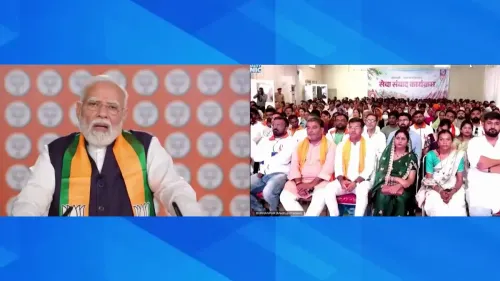
Rijiju's post includes a video attachment, amplifying the message beyond text.
The messaging is consistent with the BJP-led government's established communication framework linking policy delivery to the principle of 'seva' since 2014 .
A simple Sanskrit phrase — Atithi Devo Bhava reframed as Nagarik Devo Bhava — is doing a lot of political work on Thursday, 24 September 2026. Union Parliamentary Affairs and Minority Affairs Minister Kiren Rijiju shared a quote attributed to Prime Minister Narendra Modi, amplifying the ruling dispensation's signature 'seva' (service) framework for governance as part of what the hashtags identify as #SevaSankalpAbhiyan and #SevaYatra.
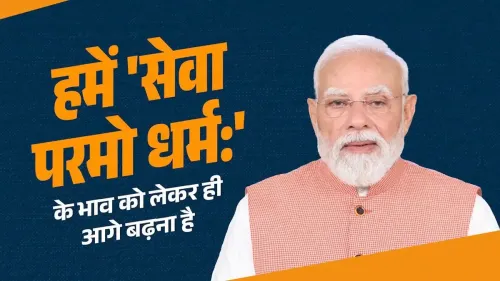
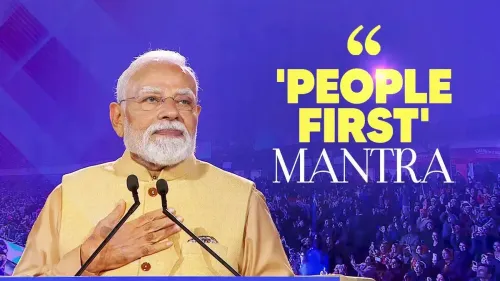
Rijiju's post reads: 'Jab shasan ke mulya mein seva ka bhav hota hai to har niti ke kendr mein Nagarik Devo Bhava ka sankalp hota hai' — translated: 'When the spirit of service is at the core of governance values, then at the centre of every policy lies the resolve that the citizen is divine.' The quote is attributed directly to Prime Minister Modi.
The 'Nagarik Devo Bhava' idea and its policy framing
The phrase inverts the classical Sanskrit dictum Atithi Devo Bhava ('the guest is God') to place the citizen at the altar of state action. It is consistent with the Modi government's decade-long communication arc, which has repeatedly positioned welfare delivery — direct-benefit transfers, Jan Dhan accounts, Ayushman Bharat, doorstep services — as acts of service rather than entitlement. Senior ministers across portfolios have regularly echoed this framing since 2014, and Rijiju's post follows that established pattern.Seva Sankalp Abhiyan and Seva Yatra: what the hashtags signal
The two campaign tags — #SevaSankalpAbhiyan and #SevaYatra — suggest a coordinated outreach or mobilisation effort running in parallel with this messaging. The specifics of both programmes, including their scope, timeline, and administering ministry, have not been formally confirmed in publicly available records as of this report. What is clear is that the hashtags are being carried by at least one senior cabinet minister, which typically precedes or accompanies a wider party or government rollout. Official programme details are worth watching for in upcoming ministry releases or parliamentary announcements.Rijiju's role as the government's amplifier-in-chief
As Parliamentary Affairs Minister, Rijiju sits at the intersection of cabinet communication and floor management, making his social-media voice an unusually reliable signal of where the government wants public attention to land. His decision to quote the Prime Minister verbatim — rather than paraphrase — underlines that this is scripted, coordinated messaging, not an improvised observation. The accompanying video (one clip attached to the post) likely extends the argument visually, though its contents were not independently reviewable for this report. When a government frames every policy as an act of devotion to the citizen, the measure of that claim is eventually in the data — service-delivery indices, grievance-redressal rates, last-mile reach. That audit will follow.Point of View
Converting welfare-delivery milestones into moral arguments about the purpose of the state. The introduction of two new campaign labels, #SevaSankalpAbhiyan and #SevaYatra, suggests the party may be building toward a structured outreach cycle, potentially timed around a parliamentary session or a state electoral calendar. Whether the rhetorical investment translates into verifiable service-delivery gains will determine how durable the framing proves against opposition scrutiny.
NationPress
24 Sept 2026
Frequently Asked Questions
What is Seva Sankalp Abhiyan?
#SevaSankalpAbhiyan appears to be a government or BJP-affiliated outreach campaign centred on seva (service) values in governance, referenced in Minister Kiren Rijiju's post on 24 September 2026. Official programme details have not been publicly confirmed as of this report.
What does Nagarik Devo Bhava mean?
Nagarik Devo Bhava means 'the citizen is divine' or 'may the citizen be revered as God.' It adapts the classical Sanskrit phrase Atithi Devo Bhava to frame every citizen as worthy of devoted public service.
Who is Kiren Rijiju?
Kiren Rijiju is a senior BJP leader from Arunachal Pradesh currently serving as India's Union Minister for Parliamentary Affairs and Minority Affairs.
Why does PM Modi use seva language in governance messaging?
The Modi government has consistently framed citizen-facing policy delivery — from direct-benefit transfers to health schemes — as acts of service since 2014 , positioning the state as a servant of citizens rather than a dispenser of entitlements. This rhetorical framework reinforces political messaging around welfare programmes.