Rijiju shares PM Modi's push for Ladakh airport, green growth

Synopsis
Union Minister Kiren Rijiju shared Prime Minister Modi's remarks on a new Ladakh airport terminal on October 15, 2026, pledging modern infrastructure growth while safeguarding the Union Territory's sensitive Himalayan environment and boosting its tourism sector.
Key Takeaways
Union Parliamentary Affairs Minister Kiren Rijiju shared PM Modi's statement on a new airport terminal in Ladakh on October 15, 2026 .
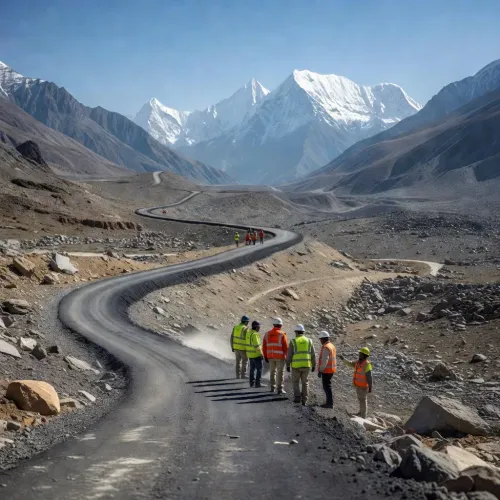
PM Modi stated the government's dual goal: modern infrastructure development in Ladakh alongside full environmental protection.
The new terminal is expected to provide 'new energy' to Ladakh's tourism sector , according to the Prime Minister.
Ladakh has been a central infrastructure priority since it became a Union Territory in 2019 , with road, airport, and power projects under focus.
Air connectivity is critical for Ladakh given seasonal road closures due to snow at high altitude.
Environmental safeguards for sensitive zones such as Pangong Tso remain a parallel concern alongside the development push.
A new airport terminal in Ladakh is being positioned as a twin-engine lift — one that accelerates tourism and one that, the government insists, will not come at the cost of the fragile Himalayan ecosystem. Union Parliamentary Affairs Minister Kiren Rijiju shared remarks by Prime Minister Narendra Modi on Thursday, October 15, 2026, underlining the administration's dual commitment to modern connectivity and environmental stewardship in the high-altitude Union Territory.
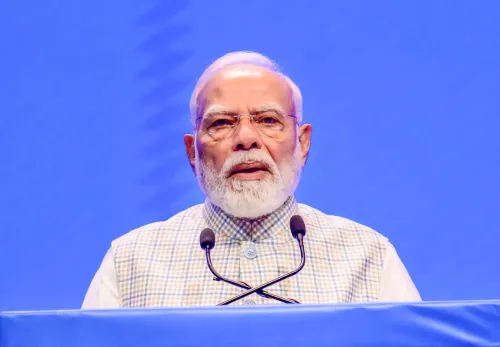
Quoting the Prime Minister, Rijiju posted: 'हमारा प्रयास है कि लद्दाख में आधुनिक इंफ्रास्ट्रक्चर का विकास हो और यहाँ के पर्यावरण का भी पूरा ध्यान रखा जाए।' — 'Our endeavour is that modern infrastructure should develop in Ladakh while full care is also taken of the environment here.' Modi added that the new airport terminal would inject 'new energy' into Ladakh's tourism sector.
Ladakh's infrastructure push since the 2019 UT formation
When Ladakh was carved out as a Union Territory in 2019, New Delhi made a standing promise: catch up fast on connectivity without repeating the ecological mistakes that scarred other hill regions. Since then, successive central budgets have earmarked road, airport, and power projects for the territory, each accompanied by assurances of environmental due diligence. The airport terminal Modi referenced fits squarely into that playbook.
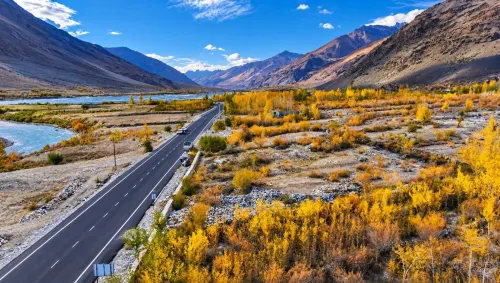
Ladakh's geography makes air connectivity disproportionately important. Roads remain snowbound for months; a functioning, expanded airport is not a convenience — it is a lifeline. For the tourism sector, better terminal capacity means more flights, more visitors, and a longer viable season. That directly translates to livelihoods for hoteliers, guides, taxi operators, and artisans across Leh and the surrounding valleys.
The tightrope: growth without ecological cost
Ladakh's environment is not a footnote — it is the product. The glaciers, the cold-desert landscape, and the thin-air solitude are precisely what draws travellers from around the world. Any infrastructure that degrades those assets defeats its own purpose. The Prime Minister's explicit mention of environmental care is a direct response to that tension, one that has animated conservation debates around Pangong Tso and other sensitive zones since the UT was formed.
Central policy has sought environmental clearance frameworks for Himalayan projects, though watchdog scrutiny of actual compliance remains active. The government's stated approach — develop and protect simultaneously — is the line Modi and his ministers have held consistently across similar Himalayan infrastructure announcements.
With a new terminal now in focus, the question shifts from aspiration to execution: whether Ladakh's skies open wider while its glaciers stay intact will be the real measure of this promise.
Point of View
Ladakh has served as a showcase for the BJP's 'development with care' narrative in the Himalayas, and each infrastructure milestone is amplified by senior ministers to reinforce that image. The tension between growth and conservation, however, is real and unresolved — how environmental commitments translate into on-ground clearance compliance will determine whether this becomes a model or a cautionary tale. Rijiju amplifying Modi's exact words signals a coordinated messaging effort ahead of potential parliamentary scrutiny of Ladakh's development trajectory.
NationPress
15 Oct 2026
Frequently Asked Questions
What did PM Modi say about the Ladakh airport terminal?
PM Modi stated that the government's goal is to develop modern infrastructure in Ladakh while fully protecting its environment, and that the new airport terminal will give the Ladakh tourism sector new energy.
Why is an airport important for Ladakh?
Ladakh's mountain roads are snowbound for extended periods each year, making air connectivity a critical lifeline for residents, the tourism industry, and strategic access to the border region.
When did Ladakh become a Union Territory?
Ladakh was bifurcated from the state of Jammu and Kashmir and became a Union Territory in 2019 , after which the central government significantly increased infrastructure investment in the region.
What are the environmental concerns around Ladakh's development?
Ladakh's glaciers, cold-desert landscape, and ecologically sensitive zones like Pangong Tso face pressure from increased human activity; conservationists watch whether infrastructure projects obtain and comply with proper environmental clearances.
What is Kiren Rijiju's role in the central government?
Kiren Rijiju is the Union Minister of Parliamentary Affairs and Minister of Minority Affairs, and a senior BJP leader from Arunachal Pradesh.