Rijiju writes to Kharge on Delimitation Bill, urges Congress not to obstruct future laws
Synopsis
Union Minister Kiren Rijiju has told Congress chief Mallikarjun Kharge in a sharply worded letter that the party ignored repeated government outreach on the Delimitation Amendment Bill, even as consultations proceeded with the DMK, SP, and five other parties. The message is a pre-emptive political framing: cooperate on future legislation, or own the label of obstructionist.
Key Takeaways
Kiren Rijiju wrote to Mallikarjun Kharge on 19 October 2026 seeking Congress's cooperation on the Delimitation Amendment Bill .
Rijiju stated that Congress did not provide dates for discussions despite repeated government requests.
The government held consultations with DMK, SP, YSRCP, NCP, Shiv Sena (UBT), AIMIM and BJD after Congress failed to engage.
The Constitution (131st Amendment) Bill, 2026 and companion bills were introduced on 16 April 2026 but were rejected in the Lok Sabha on 17 April 2026 .
Rijiju urged Congress to 'play a constructive role and not obstruct important future legislation.'
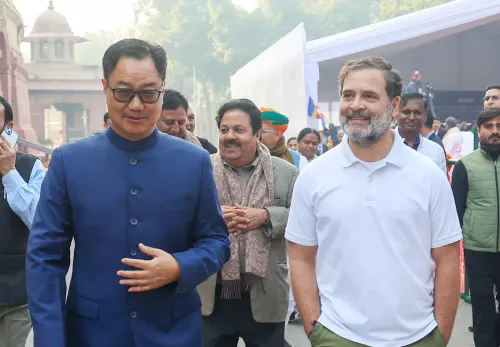
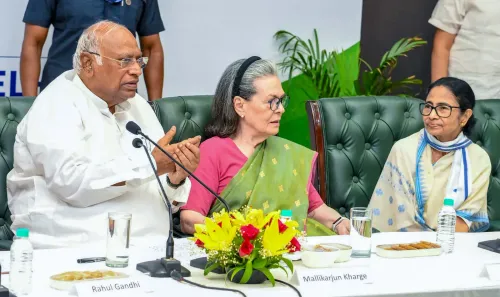
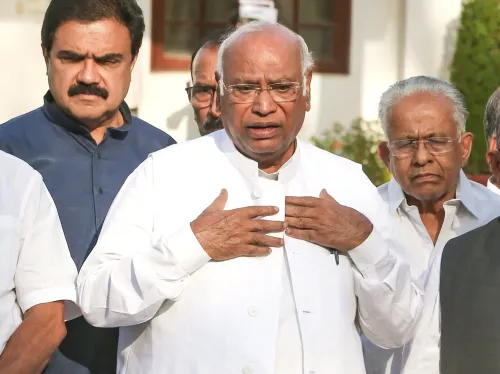
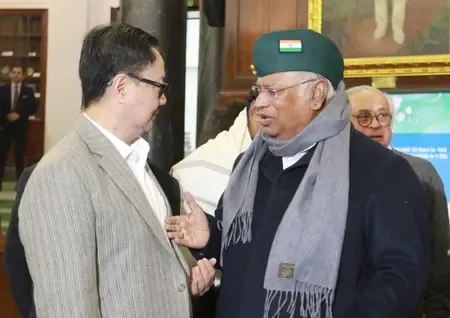
Union Parliamentary Affairs Minister Kiren Rijiju on Monday, 19 October 2026, wrote to Congress President Mallikarjun Kharge — who also serves as Leader of the Opposition in the Rajya Sabha — urging the principal Opposition party to play a constructive role in Parliament and not obstruct important future legislation. The letter was a direct response to Kharge's 16 October communication to Prime Minister Narendra Modi, in which the Congress chief had demanded an all-party meeting before the Delimitation Constitutional Amendment Bill is taken up for consideration.
Government's Case: Repeated Outreach, No Response
Rijiju firmly pushed back on the Congress demand, asserting that the government had made sustained efforts to bring the party into the consultation process. 'The government has consistently sought the Opposition's support and cooperation for the consideration and passage of the Delimitation Amendment Bill. The government has reached out to the Congress Party, being the principal Opposition party, on several occasions,' he wrote.
He added that despite repeated requests, Congress did not provide dates for discussion, following which the government extended its outreach to other political formations.
Broader Consultations with Regional Parties
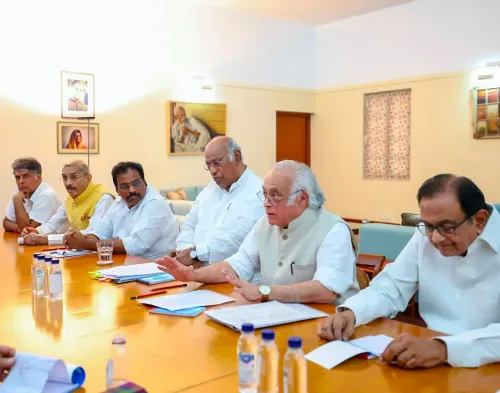
According to Rijiju's letter, the government subsequently held consultations with representatives of several parties, including the Dravida Munnetra Kazhagam (DMK), Samajwadi Party (SP), YSRCP, NCP, Shiv Sena (UBT), AIMIM, and BJD, with a view to facilitating dialogue and building a broader consensus. The minister argued that in light of these efforts, the demand for consultations raised repeatedly by Congress was difficult to reconcile. 'It is not clear why the demand for consultation is being made repeatedly, when the government has already made sustained efforts for dialogue,' he stated.
The Bills and Their Legislative History
The dispute centres on a cluster of interlinked legislative proposals: the Constitution (131st Amendment) Bill, 2026, the companion Delimitation Bill, 2026, and the Union Territories Laws (Amendment) Bill, 2026. All three were introduced in the Lok Sabha on 16 April 2026 by Minister of State for Law and Justice Arjun Ram Meghwal. However, the bills failed to pass — they were rejected in the Lok Sabha on 17 April 2026, marking a significant legislative setback for the ruling dispensation.
The episode underscores the fraught politics around delimitation, a subject with deep implications for political representation across states, particularly those in southern India that have historically resisted any reallocation of parliamentary seats based on population growth.
Rijiju's Message to the Opposition
Beyond the immediate procedural dispute, Rijiju's letter carried a pointed political message. Reiterating the government's commitment to parliamentary democracy, he wrote: 'We value the participation of all political parties in deliberations and discussions on all matters of national importance. I also hope that the Congress Party will play a constructive role and will not obstruct important future legislation.'
The appeal signals that the government intends to re-introduce or advance the delimitation legislation and is seeking to pre-emptively frame any future Opposition resistance as obstructionism rather than principled dissent.
What Comes Next
With the bills having already lapsed in the Lok Sabha, the government's path forward remains unclear. The Centre will need to either reintroduce the legislation or negotiate broader Opposition support before any fresh attempt. Congress has not yet publicly responded to Rijiju's latest letter, and the standoff over all-party consultations remains unresolved ahead of the next Parliament session.
Point of View
And now it is Congress demanding a seat at the table. What is missing from this frame is that the Delimitation Bill touches existential interests for southern and smaller states — Congress's refusal may be principled opposition, not procedural stonewalling. The bills having already been rejected on the floor of the Lok Sabha on 17 April 2026 is the inconvenient detail neither side dwells on.
NationPress
19 Oct 2026
Frequently Asked Questions
Why did Kiren Rijiju write to Mallikarjun Kharge about the Delimitation Bill?
Rijiju wrote to Kharge on 19 October 2026 in response to Kharge's earlier letter to PM Modi demanding an all-party meeting before the Delimitation Constitutional Amendment Bill is taken up in Parliament. Rijiju countered that the government had already made repeated outreach attempts to Congress, which did not respond with available dates for discussion.
What is the Constitution (131st Amendment) Bill, 2026?
It is a constitutional amendment bill related to delimitation — the redrawing of parliamentary constituency boundaries. It was introduced in the Lok Sabha on 16 April 2026 alongside the Delimitation Bill, 2026 and the Union Territories Laws (Amendment) Bill, 2026, but was rejected in the Lok Sabha on 17 April 2026.
Which parties did the government consult on the Delimitation Bill?
According to Rijiju's letter, the government held consultations with representatives of the DMK, Samajwadi Party (SP), YSRCP, NCP, Shiv Sena (UBT), AIMIM, and BJD after Congress failed to provide dates for discussion. The aim was to build broader consensus in support of the proposed legislation.
Why is the Delimitation Bill politically sensitive?
Delimitation involves the reallocation of parliamentary constituencies, typically based on population data. States — particularly in southern India — that have managed population growth more effectively fear losing parliamentary seats relative to more populous northern states, making the issue deeply politically charged.
What happens next with the Delimitation Bill?
The bills were rejected in the Lok Sabha on 17 April 2026, so the government would need to reintroduce the legislation. As of 19 October 2026, the standoff over all-party consultations remains unresolved, and Congress has not publicly responded to Rijiju's latest letter.