Rijiju's Independence Day call: honour freedom, build Viksit Bharat
Synopsis
Union Minister Kiren Rijiju marked India's Independence Day on 15 August 2026 with a Hindi post urging citizens to honour freedom fighters' sacrifices, live with self-respect and constitutional rights, and commit to the Viksit Bharat vision of a developed India by 2047.
Key Takeaways
Union Minister Kiren Rijiju posted Independence Day greetings on 15 August 2026 .
He described India's freedom as the product of 'long struggle, sacrifice, and supreme martyrdom' of countless freedom fighters.
Rijiju called on every Indian to honour, protect, and uphold the dignity of independence as a civic duty.
He framed freedom as an inspiration to live each day with 'self-respect, dignity, and one's rights.' The minister explicitly invoked the Viksit Bharat goal — a developed India by 2047 — as the national vow for Independence Day.
The post concluded with जय हिंद 🇮🇳 , a patriotic salute tracing back to the independence movement itself.
On the 78th Independence Day, 15 August 2026, Union Parliamentary Affairs and Minority Affairs Minister Kiren Rijiju issued a solemn call to every Indian — to honour the freedom won through countless sacrifices and to rededicate the nation toward the goal of a developed India.
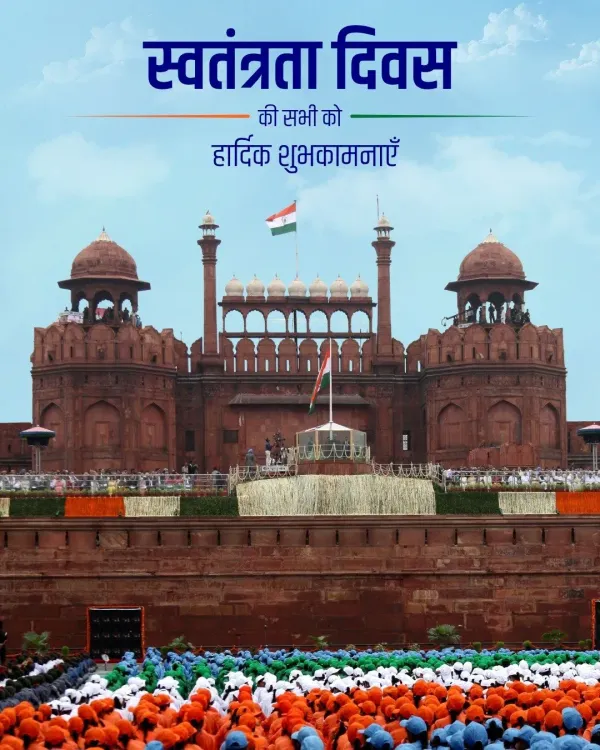
Writing in Hindi, Rijiju opened with warm greetings — 'स्वतंत्रता दिवस की सभी देशवासियों को हार्दिक शुभकामनाएँ' ('Heartfelt Independence Day greetings to all fellow citizens') — before striking a reflective note: 'Our freedom was won after a long struggle, sacrifice, and the supreme martyrdom of countless freedom fighters. It is the duty of every Indian to honour, protect, and uphold its dignity.'
Self-respect, rights, and the living meaning of freedom
Rijiju framed independence not as a historical date but as a daily lived principle. 'This freedom,' he wrote, 'inspires us to live every moment of our lives with self-respect, dignity, and our rights.' The framing is deliberate — threading constitutional values into the everyday rather than confining them to ceremonial memory.
The Viksit Bharat pledge on Independence Day
The minister closed with an explicit forward commitment, urging citizens to 'take a vow to realise the resolve of a Viksit Bharat (Developed India) while keeping the unity, integrity, and glory of the nation inviolate.' The phrase Viksit Bharat — the government's centrepiece vision for India by 2047, the centenary of independence — has become a fixture of high-level messaging, linking the freedom struggle's moral weight to a concrete developmental horizon. Rijiju signed off with 'जय हिंद 🇮🇳' — the battle cry that has closed patriotic addresses since Netaji Subhas Chandra Bose first popularised it.
India's independence on 15 August 1947 ended nearly two centuries of British colonial rule, a transition achieved through mass civil disobedience, armed resistance, and diplomatic pressure sustained over decades. Each year, the anniversary anchors a national conversation that senior ministers participate in through formal addresses, public events, and, increasingly, direct social-media communication with citizens.
Point of View
Making dissent from the vision appear to dishonour the martyrs. As Parliamentary Affairs Minister, Rijiju also manages the government's legislative calendar, so his emphasis on national unity and constitutional values carries institutional weight beyond ceremonial messaging. The post signals that the Viksit Bharat framing will continue to dominate government communication through the parliamentary sessions ahead.
NationPress
15 Aug 2026
Frequently Asked Questions
What did Kiren Rijiju say on Independence Day 2026?
Kiren Rijiju posted a Hindi message on 15 August 2026 greeting all Indians, honouring freedom fighters' sacrifices, and calling on citizens to commit to the Viksit Bharat vision of a developed India by 2047.
What is Viksit Bharat and why is it mentioned on Independence Day?
Viksit Bharat ('Developed India') is the Indian government's vision to make India a fully developed nation by 2047 — the centenary of independence. Leaders invoke it on Independence Day to link the freedom struggle's legacy to a concrete future goal.
Who is Kiren Rijiju?
Kiren Rijiju is a senior BJP leader from Arunachal Pradesh serving as Union Minister of Parliamentary Affairs and Minister of Minority Affairs in the Indian cabinet.
What does 'Jai Hind' mean and where does it come from?
'Jai Hind' means 'Victory to India' or 'Long live India.' It was popularised by Netaji Subhas Chandra Bose during the independence movement and has since become the standard patriotic closing for national addresses.
Why do Indian ministers post Independence Day messages on social media?
Senior ministers use platforms like X to communicate directly with citizens on national occasions, reinforcing constitutional values, government priorities, and a sense of shared identity — extending the reach of formal Independence Day ceremonies.