Rijiju on India's languages: love, respect, and the link-language debate

Synopsis
On the eve of Independence Day 2026, Union Minister Kiren Rijiju declared his love for all Indian languages while making the case for a link language as a national bridge — reopening one of India's most enduring constitutional debates.
Key Takeaways
Kiren Rijiju , Union Minister of Parliamentary Affairs and Minority Affairs, posted on 14 August 2026 declaring respect for all Indian languages.
He shared an authored column arguing that a link language is a 'necessary bridge' for India — framing it as complementary to, not competitive with, regional languages.
India's Constitution recognises 22 scheduled languages under the Eighth Schedule; Hindi is the Union's official language with English as an associate official language.
The Official Languages Act (1963) and the three-language formula in the National Policy on Education (1968) have shaped — and contested — language implementation for decades.
Rijiju's background in linguistically diverse Arunachal Pradesh gives his position a distinct credibility in a debate often dominated by Hindi-belt voices.
The Independence Day timing amplifies the statement's symbolic resonance on the question of national linguistic unity.
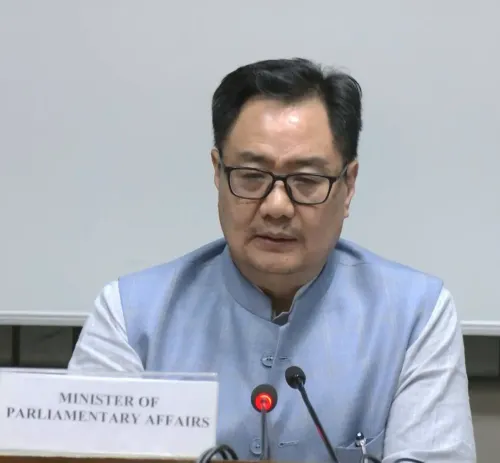
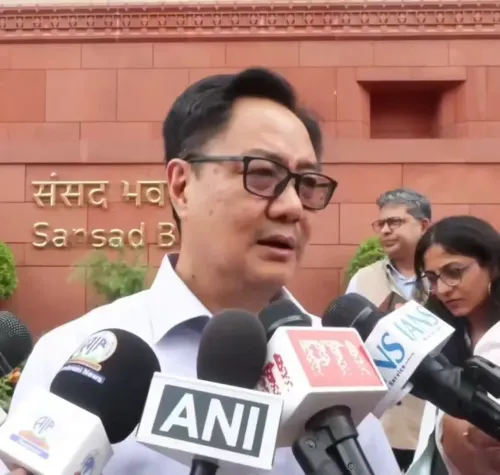
A senior Union Minister from one of India's most linguistically diverse frontier states has waded into one of the country's oldest and most charged debates — and he is doing it with an op-ed, not a megaphone. Union Parliamentary Affairs Minister Kiren Rijiju took to X on Friday, 14 August 2026 — the eve of Independence Day — to declare his love and respect for all Indian languages, sharing a column he authored on why a link language remains a necessary bridge for the nation.
Rijiju's post is brief and unambiguous: 'I love and respect all Indian languages.' The column he links to expands on the idea of a link language — framing it not as a threat to regional tongues but as a connective tissue for a country that the Constitution itself recognises as home to 22 scheduled languages under the Eighth Schedule.
The constitutional tightrope India has walked since 1950
The tension Rijiju is navigating is as old as the Republic. The Constitution of India (1950) designated Hindi as the official language of the Union while retaining English as an associate official language — a compromise that reflected the anxieties of the founding moment. The Official Languages Act of 1963 and the three-language formula embedded in the National Policy on Education (1968) tried to hold that balance: promote Hindi, protect the regional, keep English as a neutral ground. Decades on, the fault lines remain live. Southern states in particular have pushed back sharply whenever central policy has appeared to tilt toward Hindi imposition. Every major education reform — including the National Education Policy (NEP) and its mother-tongue provisions — reignites the argument about which language carries the nation forward and at whose cost.Why a BJP minister from Arunachal Pradesh carries unusual weight here
Rijiju's voice in this debate carries a particular texture. Arunachal Pradesh is home to dozens of tribal languages and sits at the crossroads of Tibetan, Burmese, and Assamese linguistic worlds. A senior BJP leader from that state arguing for both linguistic respect and a functional link language is a harder position to dismiss as Hindi-belt chauvinism. His framing — love for all languages, plus the practical case for a bridge — threads a needle that purely ideological arguments rarely manage. The timing, on the eve of Independence Day, amplifies the signal. Statements on linguistic unity on 14 August land in a charged symbolic register, and Rijiju appears to have chosen the moment deliberately. India's language question has never been purely cultural — it is federal, electoral, and deeply personal to millions of regional-language speakers and linguistic minorities. Where a Union Minister plants his flag on that question, and how he argues it, will be watched closely in Parliament's corridors and in state capitals from Chennai to Guwahati.Point of View
He is trying to occupy the moderate centre of a debate that rarely has one. For the BJP, which has faced persistent accusations of Hindi promotion at regional languages' expense, a voice from the linguistic periphery making this argument is strategically useful. The real test will come in Parliament, where official language rules and NEP implementation will determine whether the sentiment translates into policy that regional speakers can actually trust.
NationPress
28 Sept 2026
Frequently Asked Questions
What did Kiren Rijiju say about Indian languages?
Rijiju declared 'I love and respect all Indian languages' in an X post on 14 August 2026, sharing a column he wrote arguing that a link language serves as a necessary bridge for India's multilingual nation.
What is India's official language policy?
The Constitution of India designates Hindi as the official language of the Union, with English continuing as an associate official language. India also recognises 22 scheduled languages under the Eighth Schedule of the Constitution.
What is the three-language formula in India?
The three-language formula, introduced in the National Policy on Education (1968), recommends that students learn their mother tongue, Hindi, and English — a framework designed to balance regional language promotion with national communication needs.
Why is the link-language debate sensitive in India?
Southern and northeastern states have historically resisted any policy perceived as imposing Hindi, fearing cultural and administrative marginalisation. The debate touches on federal autonomy, educational access, and cultural identity for hundreds of millions of regional-language speakers.
Why is Kiren Rijiju's background relevant to this debate?
Rijiju represents Arunachal Pradesh, a state with dozens of tribal languages at the intersection of multiple linguistic traditions. His advocacy for both linguistic respect and a functional link language is harder to characterise as Hindi-belt bias than similar arguments from ministers from Hindi-speaking states.