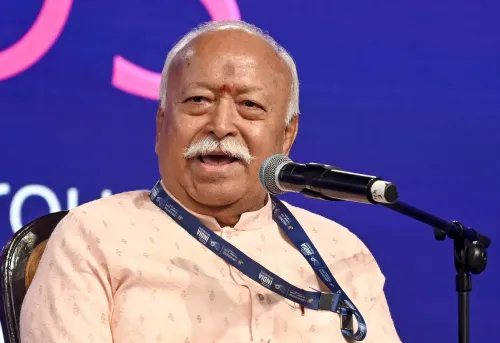
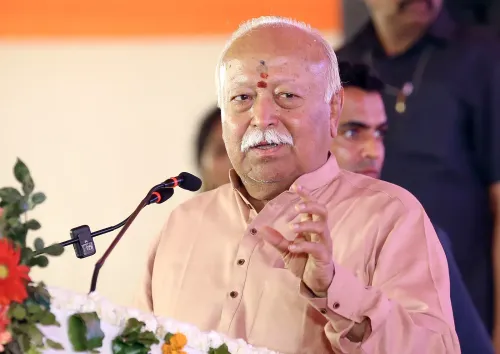
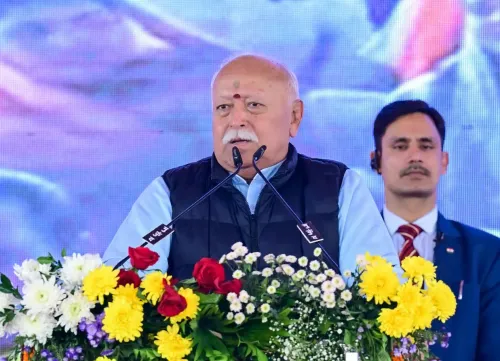
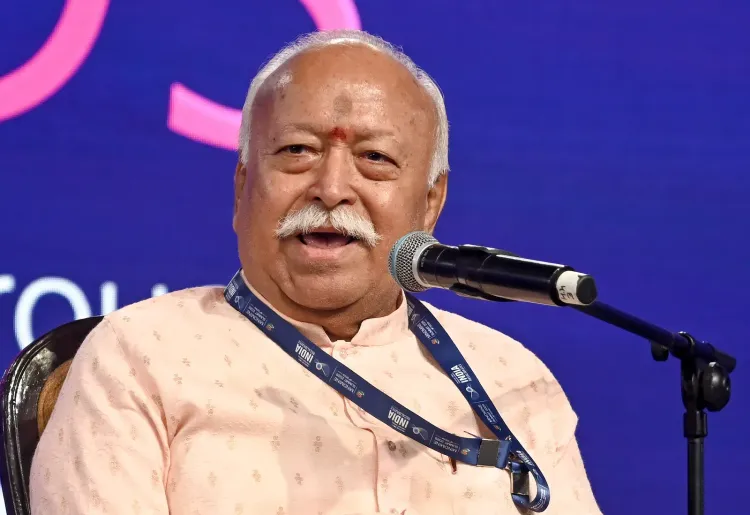
RSS chief Mohan Bhagwat to address 2,000+ Gen Z students in Mumbai
Synopsis
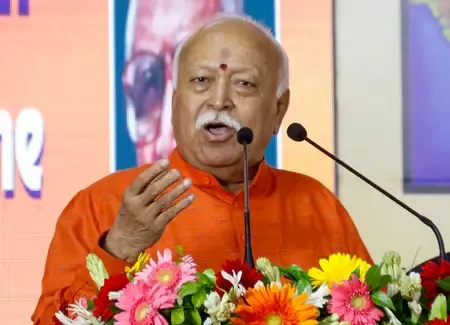
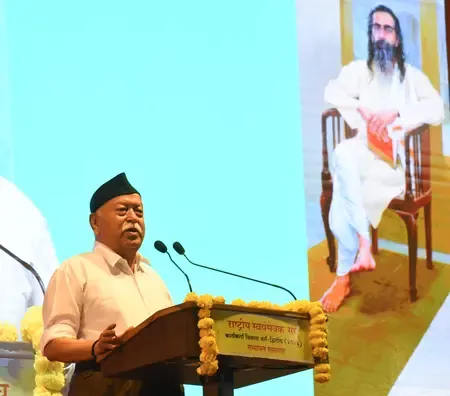
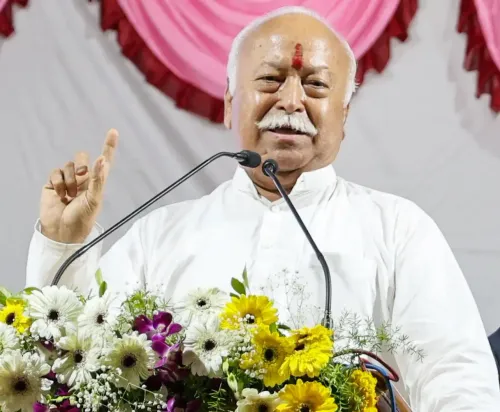
RSS chief Mohan Bhagwat steps into one of India's largest youth conferences — not a shakha, but a pluralist stage that also features ex-CJI D.Y. Chandrachud and actor Shabana Azmi. With 2,000+ students from 100 cities in the audience, this is the third time Bhagwat has chosen IIMUN as a platform, signalling a deliberate outreach to Gen Z and Gen Alpha on India's terms.
Key Takeaways
RSS chief Mohan Bhagwat will address more than 2,000 students from over 100 cities at NMACC, Mumbai on 6 August .
The event is the 15th annual IIMUN championship conference , themed around youth uniting the world 'the Indian Way'.
This is the third time Bhagwat has participated in an IIMUN event.
Former Chief Justice of India D.Y.
Chandrachud , actor Shabana Azmi , and actor Boman Irani are also expected to attend.
Nearly 30,000 students have been associated with IIMUN since its founding, according to founder Rishabh Shah .
Rashtriya Swayamsevak Sangh (RSS) chief Mohan Bhagwat will address more than 2,000 students from over 100 cities at the Nita Mukesh Ambani Cultural Centre (NMACC) in Mumbai on 6 August, during the inaugural session of the International Movement to Unite Nations (IIMUN) annual championship conference. The interaction, focused on leadership, nation-building, and India's role in global unity, is part of what organisers describe as one of the world's largest youth-led conferences.
What the Conference Is About
The inaugural session of the IIMUN conference will centre on the theme 'The Role of Youth in Uniting the World, the Indian Way'. The annual gathering brings together students aged 15 to 19 years, drawn from schools and colleges across the country. This year marks the 15th anniversary of the IIMUN championship, making the edition particularly significant in the organisation's history.
This will be the third occasion on which Bhagwat has attended an IIMUN event to engage with younger generations — a signal of the RSS's sustained interest in direct dialogue with youth on questions of identity, governance, and national purpose.
Who Else Is Attending
Beyond Bhagwat, the conference is expected to draw several prominent figures. Actor Shabana Azmi, actor Boman Irani, and former Chief Justice of India D.Y. Chandrachud are among those scheduled to participate. The presence of voices from across ideological and professional spectrums reflects IIMUN's stated commitment to exposing young people to diverse streams of thought.
What the Organisers Said
IIMUN founder Rishabh Shah said the organisation has consistently focused on helping young people understand India's values while preparing them for leadership roles. He noted that nearly 30,000 students have been associated with IIMUN over the years.
Shah made a pointed call for ideological breadth in youth education: 'I believe that organisations like RSS and Indian National Congress, along with other prominent institutions, should be studied by the younger generations. These organisations have different ideologies, and hence, the new generation should learn about them,' he said.
He further emphasised the need for convergence across political traditions: 'No matter what the ideology is, at the end of the day, when we think about Bharat, everyone needs to come together, engage to build leaders of the young Indians as we need all — Savarkar, Sardar Patel, Swami Vivekanand and Mahatma Gandhi — especially this generation,' Shah added.
Why It Matters
The event comes at a moment when young Indians are increasingly vocal in conversations around democracy, governance, and national identity. Bhagwat's participation in a platform that also features figures from the arts, judiciary, and across the political spectrum is notable — it positions the RSS chief in a deliberately pluralist setting rather than a purely ideological one.
This is the kind of soft-power outreach that large organisations deploy to shape how the next generation perceives institutional legitimacy. With Gen Z and Gen Alpha — the cohorts most likely to vote and lead in the next two decades — as the audience, the stakes of such conversations extend well beyond a single conference day.
What Happens Next
The IIMUN conference is expected to continue beyond the inaugural session, with student-led deliberations on global and national themes. How Bhagwat's address is received — and what specific positions he articulates on youth, leadership, and India's global role — will likely draw attention from political observers and commentators in the days ahead.
Point of View
Or defaults to familiar civilisational framing. Founder Rishabh Shah's call for young Indians to study both the RSS and the Congress is the most underreported line in this story — it is either genuine intellectual openness or savvy brand management, and the difference matters.
NationPress
6 Aug 2026
Frequently Asked Questions
Why is RSS chief Mohan Bhagwat attending the IIMUN conference in Mumbai?
Bhagwat is attending the 15th annual IIMUN championship conference to interact with Gen Z and Gen Alpha students on themes of leadership, nation-building, and India's role in global unity. This is the third time he has participated in an IIMUN event, reflecting a sustained RSS interest in direct youth engagement.
What is IIMUN and how large is the conference?
IIMUN, the International Movement to Unite Nations, is a youth-led organisation that has engaged nearly 30,000 students over its history. Its annual championship conference brings together students aged 15 to 19 from across India, with this year's edition drawing participants from over 100 cities.
Where is the IIMUN conference being held?
The inaugural session of the conference is being held at the Nita Mukesh Ambani Cultural Centre (NMACC) in Mumbai on 6 August.
Who else is attending the IIMUN conference alongside Bhagwat?
Former Chief Justice of India D.Y. Chandrachud, actor Shabana Azmi, and actor Boman Irani are among the prominent personalities expected to attend, alongside the 2,000-plus student delegates.
What did IIMUN founder Rishabh Shah say about the conference's purpose?
Shah said IIMUN has consistently focused on helping young people understand India's values while preparing them for leadership. He called for young Indians to study organisations across ideological lines — including both the RSS and the Indian National Congress — arguing that building the next generation of leaders requires drawing on figures from Savarkar to Mahatma Gandhi.