Allahabad HC hijab dress code ruling sparks national political debate
Synopsis
The Allahabad High Court has dismissed a petition by a Prayagraj schoolgirl seeking permission to wear a headscarf with her uniform — reigniting India's unresolved debate over religious expression in secular institutions. With BJP, VHP, Congress, and CPI all staking out opposing positions, the ruling has moved well beyond a courtroom dispute into electoral and constitutional territory.
Key Takeaways
The Allahabad High Court ruled that students cannot demand changes to institutional dress codes based on personal or religious preference.
The petition was filed by a minor girl seeking permission to wear a headscarf at a private school in Prayagraj, Uttar Pradesh .
BJP leaders Mukhtar Abbas Naqvi and Nalin Kohli backed the ruling, citing institutional discipline and Supreme Court precedent.
VHP spokesperson Vinod Bansal claimed courts have repeatedly held that hijab is not an essential Islamic practice.
Santhosh Kumar and Congress leader Shakeel Ahmad Khan argued students retain the right to religious expression within educational settings.
The verdict echoes the Karnataka High Court 's 2022 ruling and may face challenge before a higher bench or the Supreme Court .
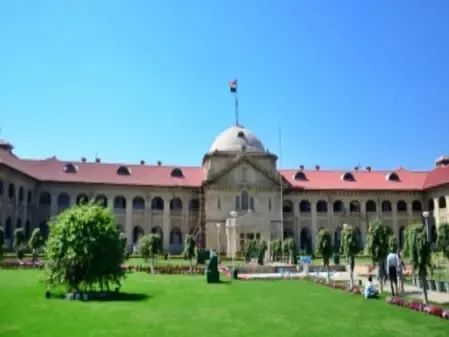
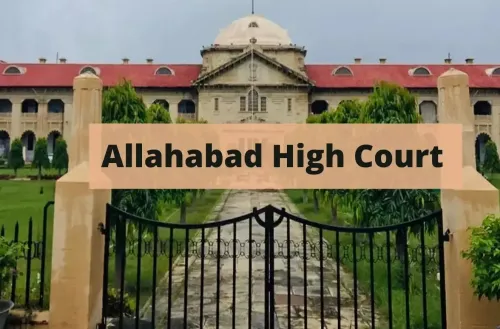
The Allahabad High Court has ruled that students cannot demand changes to an educational institution's prescribed dress code on the basis of personal preference, dismissing a petition filed by a minor girl at a private school in Prayagraj, Uttar Pradesh, who sought permission to wear a headscarf alongside the school uniform. The judgment, delivered in August 2025, has ignited a sharp national debate over the tension between institutional discipline and an individual's right to religious expression.
Background of the Case
The petition was filed on behalf of a minor student who had completed her high school education and was seeking admission to Class 11 at the same private school in Prayagraj. The court dismissed the plea seeking directions to school authorities to allow the student to wear a headscarf with the prescribed uniform. The ruling reaffirms an institution's authority to enforce uniform dress codes without exceptions based on personal or religious preference.
What the Court Said
The court's position, as interpreted by legal observers, aligns with earlier Supreme Court jurisprudence on what constitutes 'essential religious practices.' Senior advocate and Bharatiya Janata Party (BJP) leader Nalin Kohli noted that the ruling appeared consistent with Supreme Court judgments on the question. He cited Article 26 of the Constitution, which grants religious minorities the right to establish and administer their own educational institutions, and argued that families seeking religion-based schooling have that option available to them. 'If a family feels that their daughter should study on that basis, such institutions are available, and they can go there to study,' Kohli said.
Political Reactions: A Divided Response
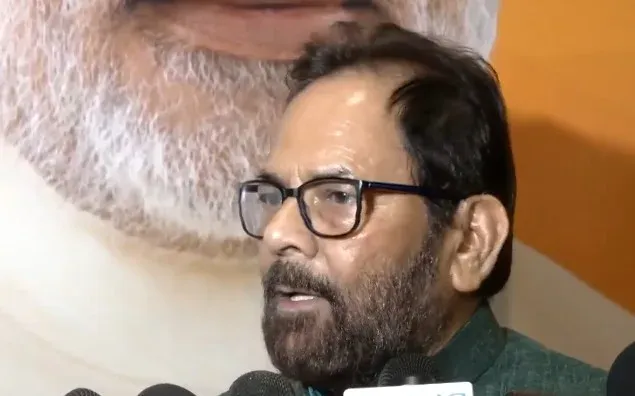
BJP leader Mukhtar Abbas Naqvi urged restraint, warning against attempts to weaponise the verdict for communal purposes. 'I think no one should try to create communal controversy or communal tension in the name of hijab. Educational institutions have their own dress codes, discipline and regulations. Everyone should respect that,' Naqvi said.
Vishva Hindu Parishad (VHP) National Spokesperson Vinod Bansal strongly backed the ruling, claiming courts have repeatedly addressed questions around the hijab and burqa. 'Not once, but many times, the courts have said regarding the hijab, burqa and all these things that neither are they a part of Islam, nor are they part of Islamic beliefs or the Quran,' Bansal said, adding that schools should teach equality and brotherhood rather than reinforce distinctions based on religious identity.
On the other side, Communist Party of India (CPI) Member of Parliament P. Santhosh Kumar argued that while uniforms symbolise equality, students retain the right to practise their faith. 'A student has every right to continue with his or her religious faith. One's right to believe in and practise the religion or faith of their choice cannot be undermined,' Kumar said.
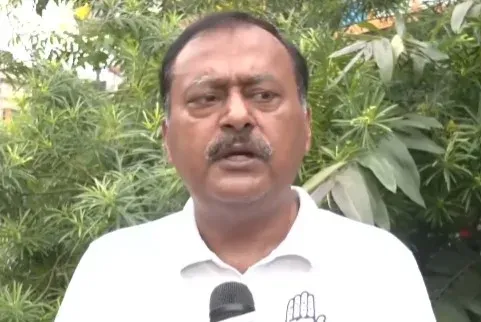
Congress leader Shakeel Ahmad Khan described head-covering as a matter of personal choice rooted in shared Indian cultural tradition. 'If you look at Indian society traditionally, it is not only Muslim women who wear a hijab, 'ghoonghat', or cover their head with an 'odhni'. This is part of our shared cultural tradition,' Khan said. He acknowledged that schools have their own rules but maintained that students wishing to cover their heads should be permitted to do so.
Why This Ruling Matters
The hijab debate in Indian courts is not new — it gained national prominence following the Karnataka High Court ruling in 2022, which also upheld institutional dress codes over individual religious preference. The Allahabad High Court's latest order adds to that judicial trend, but critics argue it does not resolve the underlying constitutional question of where institutional authority ends and individual religious freedom begins. Notably, this verdict concerns a private school, not a government institution, adding another layer of complexity to the legal and ethical discussion.
What Happens Next
Legal experts suggest the matter could be appealed before a higher bench or eventually reach the Supreme Court, given the constitutional dimensions involved. The ruling is likely to deepen political polarisation ahead of upcoming state elections, with opposition parties framing it as an attack on minority rights and the ruling establishment citing judicial consistency. The broader question of how Indian educational policy balances secular uniformity with religious pluralism remains unresolved.
Point of View
The VHP uses it to make theological claims courts have not actually endorsed, and the opposition invokes cultural pluralism without engaging the legal doctrine. Until the Supreme Court delivers a comprehensive ruling on essential religious practices in educational settings, every such verdict will be contested terrain — judicially, politically, and socially.
NationPress
25 Aug 2026
Frequently Asked Questions
What did the Allahabad High Court rule on the hijab case?
The Allahabad High Court ruled that students cannot insist on altering a school's prescribed dress code based on personal or religious preferences, and dismissed a petition filed by a minor girl in Prayagraj seeking permission to wear a headscarf alongside her school uniform. The court upheld the institution's authority to enforce its uniform policy.
Who filed the petition and why was it dismissed?
The petition was filed on behalf of a minor girl who had completed high school at a private school in Prayagraj, Uttar Pradesh, and was seeking admission to Class 11 at the same institution. The court dismissed it, ruling that personal or religious preference does not entitle a student to demand changes to an institutional dress code.
How does this ruling compare to previous court decisions on hijab in India?
The ruling aligns with the Karnataka High Court's 2022 judgment, which also upheld institutional dress codes over individual religious preference. Senior BJP leader Nalin Kohli noted it is consistent with Supreme Court jurisprudence on what constitutes 'essential religious practices.' The broader constitutional question, however, remains unsettled at the Supreme Court level.
What do opposition parties say about the Allahabad HC hijab verdict?
CPI MP P. Santhosh Kumar argued that students retain the right to practise their religious faith even while wearing uniforms. Congress leader Shakeel Ahmad Khan described head-covering as a personal choice rooted in Indian cultural tradition and said students who wish to cover their heads should be permitted to do so.
Can the Allahabad High Court ruling be challenged further?
Legal experts suggest the ruling could be appealed before a larger bench of the Allahabad High Court or taken to the Supreme Court, given its constitutional dimensions around religious freedom and institutional authority. The Supreme Court has not yet delivered a definitive ruling on hijab in non-religious private schools.