Is Russia Targeting India's Regional Aviation Market with Civil Aircraft at 'Wings India 2026'?
Synopsis
Russia's presence at Wings India 2026 with its civil aircraft signals a commitment to India's burgeoning regional aviation sector. By fostering industrial partnerships, Russia aims to leverage its long-standing ties with India for mutual growth in aviation. Discover how this collaboration could reshape the future of India's aviation landscape.
Key Takeaways
Russia aims to penetrate India's regional aviation market.
Industrial partnerships are prioritized over simple aircraft sales.
The IL-114-300 and Superjet SJ-100 are key models showcased.
India's regional aviation segment carries millions of passengers annually.
Local manufacturing under 'Make in India' could enhance job creation.
New Delhi, Jan 25 (NationPress) Russia's initiative to present its civil aircraft, the Ilyushin IL-114-300 and the Superjet SJ-100, at Wings India 2026 in Hyderabad symbolizes a significant evolution in the economic partnership between India and Russia, particularly in the realm of civil aviation, as reported by The Sunday Guardian.
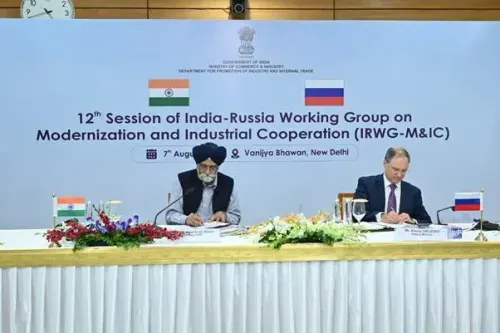
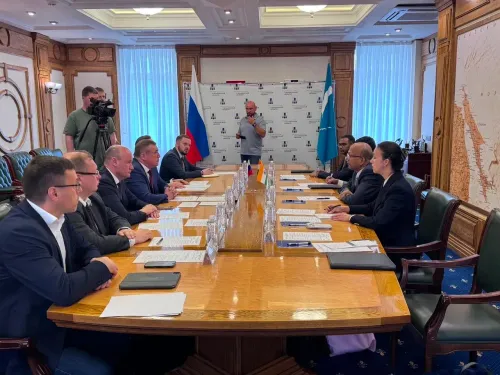
This strategic move indicates Moscow's ambition to penetrate India's rapidly expanding regional aviation sector through enduring industrial collaborations rather than merely pushing for aircraft sales.
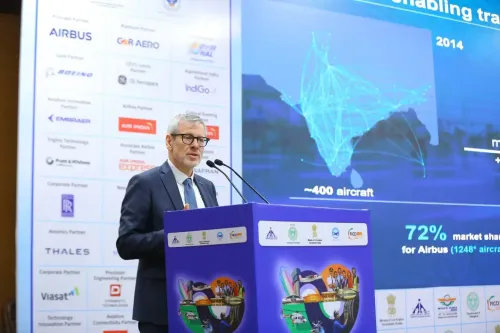
India's aviation growth has predominantly been fueled by substantial aircraft orders from local airlines directed towards Airbus and Boeing.
However, beneath these major contracts lies a burgeoning regional aviation segment that links tier-two and tier-three cities.
With the backing of airport expansions and the government's UDAN connectivity initiative, this segment accommodates approximately 18 to 36 million passengers annually and signifies a multi-billion-dollar prospect encompassing aircraft purchases, leasing, maintenance, training, and operations.
Russia is now setting its sights directly on this market. Given the enduring defense and industrial relationships between India and Russia, analysts believe that New Delhi may be amenable to permitting Russian manufacturers to establish local production and assembly facilities under the Make in India initiative.
The IL-114-300 is a turboprop aircraft with a capacity of 68 seats, designed for short runways and challenging operational environments.
It is positioned to compete with aircraft like the ATR 72-600 and the Dash-8 Q400, which currently dominate India's regional air routes.
Industry forecasts suggest the aircraft could be priced between $20 million and $35 million once mass production is stabilized, aligning it with existing turboprop options.
The Superjet SJ-100, accommodating approximately 87 to 98 passengers, aims at the higher segment of the regional jet market.
It competes with smaller offerings from Embraer's E-Jet series and is anticipated to be priced in the range of $30 million to $36 million.
While the pricing of these Russian aircraft does not significantly undercut Western competitors, their true allure lies in the industrial prospects they present.
Russian manufacturers are promoting these aircraft alongside proposals for local manufacturing, assembly, and sourcing within India.
Industry specialists argue that this approach transforms the decision from a straightforward import option into a wider industrial consideration.
Aircraft manufacturing and ongoing support produce high-skilled jobs in engineering, precision manufacturing, avionics, and maintenance, contributing to the development of supplier ecosystems that can endure for decades.
Maintenance, repair, and overhaul services are expected to be focal points if Russian civil aircraft penetrate the Indian market.
Most of an aircraft's economic value is derived post-delivery through spares, upgrades, training, and engine overhauls throughout its operational lifespan of 25 to 30 years.
Point of View
This collaboration between India and Russia has the potential to significantly enhance India's aviation capabilities while creating local jobs. It reflects a strategic shift towards self-reliance in aviation that aligns with the government's Make in India initiative. This partnership could pave the way for technological advancements and a more robust aviation industry.
NationPress
22 Sept 2026
Frequently Asked Questions
What aircraft is Russia showcasing at Wings India 2026?
Russia is showcasing the Ilyushin IL-114-300 turboprop and the Superjet SJ-100 regional jet at Wings India 2026.
What is the significance of this showcase for India?
The showcase signifies a new phase in India-Russia economic cooperation, particularly in civil aviation, focusing on industrial partnerships rather than just aircraft sales.
How many passengers does India's regional aviation segment carry?
The regional aviation segment in India carries an estimated 18 to 36 million passengers annually.
What is the potential economic impact of Russian aircraft in India?
The introduction of Russian aircraft could create a multi-billion-dollar opportunity in aircraft purchases, leasing, maintenance, training, and operations.
Will Russian aircraft be competitively priced in India?
While the pricing of Russian aircraft is not significantly lower than Western alternatives, their appeal lies in the industrial opportunities they offer.