RuTAG 2.0 review: PSA Ajay Kumar Sood urges depth of rural tech impact
Synopsis
At the first major review of RuTAG 2.0 since its 2023 relaunch, Principal Scientific Adviser Prof. Ajay Kumar Sood called for a decisive shift — from spreading rural tech thinly to driving verifiable, deep impact. With the RSVC-AMRIT platform now linking NABARD and OPSA, and IIT Roorkee championing rural entrepreneurship, India's flagship rural technology programme is being pushed toward commercial self-sufficiency.
Key Takeaways
Principal Scientific Adviser Prof.
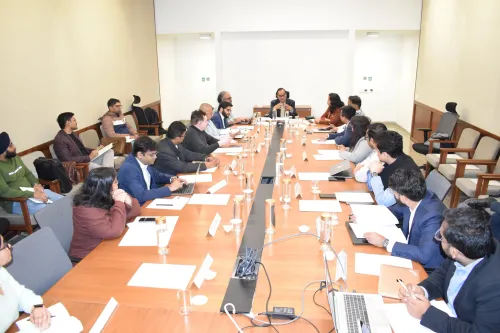
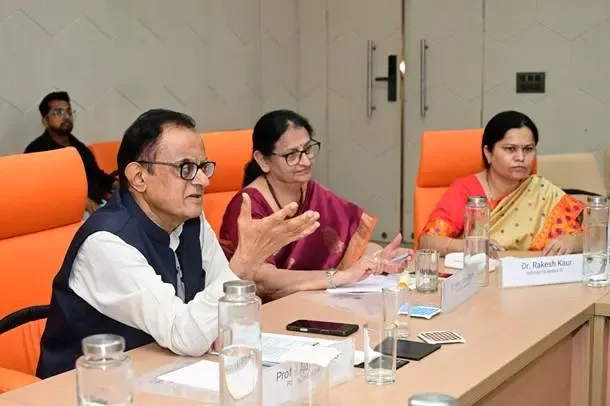
Ajay Kumar Sood addressed a review meeting of all seven RuTAG Centres on 26 September 2026 in New Delhi .
Sood called for 'depth of impact rather than breadth of activity' and stressed affordability must not compromise quality, reliability, or safety.
RuTAG 2.0 , launched in 2023 , places greater emphasis on field validation, commercialisation, and scale-up of rural technologies.
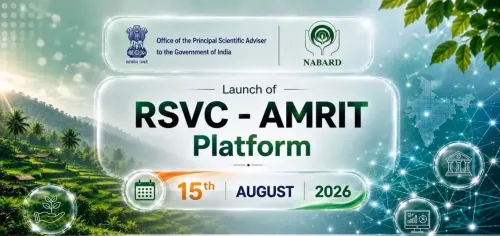
The RSVC-AMRIT platform , developed by NABARD in collaboration with OPSA , was cited as a key tool for technology discovery and deployment.
Dr Parvinder Maini (OPSA) and Prof.
Kamal Kishore Pant (IIT Roorkee) called for integrating RuTAG technologies into rural value chains and entrepreneurship models.
Principal Scientific Adviser Professor Ajay Kumar Sood on 26 September 2026 called on the Rural Technology Action Group (RuTAG) to stay sharply focused on practical, ground-level challenges facing India's rural communities, stressing that technological interventions must be both scalable and sustainable. Speaking at a review meeting of all seven RuTAG Centres, Prof. Sood said the programme's guiding principle should shift: 'the objective should increasingly be depth of impact rather than breadth of activity.'
Key Directives from the Principal Scientific Adviser
Prof. Sood laid out a clear framework for RuTAG's next phase. He underlined that affordability must not come at the cost of quality, reliability, safety, or durability — a caution aimed at preventing corner-cutting in low-cost rural deployments. He also called for mature technologies to progressively move beyond programme-supported development toward adoption by relevant institutions, enterprises, or industry, signalling a push for self-sustaining commercialisation.
Prof. Sood additionally highlighted the RSVC-AMRIT platform, developed jointly by NABARD and the Office of the Principal Scientific Adviser (OPSA), as a key enabler for technology discovery, validation, deployment, and multi-stakeholder collaboration in the rural space.
RuTAG: From 2004 Origins to the 2.0 Relaunch
Conceptualised in 2003–04 and formally established in 2004, RuTAG was created to bridge the capabilities of scientific and technical institutions with the technology needs of rural India. Nearly two decades later, RuTAG 2.0, launched in 2023, reoriented the programme with a stronger emphasis on field engagement, technology validation, commercialisation, scale-up, and wider application. The review meeting convened stakeholders to assess cumulative progress under RuTAG 2.0, deliberate on technology maturity, and map pathways for broader adoption, according to an official statement.
OPSA Scientific Secretary on Value Chains and Livelihoods
Dr Parvinder Maini, Scientific Secretary at OPSA, observed that RuTAG technologies have matured to a point where their contribution must be evaluated within broader rural value chains and livelihood systems, rather than as isolated solutions. She stated that 'the strength of RuTAG will increasingly lie in how effectively its technologies are adopted and scaled.'
IIT Roorkee Director on Entrepreneurship and Sustainability
Professor Kamal Kishore Pant, Director of IIT Roorkee, emphasised the role of science, technology, and entrepreneurship in meeting the evolving needs of rural India. He called for translating research outcomes into practical solutions and viable models capable of supporting sustainable agriculture, local livelihoods, employment, and entrepreneurship — particularly in remote and rural regions. This is the first consolidated review since RuTAG 2.0's launch, and its outcomes are expected to shape the programme's priorities heading into 2027.
Point of View
But the programme's track record on commercialisation and scale-up remains thin. The involvement of NABARD's RSVC-AMRIT platform is a genuine structural addition, but whether it translates to measurable rural livelihood outcomes depends on execution discipline that past iterations have struggled to demonstrate. The real test of RuTAG 2.0 is not another review meeting — it is whether any of its technologies appear in rural markets at scale within the next two years.
NationPress
26 Sept 2026
Frequently Asked Questions
What is RuTAG and what does it do?
RuTAG, or Rural Technology Action Group, is a government programme established in 2004 to connect scientific and technical institutions with the technology needs of rural communities. It funds, validates, and promotes practical technological solutions for agriculture, livelihoods, and rural infrastructure across India.
What is RuTAG 2.0 and how does it differ from the original programme?
RuTAG 2.0 was launched in 2023 and reorients the programme with a stronger focus on field engagement, technology validation, commercialisation, and scale-up, moving beyond the original emphasis on research and development alone. The 2.0 version aims to push mature technologies toward adoption by enterprises and industry.
What did Principal Scientific Adviser Prof. Ajay Kumar Sood say at the review meeting?
Prof. Sood urged RuTAG to prioritise depth of impact over breadth of activity, and stressed that affordability should not compromise quality, reliability, safety, or durability. He also called for mature technologies to transition from programme-supported development to adoption by institutions and industry.
What is the RSVC-AMRIT platform?
The RSVC-AMRIT platform is a technology discovery and collaboration tool developed by NABARD in partnership with the Office of the Principal Scientific Adviser. It is designed to support the validation, deployment, and scaling of rural technologies across India.
Who else spoke at the RuTAG review meeting?
Dr Parvinder Maini, Scientific Secretary at OPSA, said RuTAG technologies must now be evaluated within broader rural value chains rather than as standalone solutions. Prof. Kamal Kishore Pant, Director of IIT Roorkee, called for translating research into practical models supporting sustainable agriculture, local livelihoods, and rural entrepreneurship.