Bypoll losses in Bankipur, Datia signal shift against BJP: Shiv Sena(UBT)
Synopsis
Shiv Sena(UBT)'s 'Saamana' editorial argues the BJP's losses in Bankipur — a stronghold since 1995 — and Datia are no accident: they connect youth street protests, caste fatigue in Bihar, and a public mood that is quietly but visibly shifting against the ruling party at the Centre.
Key Takeaways
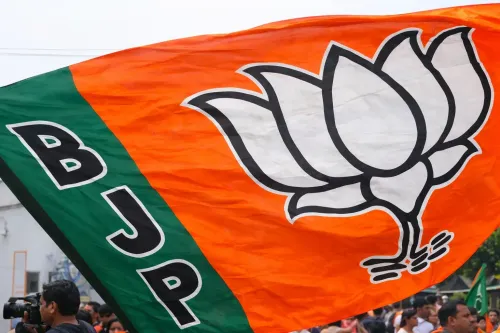
Shiv Sena (UBT) editorial in 'Saamana' on 5 August declared BJP bypoll losses in Bankipur and Datia a 'clear verdict against a corrupt administration.' Bankipur had been a BJP stronghold since 1995 ; it was won by Prashant Kishor's Jan Suraag Party, pushing the RJD to third place.
Congress candidate Ghanshyam Singh defeated the BJP in Datia , Madhya Pradesh; BJP retained Manjalpur in Gujarat.
The editorial linked the defeats to Jantar Mantar youth protests and alleged mismanagement of Ram Temple finances — claims not independently verified.
The Thackeray camp argued Bihar voters in a Muslim-Yadav majority seat chose Prashant Kishor over Tejashwi Yadav , signalling fatigue with caste politics.
The editorial called for opposition unity, warning that internal divisions remain the biggest obstacle to challenging the ruling dispensation.
Shiv Sena (UBT), led by Uddhav Thackeray, has used its party mouthpiece 'Saamana' to argue that the Bharatiya Janata Party's recent bypoll defeats in Bankipur (Bihar) and Datia (Madhya Pradesh) signal deepening public disillusionment with the ruling dispensation at the Centre. The editorial, published on Wednesday, 5 August, contends that these results, combined with youth-led protests at Jantar Mantar, mark the beginning of a broader political realignment.
What the Bypolls Showed
The Bankipur constituency in Bihar had been a BJP stronghold since 1995 and was vacated by BJP National President Nitin Nabin. According to the 'Saamana' editorial, political strategist Prashant Kishor's Jan Suraag Party breached what it called an 'impenetrable fortress,' while the Rashtriya Janata Dal (RJD) candidate was pushed to third place. The editorial noted that BJP leader Ravi Shankar Prasad had publicly claimed voters would back any candidate the party fielded in Bankipur — a statement the editorial argued reflected dangerous overconfidence that ultimately backfired.
In Datia, Congress candidate Ghanshyam Singh defeated the BJP nominee in a seat that had fallen vacant following the disqualification of a Congress MLA. The editorial described the outcome as a public rejection despite, it alleged, the ruling party deploying every available resource to retain the seat. Meanwhile, the BJP retained the Manjalpur Assembly seat in Gujarat, which the editorial acknowledged without disputing.
The Jantar Mantar Connection
The 'Saamana' editorial drew a direct line between the bypoll outcomes and youth protests at Jantar Mantar, asserting that the so-called 'Gen Z' movement had rattled the Modi government. It argued that young voters in Bankipur, in particular, mobilised against the BJP in the wake of what the editorial described as the government's handling of protesters — including alleged use of 'pellet guns' — and questions surrounding finances related to the Ram Temple. These claims are the editorial's own characterisation and have not been independently verified.
The editorial also alleged that Prime Minister Narendra Modi and Home Minister Amit Shah have effectively retreated from parliamentary debate, and that the ruling party has built its majority partly by engineering splits in opposition parties and inducing regional MPs to switch sides — allegations the BJP has not responded to in this context.
How Shiv Sena(UBT) Reads Bihar's Shift
Notably, the editorial offered a nuanced reading of Bihar's political dynamics. It observed that in a constituency where Muslims and Yadavas form a majority — traditionally an RJD base — voters chose Prashant Kishor over Tejashwi Yadav, which the Thackeray camp attributed to public fatigue with caste-based politics and a growing demand for governance centred on education and employment. The editorial described this as 'a new direction' for Bihar's political landscape.
The 'Saamana' piece was careful to hedge its broader conclusions, stating: 'Calling these by-elections mini general elections or a mirror of the public mood might be an exaggeration. Nonetheless, the results clearly illustrate the current trajectory of political developments.'
Opposition Unity and What Comes Next
The editorial concluded with a call for opposition cohesion, arguing that internal ego within opposition ranks is the primary obstacle to mounting an effective challenge. It claimed that the BJP's 'purchased majority' carries diminishing weight both in Parliament and among the wider public. 'If the opposition sets aside its internal ego, the downfall of this authoritarian power is inevitable,' the editorial said.
With assembly elections in several states on the horizon and youth mobilisation continuing, the political significance of these bypoll results is likely to be debated well beyond the constituencies themselves.
Point of View
By nature, partisan advocacy — but its most interesting observation is the one that cuts against its own allies: that RJD and Tejashwi Yadav were rejected even in a constituency where their traditional vote bank dominates. That is a more significant data point than the BJP's loss. The Bankipur result suggests Prashant Kishor has found a lane between identity politics and governance-first messaging that neither the BJP nor the established opposition currently occupies. The editorial's broader 'wind of change' thesis, however, rests on just two seats — a thin empirical base for sweeping conclusions about national political direction.
NationPress
19 Sept 2026
Frequently Asked Questions
What did Shiv Sena(UBT)'s 'Saamana' editorial say about the recent bypolls?
The 'Saamana' editorial, published on 5 August, argued that BJP losses in the Bankipur (Bihar) and Datia (Madhya Pradesh) bypolls reflect growing public discontent with the ruling party over governance, youth protests, and alleged high-handedness. It stopped short of calling them a definitive national mandate but said they 'clearly illustrate the current trajectory of political developments.'
Who won the Bankipur bypoll and why does it matter?
Prashant Kishor's Jan Suraaj Party won the Bankipur seat, which had been a BJP stronghold since 1995 and was vacated by BJP National President Nitin Nabin. The RJD was pushed to third place. The editorial argues the result is significant because it shows voters in a Muslim-Yadav majority constituency chose a governance-focused alternative over both the BJP and the established opposition.
What happened in the Datia bypoll?
Congress candidate Ghanshyam Singh defeated the BJP in the Datia Assembly constituency in Madhya Pradesh. The seat had fallen vacant after a Congress MLA was disqualified. The 'Saamana' editorial described the result as a public rejection of the BJP despite the party's efforts to retain the seat.
What is the connection between Jantar Mantar protests and the bypoll results?
The 'Saamana' editorial claims that youth-led protests at Jantar Mantar galvanised young voters against the BJP, particularly in Bankipur. It alleges the government's response to protesters — including use of 'pellet guns' — and questions about Ram Temple finances contributed to voter anger. These are the editorial's own assertions and have not been independently verified.
Did the BJP win any of the contested seats?
Yes. The BJP retained the Manjalpur Assembly seat in Gujarat, which the 'Saamana' editorial acknowledged. However, it argued that the party's reputation suffered significant damage through its losses in Bankipur and Datia, both in states — Bihar and Madhya Pradesh — where the BJP is part of the ruling dispensation.