Sachin Pilot Demands SC-Monitored Probe Into Force Used on Students
Synopsis
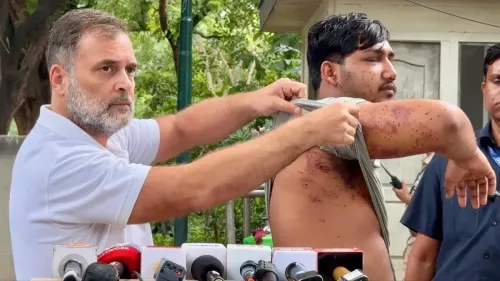
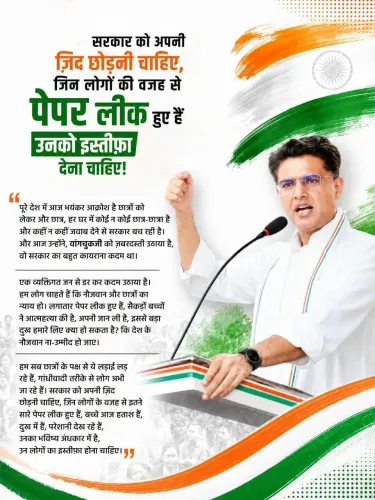
Congress general secretary Sachin Pilot has demanded a Supreme Court-monitored judicial inquiry into alleged use of pellet guns, tear gas, and lathi-charges against students, directly holding Home Minister Amit Shah accountable and warning that student voices 'cannot be silenced.'
Key Takeaways
Sachin Pilot called for an independent, Supreme Court -monitored judicial inquiry into alleged police brutality against student protesters.
He specifically named Union Home Minister Amit Shah , demanding he answer why students were met with 'brutal force and intimidation.' Alleged use of pellet guns , tear gas canisters , and lathi-charges against students forms the core of the accountability demand.
Pilot tagged Rahul Gandhi , K.C.
Venugopal , and Priyanka Gandhi , signalling a coordinated Congress party push.
The demand echoes a precedent set after the Jamia Millia Islamia incidents of December 2019 , when similar SC-monitored probe demands were raised.
No government response or announcement of an internal inquiry has been made as of the time of posting.
When students take to the streets to ask questions about their futures, the answer they receive should never be pellet guns and lathi-charges. Congress leader Sachin Pilot, general secretary and Chhattisgarh in-charge of the Indian National Congress, fired a pointed political salvo on Monday, 10 August 2026, demanding a Supreme Court-monitored judicial inquiry into alleged police brutality against student protesters — and placing the question squarely at the door of Union Home Minister Amit Shah.
What Pilot Is Demanding — and Why It Targets Shah
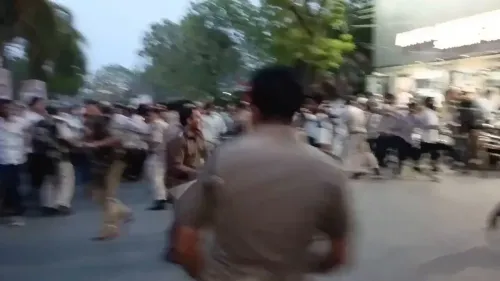
Pilot's post pulls no punches on the specifics. He calls for an independent, judicial inquiry — monitored by the Supreme Court of India — into the alleged use of pellet guns, tear gas canisters, and lathi-charges against students he describes as 'simply raising questions about their future.' He insists those found responsible must be 'held accountable and punished.'
The direct address to Amit Shah is deliberate. As Union Home Minister since 2019, Shah oversees internal security and the coordination of central police forces — making him the constitutional face of the Centre's law-and-order posture. Pilot's framing: Shah 'cannot evade the truth.'
The Playbook: Opposition, Students, and the SC-Probe Demand
This is not the first time India's principal opposition has reached for this particular tool. After the Jamia Millia Islamia incidents in December 2019, Congress and allied parties similarly demanded Supreme Court-supervised probes into alleged police excesses on campus. The apex court has, in past instances, directed and monitored independent inquiries into allegations of disproportionate force during protests — lending the demand genuine constitutional weight, not merely rhetorical force.
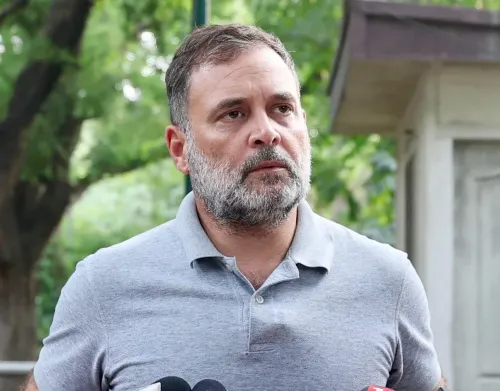
Pilot tagged Rahul Gandhi, K.C. Venugopal, and Priyanka Gandhi in the post, signalling a coordinated party push rather than a solo statement. Gandhi has repeatedly raised police conduct and student rights in Parliament; the tagging suggests this demand may be amplified in the next parliamentary session through formal questions or adjournment motions.
Students' Concerns 'Cannot Be Silenced'
At the heart of Pilot's statement is an argument about democratic legitimacy: that youth voicing concerns about education and employment is not a law-and-order problem, and treating it as one is a category error with serious consequences. 'Students should never be met with force and intimidation for raising their voices,' he wrote — a line that doubles as a rallying cry and a legal standard.
The specific protest, its location, and precise dates have not been independently confirmed, but the political and institutional machinery Pilot is invoking — a Supreme Court-monitored probe, direct ministerial accountability, coordinated opposition pressure — is entirely real and has precedent.
Whether the government responds with an internal inquiry, a parliamentary statement, or silence will be the next test of how seriously it takes the charge.
Point of View
Verifiable institutional demand (Supreme Court monitoring) to force the government onto the defensive rather than issuing a generic condemnation. By naming Shah directly, Congress attempts to personalise and escalate the political cost. The invocation of the Supreme Court is strategically significant: it shifts the arena from Parliament, where the ruling coalition controls the numbers, to the judiciary, where it does not. Watch whether this translates into a formal petition or a coordinated parliamentary offensive — that will reveal whether this is a pressure campaign or a passing statement.
NationPress
10 Aug 2026
Frequently Asked Questions
What is Sachin Pilot demanding regarding the student protests?
Sachin Pilot is demanding an independent, judicial inquiry monitored by the Supreme Court of India into alleged use of pellet guns, tear gas canisters, and lathi-charges against student protesters, with accountability for those found responsible.
Why is Sachin Pilot targeting Amit Shah over the student protests?
As Union Home Minister since 2019, Amit Shah is responsible for internal security and central police force coordination, making him the constitutional authority Pilot holds accountable for the alleged use of force against students.
Has the Supreme Court monitored protest inquiries before in India?
Yes. The Supreme Court of India has previously directed and monitored independent inquiries into allegations of excessive police force during protests, including incidents at Jamia Millia Islamia in December 2019.
Which Congress leaders are backing Sachin Pilot's demand?
Pilot tagged Rahul Gandhi, K.C. Venugopal, and Priyanka Gandhi in his post, indicating a coordinated party position rather than a solo statement.
What happens next after Sachin Pilot's demand for a probe?
The demand could be escalated through parliamentary questions in the next session, a formal Supreme Court petition, or further public pressure — depending on whether the government responds with an inquiry or remains silent.