CM Saini Calls Auto-Mutation Launch Historic for Haryana Revenue

Synopsis
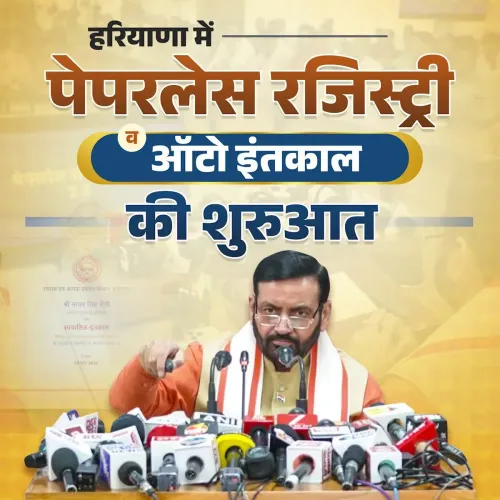
Haryana Chief Minister Nayab Singh Saini has called the state's newly launched automated land-mutation system a 'historic and revolutionary' reform in revenue administration, integrating property registration with automatic record mutation under the national DILRMP framework.
Key Takeaways
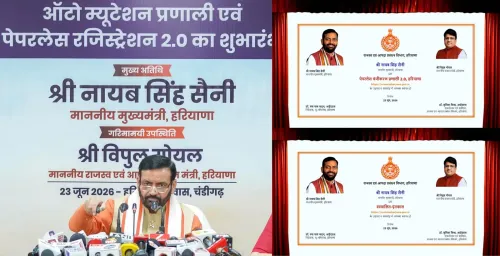
CM Nayab Singh Saini on June 23, 2026 announced Haryana's automated land-mutation system, calling it a historic reform in revenue administration.
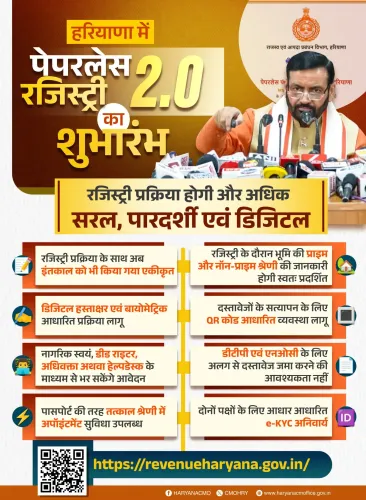
The system automatically updates land records upon registration of a sale deed, removing the need for a separate mutation application.
The reform aligns with the Digital India Land Records Modernization Programme (DILRMP) , a central scheme operational since 2008 .
States such as Karnataka , Maharashtra , and Madhya Pradesh have implemented similar integrations under the same national framework.
Key beneficiaries include farmers , landowners, and revenue officials who face persistent mutation pendency and property disputes.
District-wise rollout timelines and integration details with Haryana's registration portal are yet to be made public.
Haryana Chief Minister Nayab Singh Saini on Tuesday, June 23, 2026, described the launch of an automated land-mutation system — known as swachalit intkal pranali (auto-mutation system) — as a 'historic and revolutionary change' in the state's revenue administration, announcing the reform on social media.
Context
In his post, CM Saini stated: 'The launch of the automated (auto) mutation system in Haryana is a historic and revolutionary change in revenue administration.' The system is designed to trigger land-record mutations automatically after a sale deed is registered, eliminating the need for a separate manual application to revenue officials.
Until now, landowners in Haryana had to file a separate request at the patwari or tehsildar office after registering a property transaction — a process that often led to delays, pendency, and opportunities for rent-seeking. The new system aims to collapse registration and mutation into a single seamless event.
Policy Backdrop
The reform fits squarely within the Digital India Land Records Modernization Programme (DILRMP), a central scheme approved in 2008 to computerise land records, link sub-registrar offices with revenue databases, and enable online mutations across states. The programme has been a cornerstone of India's e-governance push in the agrarian sector for nearly two decades.
Several states — including Karnataka, Maharashtra, and Madhya Pradesh — advanced automatic-mutation integrations through the DILRMP framework from the mid-2010s onward. Haryana's adoption places it within this broader national pattern, though the state's specific technical architecture and district-wise rollout schedule are yet to be detailed publicly.
Stakeholders and Impact
Farmers and landowners stand to benefit most directly: the mutation of agricultural and residential plots after a sale will no longer depend on a manual follow-up, reducing both the time and the informal costs associated with the process. Revenue officials are expected to see a reduction in pendency at tehsil offices.
Haryana has significant agricultural landholdings, and land-record disputes have historically been a source of prolonged litigation in the state. A system that creates an automatic, time-stamped mutation trail could reduce the evidentiary ambiguity that fuels such disputes and ease the burden on revenue courts.
What's Next
Observers will watch for the district-wise rollout timeline and the depth of integration between Haryana's property-registration portal and its revenue-record database. A measurable decline in mutation pendency and property-related litigation would serve as the clearest indicators of the system's real-world effectiveness.
If the automated pipeline performs as intended, it could also accelerate the state's compliance with central benchmarks under the DILRMP, potentially unlocking additional federal incentives tied to land-record modernisation milestones.
Point of View
' CM Saini is staking a governance credential ahead of what is likely to be a period of closer scrutiny of BJP-ruled state administrations on delivery. The real test will be implementation fidelity: automatic mutation systems in other states have occasionally stalled due to data-quality mismatches between registration and revenue databases. If Haryana can demonstrate a measurable drop in pendency, it would strengthen the case for the DILRMP model as a replicable blueprint across the remaining states that have yet to fully integrate the two systems.
NationPress
22 Sept 2026
Frequently Asked Questions
What is the automated mutation system launched in Haryana?
The automated mutation system — called swachalit intkal pranali in Hindi — automatically updates land ownership records in Haryana's revenue database as soon as a property sale deed is registered, removing the need for a separate manual mutation application at the tehsil office.
Who announced the Haryana auto-mutation system?
Haryana Chief Minister Nayab Singh Saini announced and described the launch of the automated land-mutation system on June 23, 2026 , calling it a 'historic and revolutionary change' in the state's revenue administration.
What is DILRMP and how does it relate to Haryana's reform?
The Digital India Land Records Modernization Programme (DILRMP) is a central government scheme launched in 2008 to computerise land records and link property registration with automatic mutation. Haryana's new system is in line with this national framework, which states like Karnataka , Maharashtra , and Madhya Pradesh have already advanced.
How does auto-mutation benefit farmers and landowners in Haryana?
Farmers and landowners will no longer need to make a separate visit to revenue offices after registering a property transaction. The mutation happens automatically, cutting delays, reducing informal costs, and creating a cleaner evidentiary record that can help prevent land disputes.
When will the automated mutation system be rolled out across all districts of Haryana?
A district-wise rollout timeline has not yet been made public. Observers are watching for details on the phased implementation schedule and the extent of integration between Haryana's property-registration portal and its revenue-record database.