Haryana CM launches Auto Mutation System and Paperless Registration 2.0

Synopsis
Haryana has quietly ended one of its most persistent citizen grievances — land mutation delays of up to two years — by automating the process at the point of registration. With Aadhaar e-KYC now mandatory and mutation documents downloadable from home, Paperless Registration 2.0 is the state's most substantive digital land-records overhaul to date.
Key Takeaways
Haryana CM Nayab Singh Saini launched the Auto Mutation System and Paperless Registration 2.0 on 23 June in Chandigarh .
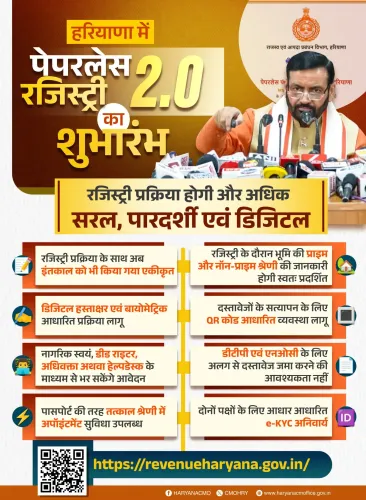
Residents no longer need to file separate mutation applications — the process is now triggered automatically upon property registration.
Mutation documents can be downloaded directly from home, eliminating office visits that previously took 1–2 years to resolve.
Aadhaar-based e-KYC is now mandatory for all parties, ensuring 100% identity verification .
The system builds on Paperless Registration 1.0 , first piloted in Ladwa tehsil, Kurukshetra on 29 September 2025 and rolled out statewide from 1 November 2025 .
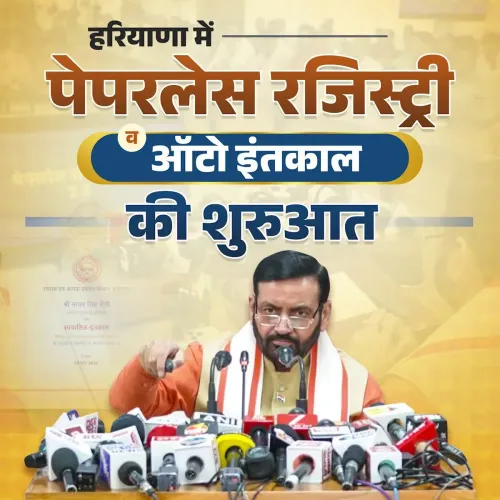
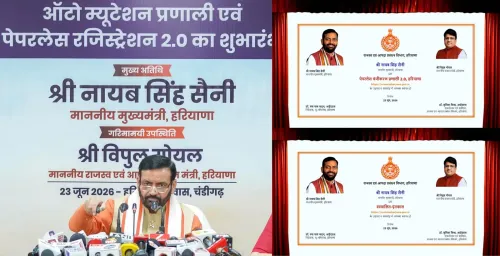
Haryana Chief Minister Nayab Singh Saini on Tuesday, 23 June launched the Auto Mutation System and Paperless Registration 2.0 in Chandigarh, eliminating the need for residents to file separate mutation applications and enabling them to download mutation documents directly from home. The twin initiatives mark a significant push toward digital land administration in the state.
What the New System Changes
Under the Auto Mutation System, mutation of land records is now triggered automatically upon property registration — residents no longer need to submit standalone applications or make repeated visits to government offices. Mutation documents can be downloaded from home, cutting out a process that previously forced citizens to wait anywhere between one and two years for resolution.
Paperless Registration 2.0 integrates the mutation process directly with property registration, building on the first phase that was piloted on 29 September 2025 in Ladwa tehsil of Kurukshetra district before being rolled out statewide from 1 November 2025. The second phase incorporates feedback gathered over eight months of operation.
Key Features of Paperless Registration 2.0
The upgraded system introduces a simplified, more user-friendly registration application form. Critically, Aadhaar-based e-KYC has been made mandatory for all parties involved, ensuring 100 per cent identity verification at the point of registration. Officials say the move addresses longstanding concerns around fraudulent transfers and identity disputes in land records.
What the Government Said
Chief Minister Saini described the launches as giving 'a new impetus' to the government's commitment to making residents' lives simpler and more convenient. He framed the initiatives as a step toward realising Prime Minister Narendra Modi's vision of a Viksit Bharat and a Viksit Haryana, citing the state's 'double-engine' government as working with 'transparency, accountability, and commitment' to deliver services in a time-bound manner.
The event was attended by Revenue Minister Vipul Goel, Public Works Minister Ranbir Gangwa, and Additional Chief Secretary Sumita Misra, among others. Deputy Commissioners across the state joined the launch virtually.
Context and Significance
Land mutation delays have historically been a major source of citizen grievance in Haryana, with disputes over records fuelling litigation and corruption at the tehsil level. This is the state's most substantive digital land-records intervention since the introduction of the first paperless registration pilot in late 2025. The mandatory Aadhaar e-KYC requirement, in particular, closes an identity-verification gap that earlier digitisation efforts left open. With the system now live statewide, the real test will be whether backend revenue department infrastructure can sustain the automated workflow at scale.
Point of View
Not just a cosmetic digitisation exercise. The mandatory Aadhaar e-KYC closes an identity gap that earlier efforts sidestepped. The harder question is execution: automated workflows are only as reliable as the backend databases they draw from, and Haryana's land records, like most states', carry legacy errors. If the system flags discrepancies rather than silently propagating them, it will be a genuine reform. If not, automation risks scaling the old problems faster.
NationPress
22 Sept 2026
Frequently Asked Questions
What is the Auto Mutation System launched in Haryana?
The Auto Mutation System automatically initiates mutation of land records at the point of property registration, removing the need for residents to file a separate mutation application. Previously, citizens had to wait one to two years and make repeated visits to government offices to complete the process.
What is Paperless Registration 2.0 in Haryana?
Paperless Registration 2.0 is the upgraded phase of Haryana's digital property registration system, integrating the mutation process directly with registration. It was launched on 23 June, building on the first phase piloted in Ladwa tehsil of Kurukshetra district on 29 September 2025 and expanded statewide from 1 November 2025.
How does Aadhaar e-KYC feature in the new system?
Aadhaar-based e-KYC has been made mandatory for both parties in a property transaction under Paperless Registration 2.0, ensuring 100 per cent identity verification at the point of registration. This addresses concerns around fraudulent transfers and identity disputes in land records.
Who attended the launch of the Auto Mutation System?
The launch was attended by Revenue Minister Vipul Goel, Public Works Minister Ranbir Gangwa, and Additional Chief Secretary Sumita Misra, among others. Deputy Commissioners from across Haryana joined the event virtually.
How does this reform benefit ordinary residents?
Residents can now download mutation documents from home without visiting a government office or filing a separate application. The reform eliminates delays that previously stretched to one to two years, directly reducing the burden on citizens dealing with property transactions.